So, I did something dumb today. I completely missed the driveway as I backed my truck into the spot, and got it stuck but good in the mud between the driveway parking space and the sidewalk. I don’t have an explanation.

Yes, I do. It was aliens.

So I came inside and made this reel from the story A Bedtime Story, from the book Better You Believe: A Collection of Horror by Tony Evans. I met Tony briefly at Scares That Care/AuthorCon in Williamsburg, Virginia last year. He’s part of the Appalachian horror writers’ scene. This story is one of my favorites in the collection. I hope you like my pseudo-spooky reading of it!

So. I’ve procrastinated productively. I’ve got character notes, timeline notes, outline notes, research notes, notes for my notes. I’m starting the prologue, draft 2, novel 1. (And being very dramatic about it, too, ain’t I precious?)

One of my tasks is to rescue my main character from the barely-there-outline she currently is. And I’m suddenly weepy about her, knowing what is in store for her, and I’m weepy for her son, and I hope this fucking novel is worth it. I mean, it is. I don’t have any choice though. Good, bad, or worst of all, indifferent, I’ve got to do it. But dang.

I’m starting out the year with a few anthologies I’ve been pretty anxious to read. I’ll read simultaneous with novels and other books.

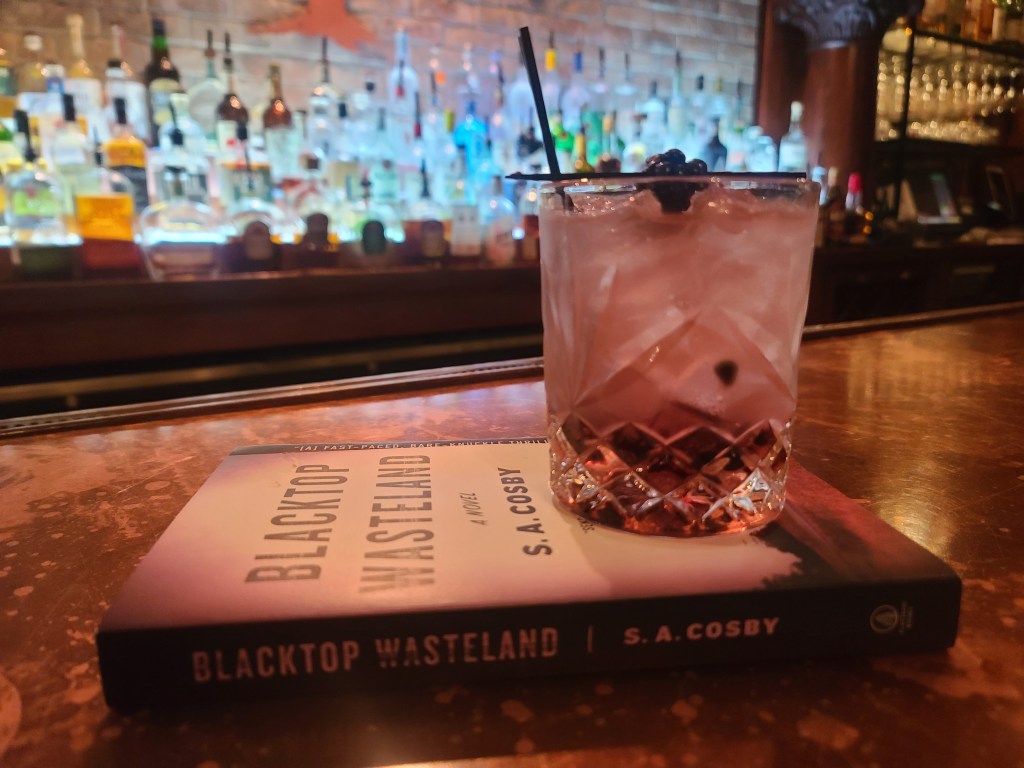
Weird Tales: 100 Years of Weird, edited by Jonathan Maberry, is going to be great. I became a Weird Tales fan in the late 1980s, when Weird Tales was part of Terminus Publishing and under the helm of George H. Scithers, John Gregory Betancourt, and Darrell Schweitzer. The magazine covers were beautiful and lavish, and I can see some of the illustrations with my eyes closed. Weird Tales in that era introduced me to some of the best writers in horror at that time. I can’t wait to dive into this 100 year retrospective and forecast, edited by Jonathan Maberry, who is absolutely a perfect choice for this. (He’s also the editor of the current iteration of the magazine.

I brought the book with me to Route 51 Brewery, where I enjoyed a Pumpkin Ale, easily the best of its kind in the region.

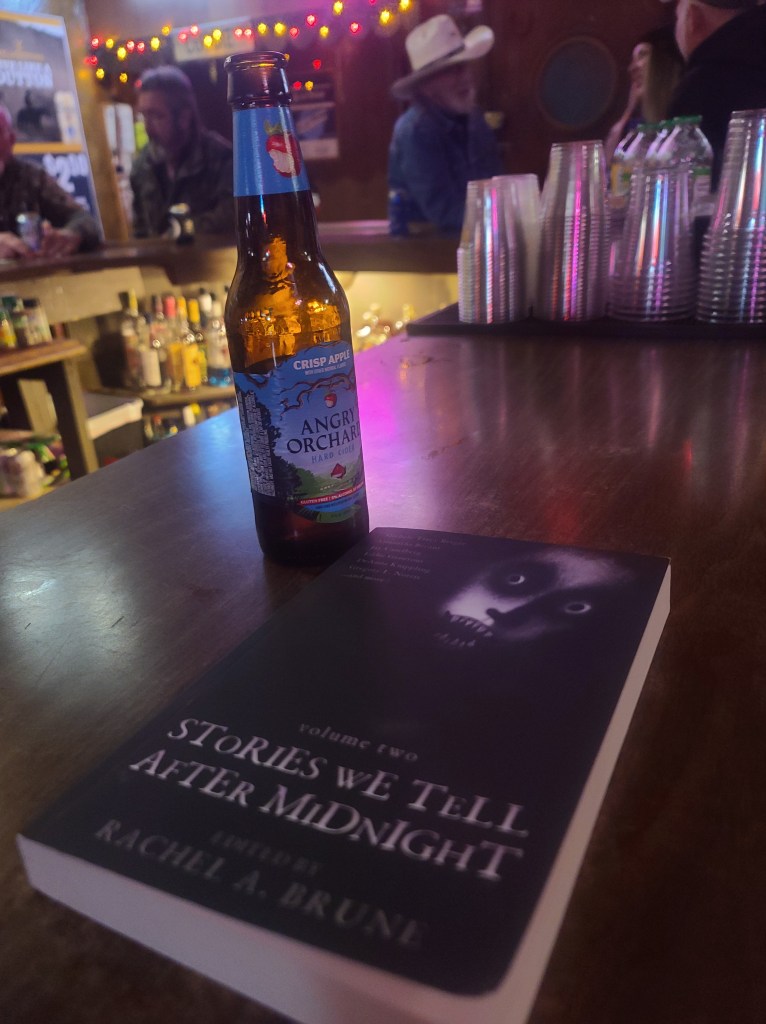
I just finished Stories We Tell After Midnight, vol. 2 edited by Rachel A. Brune. I’ll have to get volume 1 now. It’s a Crone Girls Press publication. Support indie horror publishers and get this book! Seriously, the founders are terrific people who were very welcoming to me at my first horror con. After-midnight nightclubs, nursery rhymes gone awry, dating while cannibalistic, becoming part of an all-too-real movie premiere—and more.

I had this book with me just after Christmas at my favorite dive bar in Union County, Fuzzy’s, while starting out the night with an Angry Orchard.

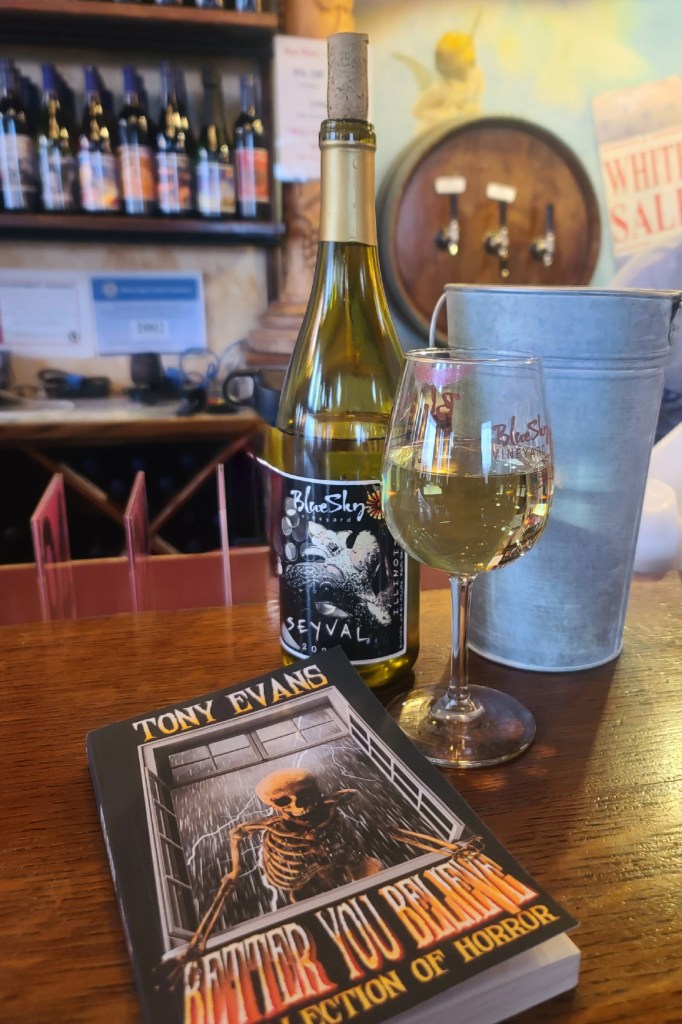
I’m a little bit fixated on the Appalachians right now. I’m always low-key into that region but driving through a corner of it on the way home from Scares That Care / AuthorCon last spring poured fuel on the Appalachian-love fire. So I’m ready to tear into Tony Evans’ Better You Believe: A Collection of Horror. Also, I plan to attend AuthorCon IV in St. Louis in October. I don’t have a book yet, but I will have a manuscript by then, I hope.

I started reading this one at Blue Sky Vineyard, where my wine of choice that day was Seyval.

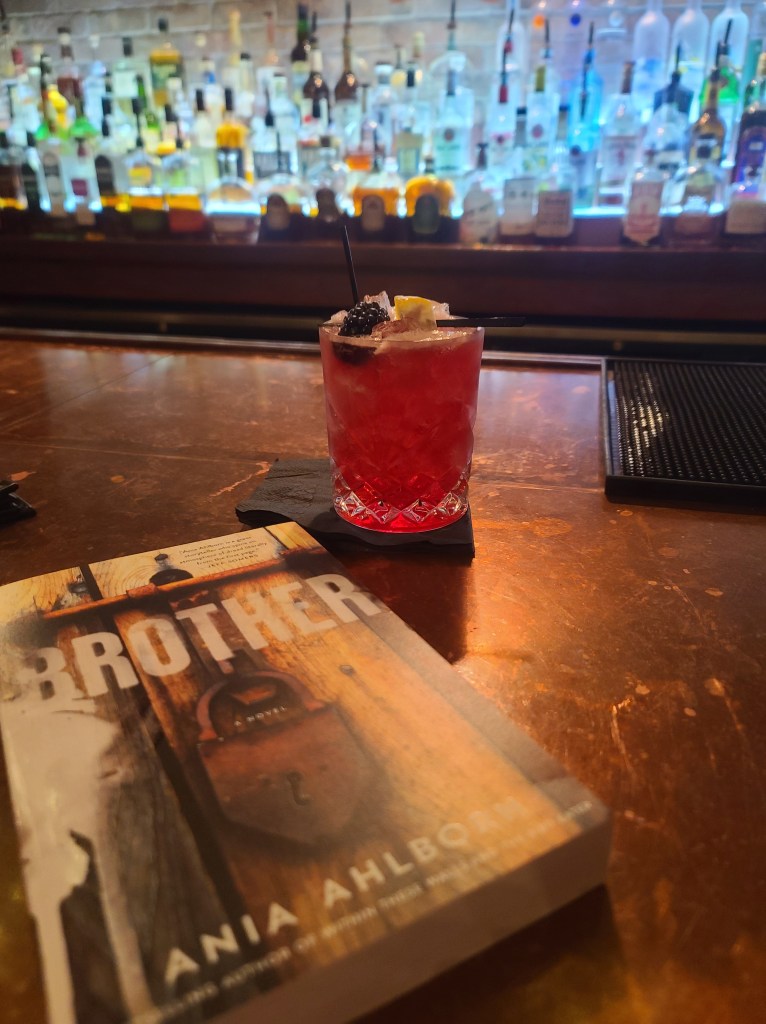
Read horror! Share your #nerdinabarwithabook!

No secret that I love fairytales and folklore. Different cultures bring different flavor. In Irish fairy and folk tales, you’ll find a grimly manic humor in the darker stories. A common thread that comes all the way from the epics through the fairy stories is the concept of lost time. While you are in the thrall of the ghost or in the fairy glamour, time marches on and you are outside it. When you return to your senses, you will find the world has changed—maybe only fractionally—if you are lucky—but changed all the same. I had that idea in mind when I wrote this story.

Jinx. From Feed Literary Magazine

This one is published in Feed Literary Magazine, and I’m so grateful to them for giving two of my micros a home in the same issue!

The video is from the end of September, 2023. I was on my way from Archon, a sci-fi fantasy convention held in Collinsville, Illinois (home of the world’s largest catsup bottle) to the Grubville Opry, a listening room in Dittmer, Missouri, to hear my songwriter husband, Tim Crosby, play. I was at Archon for the first time because Jonathan Maberry was there. He’s a writing hero of mine. He’s incredibly talented, and staggeringly prolific. He’s got a great work ethic to match his talent, and he’s super cool to his fans. I had a great time at Archon. A fantastic group of people—friendly, creative, supportive of each other… the kind of people you hope you find at a convention when you know no one when you show up.

I filmed the reading alongside the Meramec River in Missouri. I stopped at the Minnie Ha Ha Park in Sunset Hills, Missouri to take a walking break. It turned into a filming break. There’s a little bit of background noise—it’s a popular park! The crow, pileated woodpecker, and black snake clips are from Coyote Creek (my backyard).

I hope you enjoy!

My writing comfort zone is flash fiction. It’s where I found my voice. And my first writing community. The process of writing a novel is vastly different from flash. I really love both processes. Writing this novel makes me appreciate the freedom of flash, and renews my respect for the creative process that happens there.

I approached the novel methodically. Or so I thought. I had a multi-page annotated outline to guide me. As it turns out, I hadn’t planned and plotted nearly enough! About 2/3 of the way in, I realized I had not thoroughly considered some of the most important plot points—like, why do you have TWO ghosts? Also, if you want the reader to like your main character, maybe spend some time making her likeable?

With flash, I rarely have even a smidge of an idea when I sit down to write. I use random-word prompts or picture prompts. When I start writing, I don’t know where I’m going. It’s free-falling. Sometimes it works and the words soar. Sometimes it’s more of a crash and burn. But it’s exhilarating. Even the flailing around can sometimes produce a nugget of a story.

I’m friends with and know so many writers, I feel kinda precious being all excited about draft 1, novel 1. But, having gotten this far, I can say I’ve learned tons about my own processes. For me, flash is instinct followed by thinking. Novel-writing begins with thinking and is aided by instinct.

I’m excited to dive into the second draft. I plan to have it in hand by AuthorCon St. Louis.

Caution: spoilers.

I hated reading The Girl Next Door by Jack Ketchum. I did not enjoy it at all. If Ketchum were not the craftsman he is, I’m not sure I could have finished it. As it is, he is an astonishing writer and he knew exactly what he was doing with this book. And it’s an important book, and, I think, one that should be read, and talked about. The back description sums up why: “Based on a true story, this shocking novel reveals the depravity of which we are all capable.”

Based on a true story. The novel is a fictional take on the true story of the horrible abuse and murder of Indiana teenager Sylvia Likens. Sylvia was abused, imprisoned, and eventually killed by Gertrude Baniszewski, whom Sylvia’s father trusted with her care. Baniszewski involved a handful of neighborhood children and her own children—Sylvia’s peers—encouraging their participation in inflicting serious injuries on Sylvia. Several adults in the neighborhood saw hints of maltreatment but none of them called authorities. The abuse escalated to shocking degrees, and eventually, Sylvia’s murder.

Knowing this book is based on a true story makes it that much more difficult to read. Because unlike two similar difficult-to-read-but-masterful books—American Psycho by Bret Easton Ellis and Not Forever, But For Now by Chuck Palahniuk—this is not a satire. It’s an exposé.

Ketchum’s book takes a hard look at the questions: How could this happen? Why did it happen? By his own admission, he flinched. In the book, main character David is redeemable, and Meg (the fictional version of Sylvia) has some small comfort at the end—she is not alone.

The depravity of which we are all capable. Several of the villains in this book are kids. The youngest is 10, the others in their early teens. However, their youth does not render them inculpable.

Ketchum makes David, neighbor boy and family friend, our protagonist. In doing so, he takes away our easy out—letting the kids off the hook and blaming only Ruth. David knows his limited participation is wrong, and he understands that his passivity is tantamount to betrayal. He approaches his parents when the abuse begins to escalate, but does such a poor job of explaining what is happening—and his parents such a lousy job of listening to him—that it amounts to having done nothing.

We are not to walk away from this book thinking, aw, he’s just a kid. We are to see ourselves as David. We are challenged to confront our own hesitation to take a stand when it’s difficult to do so, when we feel (or are) powerless, and when we might lose standing in our peer group—including in our careers or at university, for example.

Ketchum’s Ruth, the fictional Baniszewski, has had a rough and unfair life, and she has lost her ability to empathize. She convinces herself, at least in the beginning, that she’s helping Meg avoid some of the perils to which she herself fell prey. She is as hateful as any character I’ve ever encountered in literature.

While we might be very unlike Ruth, still: How many times have we justified being unkind, callous, or thoughtless because we perceive someone else’s suffering as less than our own?

Have we gloried in someone’s misfortune because we think they deserve it?

Have we labeled a group of people—those who vote differently than we do, for example, or those who choose different lifestyles—and by labeling them, rendered them less than human, a group we can denigrate and even persecute?

An important point to bring away from this book: Don’t assume you can never be the monster.

“We had permission.” A key factor both in the fictional and the true stories: The neighborhood children participated in torturing a girl because they were told they could. They had permission. An authority figure told them it was their right. They felt justified. They felt righteous. They might as well have confidently stated that they were “on the right side of history.”

So here’s another point: We can’t be like children and assume that authority is always right. “I was just following orders” didn’t keep war criminals from punishment. “They told me it was the right thing to do” doesn’t absolve us from asking questions. We have an obligation to defy authority when authority acts to persecute, vilify, and dehumanize. And no, it’s not just those people over there who need this lesson. It’s us, too. Whoever your “us” includes.

I needed some comfort while I was reading, some support. I posted about this reading experience in the Facebook group Books of Horror—an excellent community of well-read fans of the horror genre. The responses were thoughtful and considered. Other readers talked about feeling complicit in the atrocity just by continuing to read about it. They talked about honoring the memory of Sylvia Likens by reading the fictional account of what happened to her—giving her a voice and seeing her. A few people didn’t finish the book. A few people did and were still shaken. Very few were untouched by it.

This isn’t a book I’m going to be giving away at Christmas. It’s a difficult read. In writing this book, Jack Ketchum reminds us: We must confront the potential monsters we carry inside ourselves.
I hit 50,000 words yesterday, a whole two days before deadline. And for me, it is an accomplishment. I started writing a novel several years ago, and have set it down several times. I signed up for NaNoWriMo (National Novel Writing Month) for the first time as a do-or-die—finish a draft of the novel, or forget about it.

So I went for it. I did not write every day, but I did write consistently. The novel is not finished. There are probably 10 more chapters to go. My notes for the second draft are extensive. There are many fixes I’ll need to make—time inconsistencies, point of view and tense departures, plot developments that need foreshadowing, and pacing—my biggest challenge.

The end is in sight. I see a path to the end of the novel, and I’ve already got the scaffolding for the fixes. I’m all kinds of insecure about it. But also hopeful.

In addition to the formal NaNoWriMo, I was participating (trying to) in a 300-word story NaWriMo challenge. That kind of writing is so dear to me. With the novel, I’ve got a detailed outline that I update after each chapter and where I’ve made my story-fix notes; a character list; and a time-line with details that won’t necessarily make it into the story.

I write flash mostly from prompts: word prompts are my favorite, picture prompts next. Sometimes an open-ended suggested direction is helpful. But a prompt that says “Write a story about X leaving Y and encountering Z” is way too specific for me most times.

Once in a while I have an idea when I sit down to write flash, but most of the time I haven’t a clue. It’s an exploration, an adventure. I may write myself into a hole and back out again, and find the beginning of the story somewhere in the middle. Or, occasionally, the story explodes in about the second sentence, blooming into something I know I want to keep. Often, I write myself off a cliff and know there are no survivors—not a single sentence or phrase or image.

Writing every day for 30 days is a worthy aspiration. NaNoWriMo is like a detox cleanse, boot camp, sweat lodge, a period of fasting, training for a marathon—in short: a time set aside for a disciplined, rigorous attack on your goals.

I knew I wouldn’t be able to write every day when I signed up for NaNoWriMo—there are other areas of my life that require my attention. I’m sure a 30-day stretch with no misses is hard for many writers. Writing consistently, though—that’s crucial. Writing has to be part of your normal routine. If it is, then those times when you must take a break—for whatever reason—your good writing habits stay with you, and it will be easier to get back on course when you can. If you’ve never been on course… well… it gets easier and easier not to write. That’s where I was with the novel. The 30 days of focus on it has given me the determination to finish.

Thanks for hanging out with me, and for all the encouragement so many people have given me over the years. I hope to make 2024 my best year yet!