I’ve got a story in The Horror Zine Magazine! The Horror Zine has plenty of street cred in the horror world. It’s got longevity and quality on its side, and editor Jeani Rector is well known for her contributions to the community, including encouraging new horror writers.
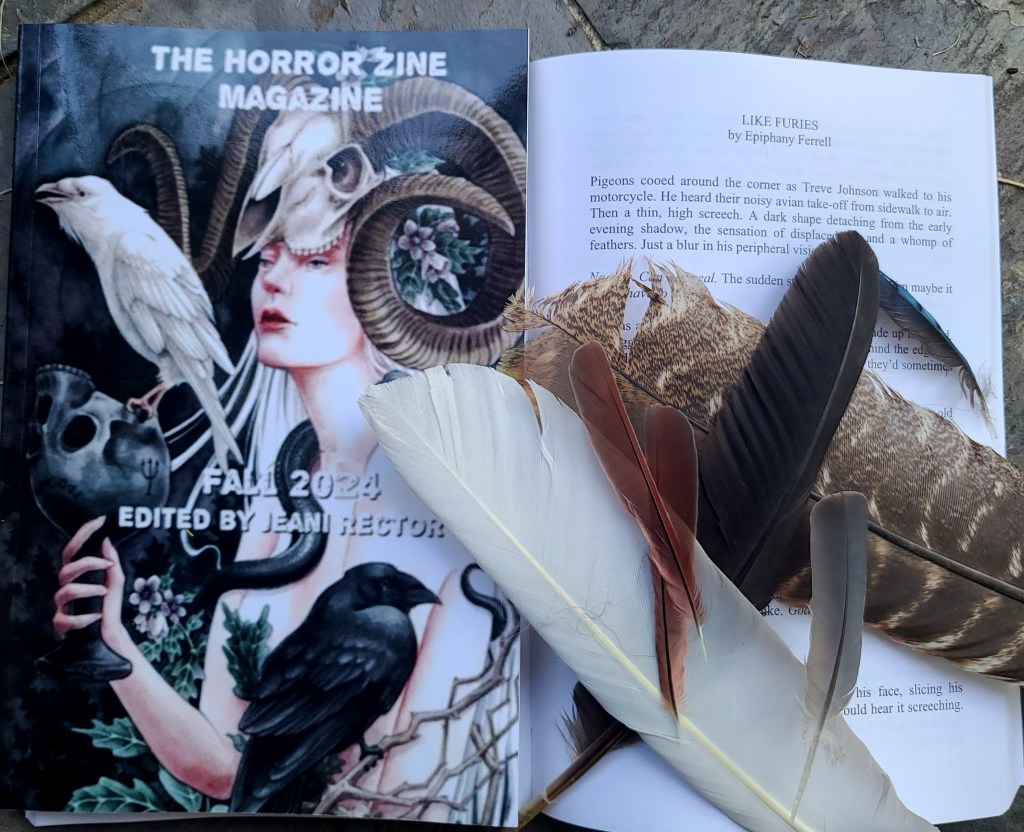
I’m continually enchanted by the idea of the veil between the worlds stretching, growing thin, allowing crossover from one world to the next. It’s the essence of fairy stories. For me, it’s part of what moves me to awe in the natural world. And it’s often something I weave into stories.

The idea for Like Furies came while I was waiting for my husband’s trio gig to start in Centralia, Illinois. They play in a courtyard between two older brick buildings. I was restless, and was walking around this block, then that one. We were on the edge of town, near railroad tracks. Within the same two block square, there was an abandoned building with tall grass and vine in the alley like a jungle, and also store fronts, a bank, park benches along the sidewalk, and a couple traffic lights. As I wandered around, I noticed a few feathers on the sidewalk. I almost always pick up feathers. A few feet further, more feathers, different kind, in good shape. As I walked, I picked up half a dozen nice feathers, and left quite a few on the sidewalk that were in poor shape, or clumped together as if torn out in a bunch.

And that got me thinking: Why are there so many feathers? A resident peregrine? Some larger cities have them to control the pigeon population. What if it was something else? Something sinister? That, in the way of small towns everywhere, no one would talk about? What if that person watching me pick up a feather didn’t think I was merely weird, but that I was breaking tabu?

I scribbled a few notes, and began writing the story the next day.
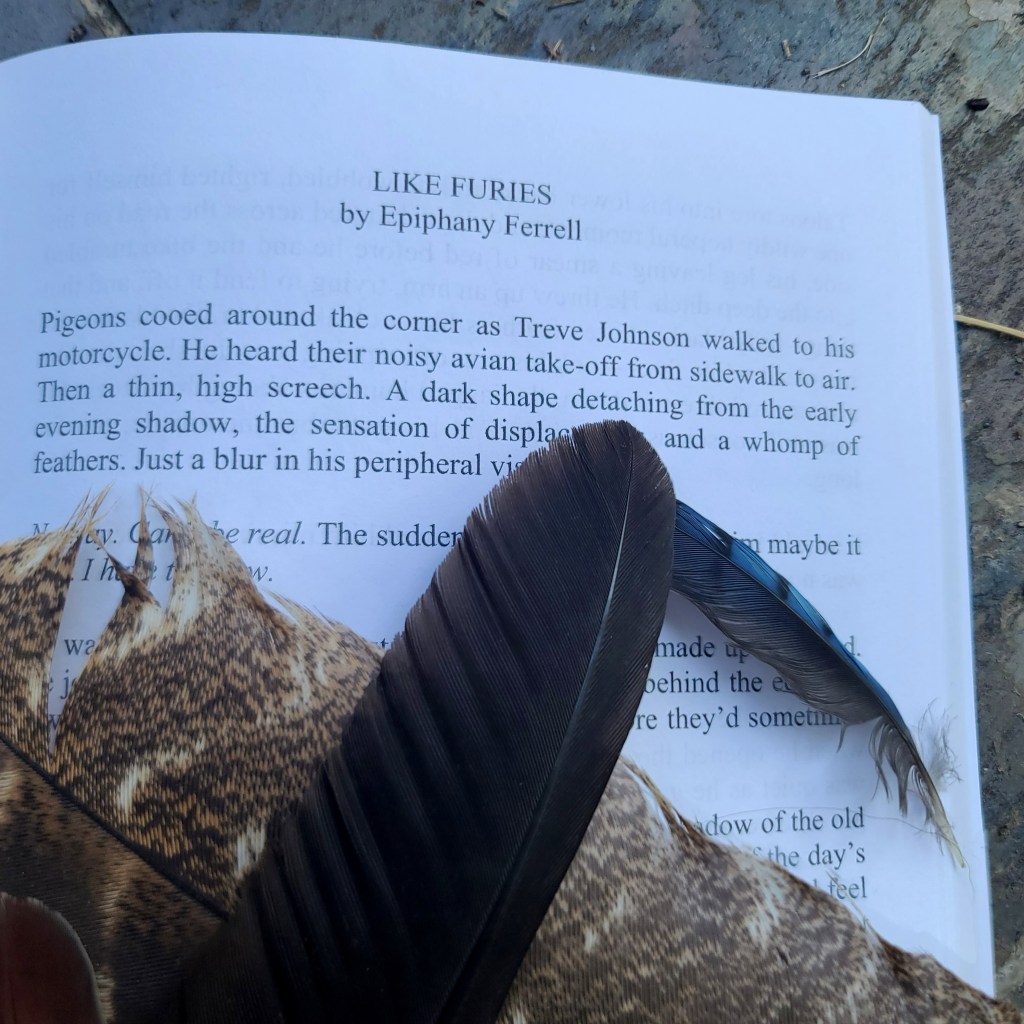
I thought about having someone send Tori to Black Creek as vengeance for an imagined slight. But as I wrote her character, it became clear she wouldn’t fall for that. She wouldn’t be a victim— she’d be more susceptible to grief. But not over a man.

Though I didn’t describe what she looks like in the story, I have a clear picture of her in my mind.

That’s the way it works for me. Sometimes characters are fully formed in my mind and they tell me what to do, being rather bossy about it. Other times, I have to tease it out. And sometimes I only know what they are all about until I’ve gotten it wrong a few times.

The story’s ending was a bit of a surprise for me. I had it in my mind up until Tori’s encounter with the source of the feathers in town. The rest was spontaneous. I love when that happens.

Print copy, with that outstanding cover art, here.
I grew up in a town where the Pied Piper was (is) a big deal. In fact, because of it, I was a rat in a parade.

My home town is Frankenmuth, Michigan, known as Michigan’s Little Bavaria. One of the town landmarks in the Glockenspiel at Bavarian Inn. The Glockenspiel is a 50-foot bell tower that plays music and tells the story, with the help of carved figures that emerge onto a platform, of the Pied Piper.

One year the kids in my neighborhood entered the annual Children’s Parade, part of the then-weeklong Bavarian Festival, with a Pied Piper rat group, and a Pied Piper child group, with two of the older boys playing the Pied Piper. So… I was a rat.

When I say I have always been fascinated by the darkness of the Pied Piper of Hameln story, I mean it.

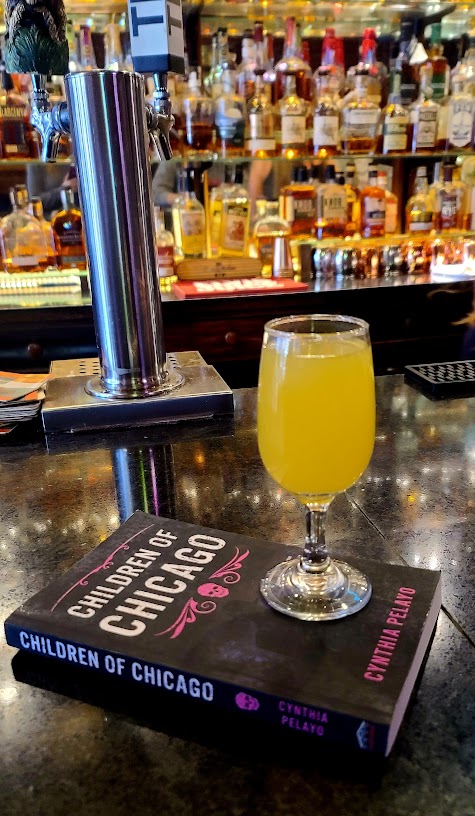
In Children of Chicago, Cynthia Pelayo took a dark tale and made it even darker, dark as pitch. In Pelayo’s hands, we have a Pied Piper that is truly the stuff of children’s legends, and the instrument of the kind of pure anger of which children can be capable. This is a story about children killing children. And somehow, it is told with compassion. Unflinchingly, but also with empathy. It’s a stunning accomplishment.

If you are familiar with the Pied Piper story, don’t think that will help you. This is a horror story with thriller overtones, and the mysterious twists and bends that come with a good detective mystery. You might think you have it figured out, and you might, partly. You won’t see the whole thing coming at you, I assure you.

Chicago is as much a character in this story as the children and the detective trying to save them. Calling it a love song to Chicago is trite. But still true. I’ve been to Chicago a dozen times, but I’ve never seen it presented in quite this loving, honest, respectful way. The next time I’m there, I’ll try to visit Humboldt Park. I won’t be chanting rhymes in front of candlelit mirrors, though. No way.

The drink is a mimosa. It was early-ish and I’d had … some beers… the previous night. The place is the Crazy Horse bar and grill in Bloomington, Indiana.

I just had a wonderful weekend! It started with heavy fog and me driving my least favorite freeway—I-57—and the fog didn’t lift until I was almost to Indiana.

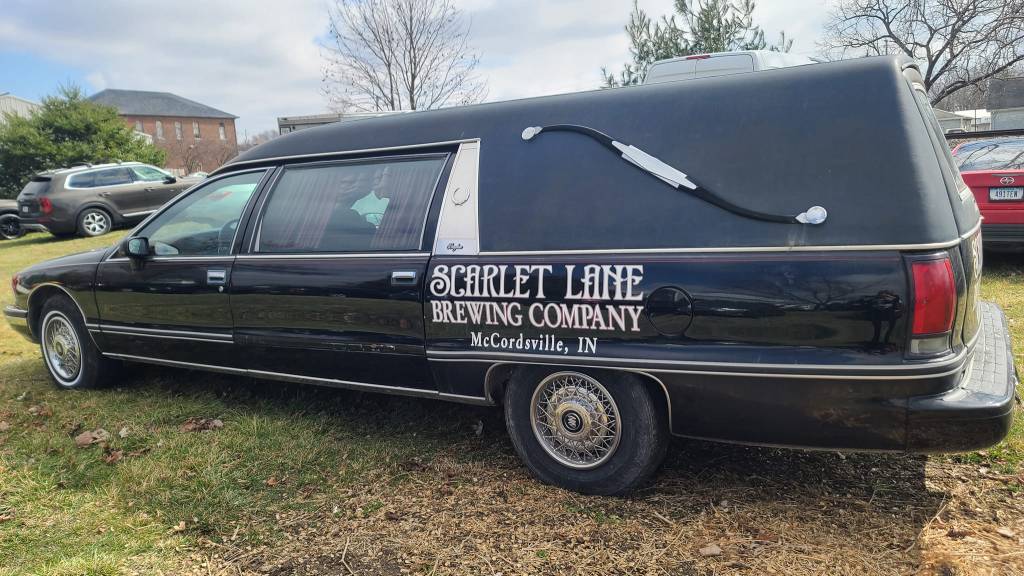
I attended the Scarelastic Book Fair at Scarlet Lane Brewing Company in McCordsville, hosted by author and master brewer Josh Hull. What a great time! A horror-themed brewery, many favorite authors, spent way too much on books (including one I now have two of, both signed…how could I forget??)

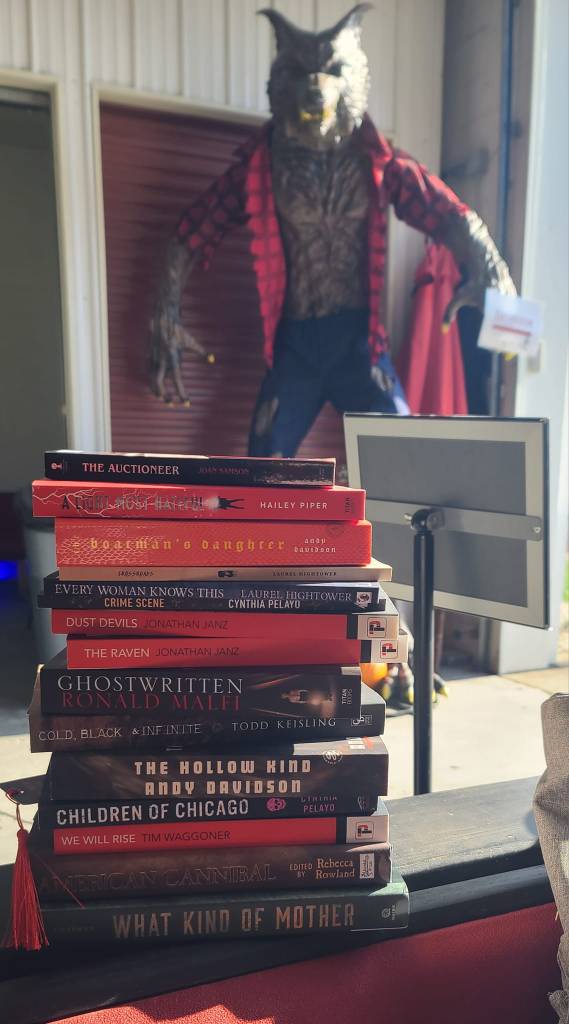
Above is most of what I bought. I snagged a few more right before I left. Pretty much my book budget for the year. Well… I mean…. not really. But…

I should mention the beer at Scarlet Lane is fantastic. Highly recommend—the brewery is absolutely worth a visit all on its own.

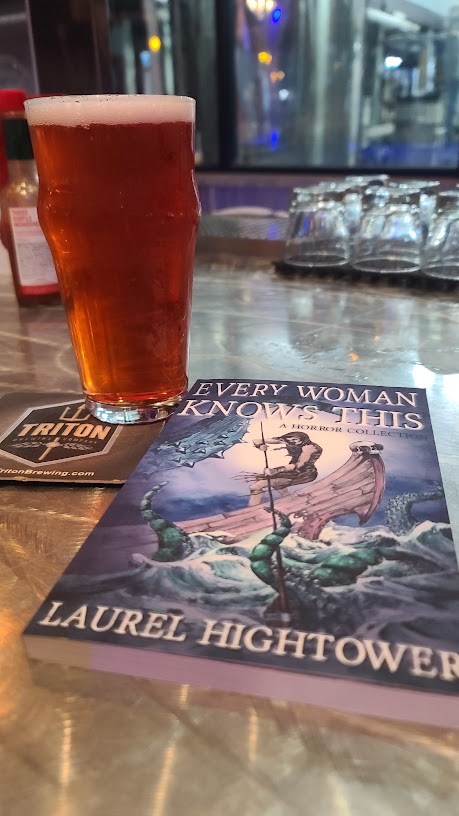
I spent the night at Fort Harrison State Park Inn, a cool old hotel. It was so quiet I was briefly convinced I was the only guest. I had dinner and a couple more fantastic brews at Triton Brewing Company. And of course, had to have a book with me, since I bought so many good ones. This is Laurel Hightower’s Every Woman Knows This and I can’t wait to dig into it! That beer is their Strawberry Hometown Hero Ale. Isn’t it pretty?

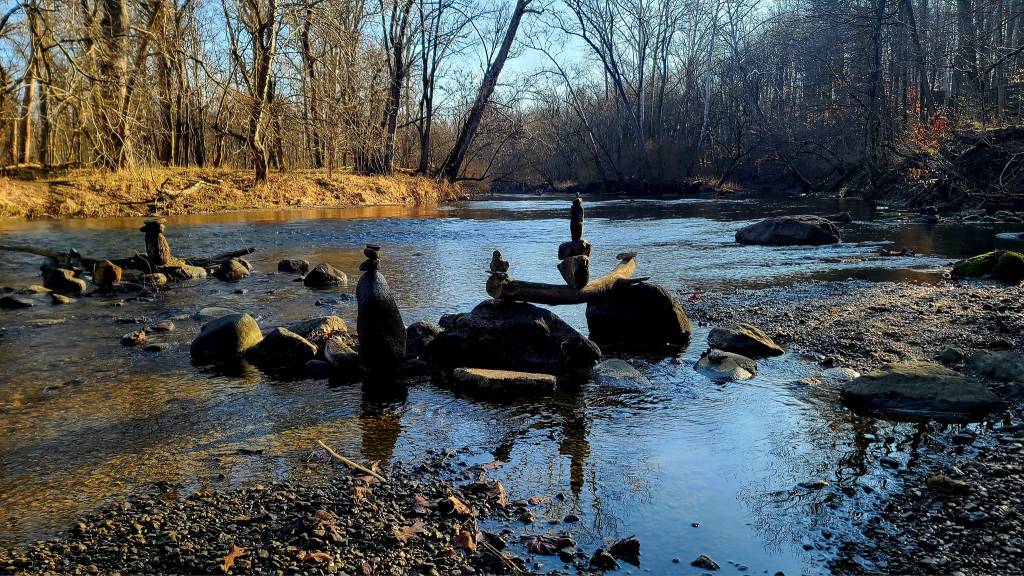
Then up early in the morning to hike the Fall Creek Trail in the state park. I didn’t make those cairns, someone else’s handiwork. But I enjoyed. That’s Fall Creek. Hence the trail name. 🙂

I stopped off in Bloomington, IN for lunch because I wanted to see the town, and also go home a different way. Great lunch. Did a quick read from Quick Adjustments by Robert Scotellaro. I read Interpreter of Dreams, one of my favorites from that great new collection. It’s on my Instagram if you want to check it out.

And then I managed to add almost an hour to my drive time—oops!—by going all the way south to Kentucky before going west towards home. S’ok, it was rural scenery I would not have seen otherwise.

Got home to find that my husband has written a new song that’s pretty kick-ass heartbreaking. So we both had a productive weekend! I hope yours was fantastic too!

Somewhere I heard the expression “teaching the dead to talk with us.” I don’t think, really, that’s quite what was said. I don’t know that “the dead” were involved at all. But the minute I thought it, I knew I had a story.

I’ve been watching shark videos and reels in the way many people watch funny cats or goats in pajamas. I see people who are shark experts swimming with sharks. I admire them.

And I wonder if there are consequences to messing with the order of things.

I don’t have the answers. Just a story. Here it is.

This story first appeared in Feed Lit Magazine.

So, I did something dumb today. I completely missed the driveway as I backed my truck into the spot, and got it stuck but good in the mud between the driveway parking space and the sidewalk. I don’t have an explanation.

Yes, I do. It was aliens.

So I came inside and made this reel from the story A Bedtime Story, from the book Better You Believe: A Collection of Horror by Tony Evans. I met Tony briefly at Scares That Care/AuthorCon in Williamsburg, Virginia last year. He’s part of the Appalachian horror writers’ scene. This story is one of my favorites in the collection. I hope you like my pseudo-spooky reading of it!

I’m starting out the year with a few anthologies I’ve been pretty anxious to read. I’ll read simultaneous with novels and other books.

Weird Tales: 100 Years of Weird, edited by Jonathan Maberry, is going to be great. I became a Weird Tales fan in the late 1980s, when Weird Tales was part of Terminus Publishing and under the helm of George H. Scithers, John Gregory Betancourt, and Darrell Schweitzer. The magazine covers were beautiful and lavish, and I can see some of the illustrations with my eyes closed. Weird Tales in that era introduced me to some of the best writers in horror at that time. I can’t wait to dive into this 100 year retrospective and forecast, edited by Jonathan Maberry, who is absolutely a perfect choice for this. (He’s also the editor of the current iteration of the magazine.

I brought the book with me to Route 51 Brewery, where I enjoyed a Pumpkin Ale, easily the best of its kind in the region.

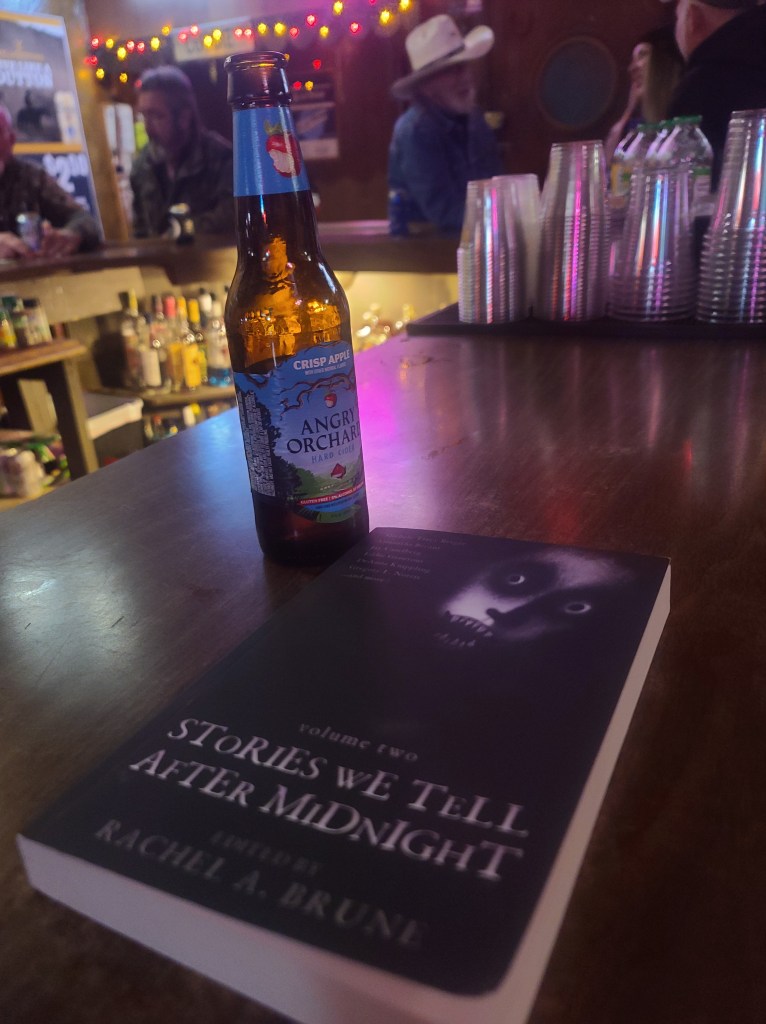
I just finished Stories We Tell After Midnight, vol. 2 edited by Rachel A. Brune. I’ll have to get volume 1 now. It’s a Crone Girls Press publication. Support indie horror publishers and get this book! Seriously, the founders are terrific people who were very welcoming to me at my first horror con. After-midnight nightclubs, nursery rhymes gone awry, dating while cannibalistic, becoming part of an all-too-real movie premiere—and more.

I had this book with me just after Christmas at my favorite dive bar in Union County, Fuzzy’s, while starting out the night with an Angry Orchard.

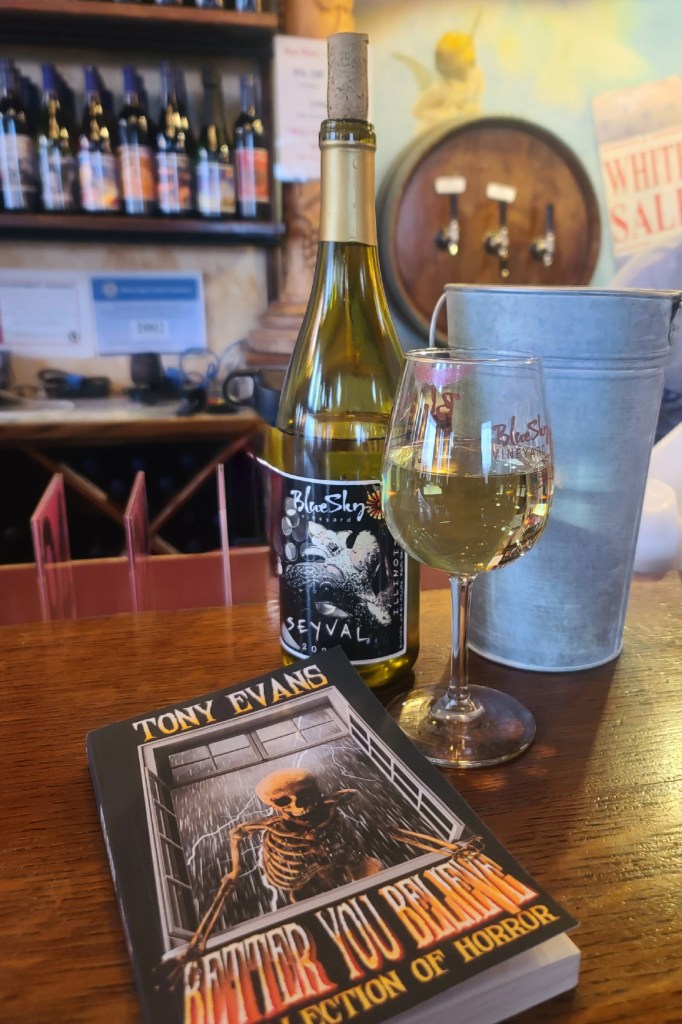
I’m a little bit fixated on the Appalachians right now. I’m always low-key into that region but driving through a corner of it on the way home from Scares That Care / AuthorCon last spring poured fuel on the Appalachian-love fire. So I’m ready to tear into Tony Evans’ Better You Believe: A Collection of Horror. Also, I plan to attend AuthorCon IV in St. Louis in October. I don’t have a book yet, but I will have a manuscript by then, I hope.

I started reading this one at Blue Sky Vineyard, where my wine of choice that day was Seyval.

Read horror! Share your #nerdinabarwithabook!

My writing comfort zone is flash fiction. It’s where I found my voice. And my first writing community. The process of writing a novel is vastly different from flash. I really love both processes. Writing this novel makes me appreciate the freedom of flash, and renews my respect for the creative process that happens there.

I approached the novel methodically. Or so I thought. I had a multi-page annotated outline to guide me. As it turns out, I hadn’t planned and plotted nearly enough! About 2/3 of the way in, I realized I had not thoroughly considered some of the most important plot points—like, why do you have TWO ghosts? Also, if you want the reader to like your main character, maybe spend some time making her likeable?

With flash, I rarely have even a smidge of an idea when I sit down to write. I use random-word prompts or picture prompts. When I start writing, I don’t know where I’m going. It’s free-falling. Sometimes it works and the words soar. Sometimes it’s more of a crash and burn. But it’s exhilarating. Even the flailing around can sometimes produce a nugget of a story.

I’m friends with and know so many writers, I feel kinda precious being all excited about draft 1, novel 1. But, having gotten this far, I can say I’ve learned tons about my own processes. For me, flash is instinct followed by thinking. Novel-writing begins with thinking and is aided by instinct.

I’m excited to dive into the second draft. I plan to have it in hand by AuthorCon St. Louis.

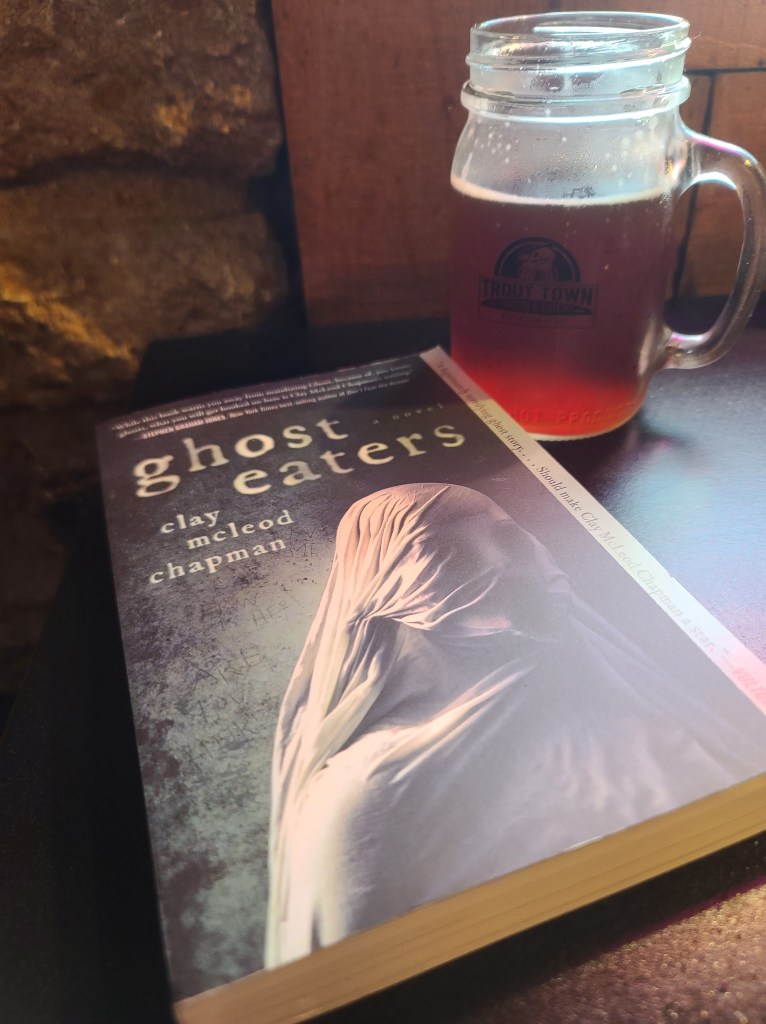
Gothic-punk. Okay, I can dig that designation for Ghost Eaters by Clay McLeod Chapman.

This story is terrifying. And pretty damn bleak.

We begin with a quartet of friends — or should I say, Silas and his fan club — trespassing in a cemetery late at night with the intention (Silas’) of stealing a corpse’s tongue for occult purposes. Should I mention the four of them are tripping? I should. Addiction and drug abuse are main features of this story — ah, but not just any drug addiction. A Ghost addiction. Fungi are having a moment…

Silas is low-key obsessed with his dead mother. Erin (the narrator of this haunted foray into horror) is obsessed with Silas.

I don’t want to give away too much of the plot, but be prepared: These ghosts are some of the scariest I’ve ever encountered in literature. You remember how Odysseus fed blood to the ghosts in the Underworld to restore their memory temporarily? Like that. Only worse.

Setting is key. Richmond, Virginia. An old city on long-established ground with a history of past cruelty and enslavement and conquer. A city where the ghosts of the trampled want to be seen and acknowledged. They are hungry ghosts. Insatiable. So, Chapman asks: What should we do with our ghosts?

I don’t think I’d have been friends with Erin. She can be pathetic, needy, spineless. But occasionally, I’ve been just like her. There is something so pure in her desperation, so relateable in her self-sabotage. Because this story, like all the best horror, is about people — about how people decide who they are, and what people will do if you let them.

And I assure you, as horrifying as these ghosts are, they aren’t the worst monster in these pages.

Since setting is so important to this book, I wanted to emphasize setting where I was when I started reading it — by having an exclusive Trout Town Steelhead Amber at Trout Town Tavern in Kalkaska, Michigan, where beer comes with a pretzel!

#nerdinabarwithabook Share yours!

I missed getting this book in the Night Worms book subscription, which would have been really cool because it would have come with fun add-ons like stickers and bookmarks. Still, I got it within the first week or two after release.

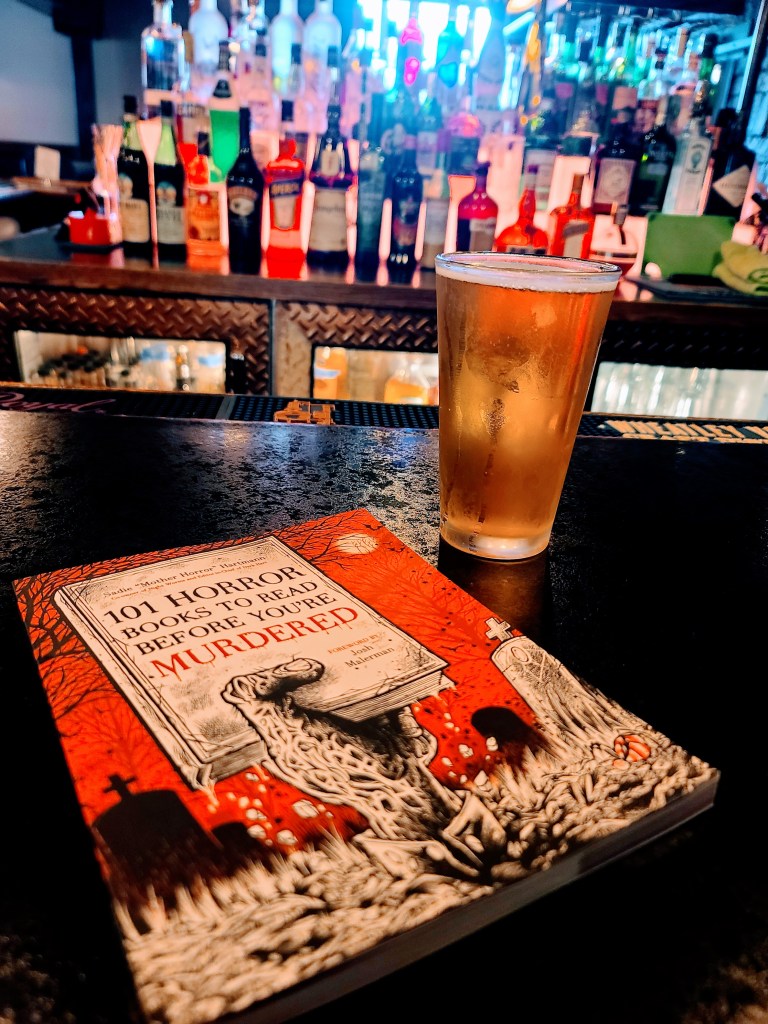
101 Horror Books To Read Before You’re Murdered by Sadie “Mother Horror” Hartmann isn’t a list of the greatest horror books of all time. It’s not a list of favorite horror books. It deliberately leaves out Stephen King (because it goes without saying, if you know modern horror, you know Stephen King!). It is a dissertation on modern horror. And it is amazing. Cue the chorus: “You’ve left off a favorite of mine!” Yeah, that’s not really a valid point here. This is a survey of the last 20 years in horror, with an eye to presenting some of the very best, and to do so over a chainsaw-sweep of sub-genres. If you read all of these books (before you are murdered) you will be an educated horror reader, a scholar of modern horror. And you’ll still be behind Sadie Hartmann, who is still reading and researching and compiling and reviewing. It’s not just the depth, though. It’s the insight. The first pages of this book give you an At a Glance reference guide which offers keen details on sub-genre, tone and style. I’ve made it sound easy. It’s clear that every book included in this guide has been thoroughly read, considered and studied. It’s already a classic.

The drink is a King Ale, a cream-style beer created in cooperation with Ravinia Brew Works and SIU Carbondale’s Saluki Brew Works. Enjoying at The Underground Public House. A couple patrons good naturedly moved over to let me get this photo.

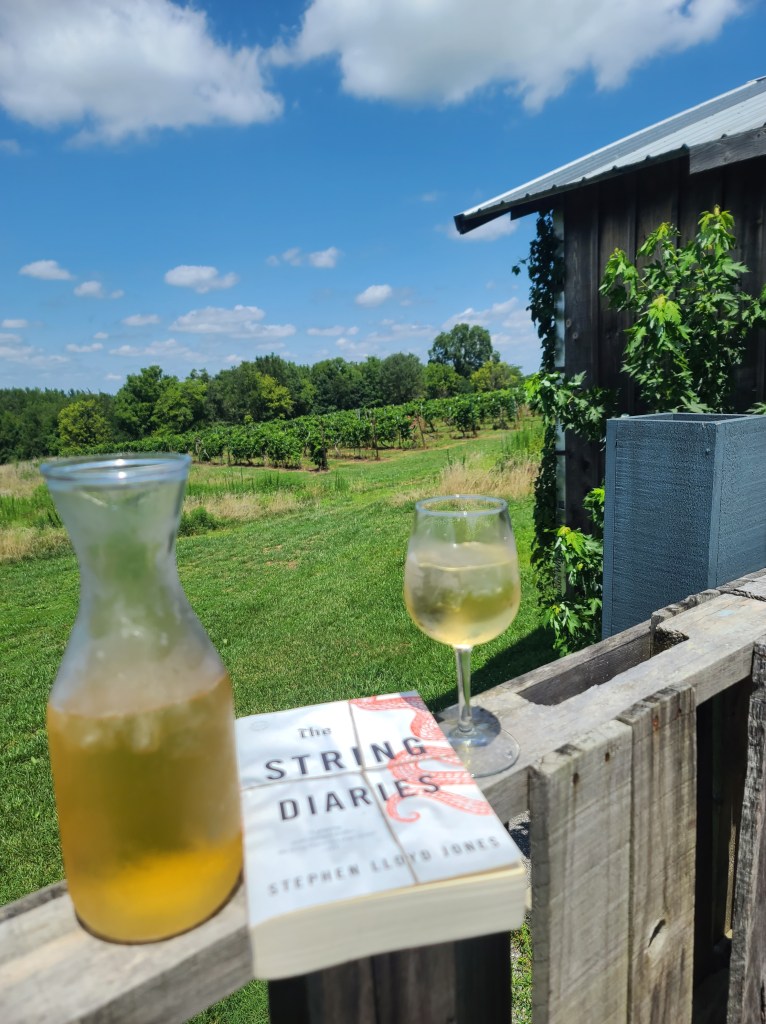
This book now—I haven’t seen a description of The String Diaries by Stephen Lloyd Jones that does it justice, and I won’t do it justice either. The plot basics: The villain, Jakob, is a man from a long-lived, aristocratic race of people gifted with, among other things, the ability to shift into any other person’s likeness. The hero—the final girl, if you will—is an altogether likeable young wife and mother whose entire life has been shadowed by the generations-long obsession of Jakob to possess a descendent of his long-ago love. That his advances aren’t wanted is not part of his consideration. The story sweeps across Europe and over a century, beginning in a frenzy and, building from there. Beautifully written, with vivid characters, mystery, secret societies, and an obvious love for scholarship.


The wine is a peach lavender sangria at the Peachbarn Winery & Café.
#nerdinabarwithabook
What are you reading? And what are you reading it with?