I hit 50,000 words yesterday, a whole two days before deadline. And for me, it is an accomplishment. I started writing a novel several years ago, and have set it down several times. I signed up for NaNoWriMo (National Novel Writing Month) for the first time as a do-or-die—finish a draft of the novel, or forget about it.

So I went for it. I did not write every day, but I did write consistently. The novel is not finished. There are probably 10 more chapters to go. My notes for the second draft are extensive. There are many fixes I’ll need to make—time inconsistencies, point of view and tense departures, plot developments that need foreshadowing, and pacing—my biggest challenge.

The end is in sight. I see a path to the end of the novel, and I’ve already got the scaffolding for the fixes. I’m all kinds of insecure about it. But also hopeful.

In addition to the formal NaNoWriMo, I was participating (trying to) in a 300-word story NaWriMo challenge. That kind of writing is so dear to me. With the novel, I’ve got a detailed outline that I update after each chapter and where I’ve made my story-fix notes; a character list; and a time-line with details that won’t necessarily make it into the story.

I write flash mostly from prompts: word prompts are my favorite, picture prompts next. Sometimes an open-ended suggested direction is helpful. But a prompt that says “Write a story about X leaving Y and encountering Z” is way too specific for me most times.

Once in a while I have an idea when I sit down to write flash, but most of the time I haven’t a clue. It’s an exploration, an adventure. I may write myself into a hole and back out again, and find the beginning of the story somewhere in the middle. Or, occasionally, the story explodes in about the second sentence, blooming into something I know I want to keep. Often, I write myself off a cliff and know there are no survivors—not a single sentence or phrase or image.

Writing every day for 30 days is a worthy aspiration. NaNoWriMo is like a detox cleanse, boot camp, sweat lodge, a period of fasting, training for a marathon—in short: a time set aside for a disciplined, rigorous attack on your goals.

I knew I wouldn’t be able to write every day when I signed up for NaNoWriMo—there are other areas of my life that require my attention. I’m sure a 30-day stretch with no misses is hard for many writers. Writing consistently, though—that’s crucial. Writing has to be part of your normal routine. If it is, then those times when you must take a break—for whatever reason—your good writing habits stay with you, and it will be easier to get back on course when you can. If you’ve never been on course… well… it gets easier and easier not to write. That’s where I was with the novel. The 30 days of focus on it has given me the determination to finish.

Thanks for hanging out with me, and for all the encouragement so many people have given me over the years. I hope to make 2024 my best year yet!

I find that a couple nights away from home with the intention of writing like crazy, works. Partly because I go there with the express intention of writing. Partly because we are paying for it, so feel the need to get the most out of it. Or maybe especially because I rarely indulge in a writing retreat. In fact, this was only my second one ever!

So. Tim and I went to Falls of Rough, Kentucky, on the Rough River Lake. I had about a dozen places picked, and ultimately we went with the cheapest. (Heh) My selection criteria were: a place to write, a place with some privacy for Tim to work on a song, a place to walk, affordable, food options.

We got most of those in Falls in Rough.

I want a place for a writing retreat that is cool—but not too cool. In other words, a place I enjoy visiting. But not somewhere that makes me want to go outside and play more than write.

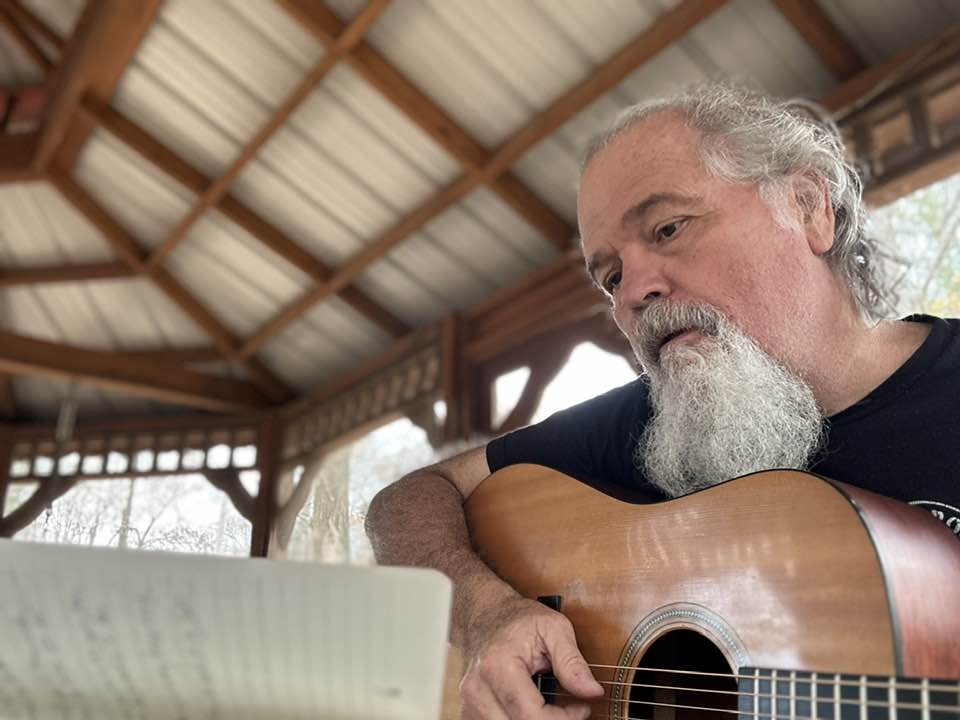
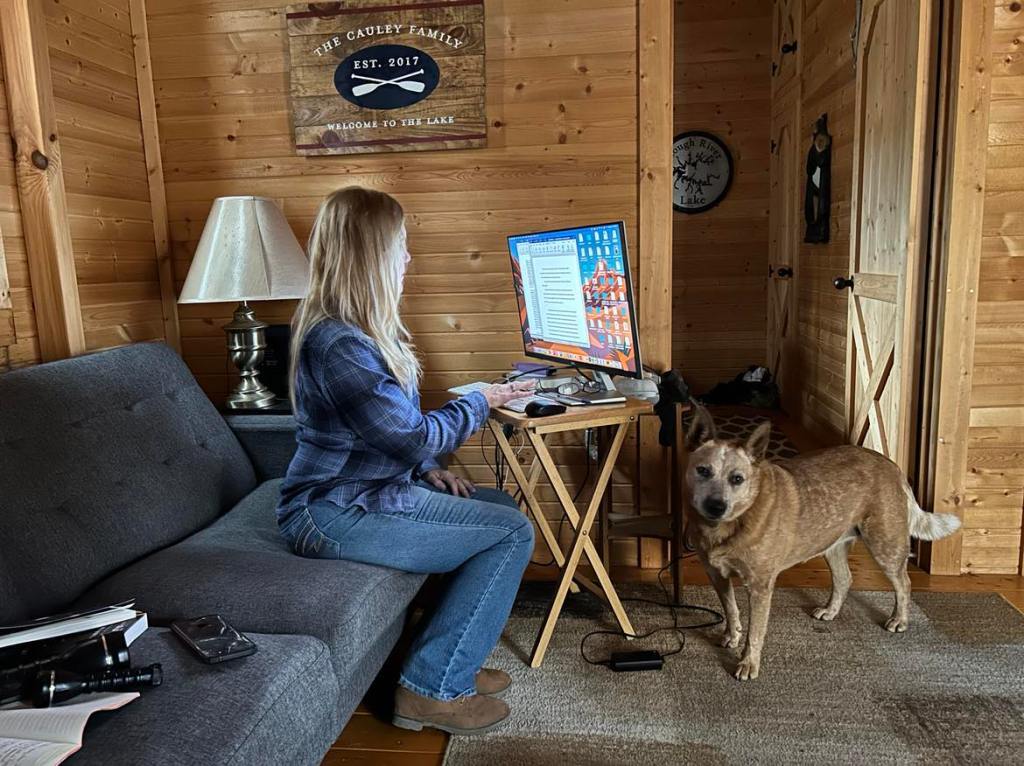
We stayed in a wee little log cabin in a lake neighborhood. I filmed a story reading in the loft—you’ll see it here later. The weather was pleasant for November, so Tim did a lot of his work in the fantastic gazebo on the property. We brought the dogs along, and they hung out on the porch, in the fenced backyard, or underfoot.

Sundance insists on looking out the front window. Banjo is content to curl up and chill out.

For my writing area? I wound up using a TV tray for a desk. Not even kidding. And I took my computer, not a laptop (my Chromebook is my laptop). So I was all cramped, not even able to use the mouse properly, hunched over and sitting on a couch in a corner of the living room.

It was great. I mean it. I got so much done!

I signed up for NaNoWriMo with what I called a new project, but which is only partly that. So what I was able to do on this writing retreat was to get all the way through what I already had, doing some small re-writes, and making notes of continuity problems, timeline issues, sucky sections, and character inconsistencies. I have a LOT of work to do on this novel. But right now the important thing is to finish the draft.

I wrote a trio of flash stories while I was there, too. One of them shall not see the light of day. The other two have some potential.

When we weren’t writing songs and stories, we explored the area. The nearest actual town is Leitchfield, and we went there, mostly, to eat. A highlight of the trip was me peering in restaurant windows that first night to try to guess if we’d be able to get a beer or other adult beverage with our meal.

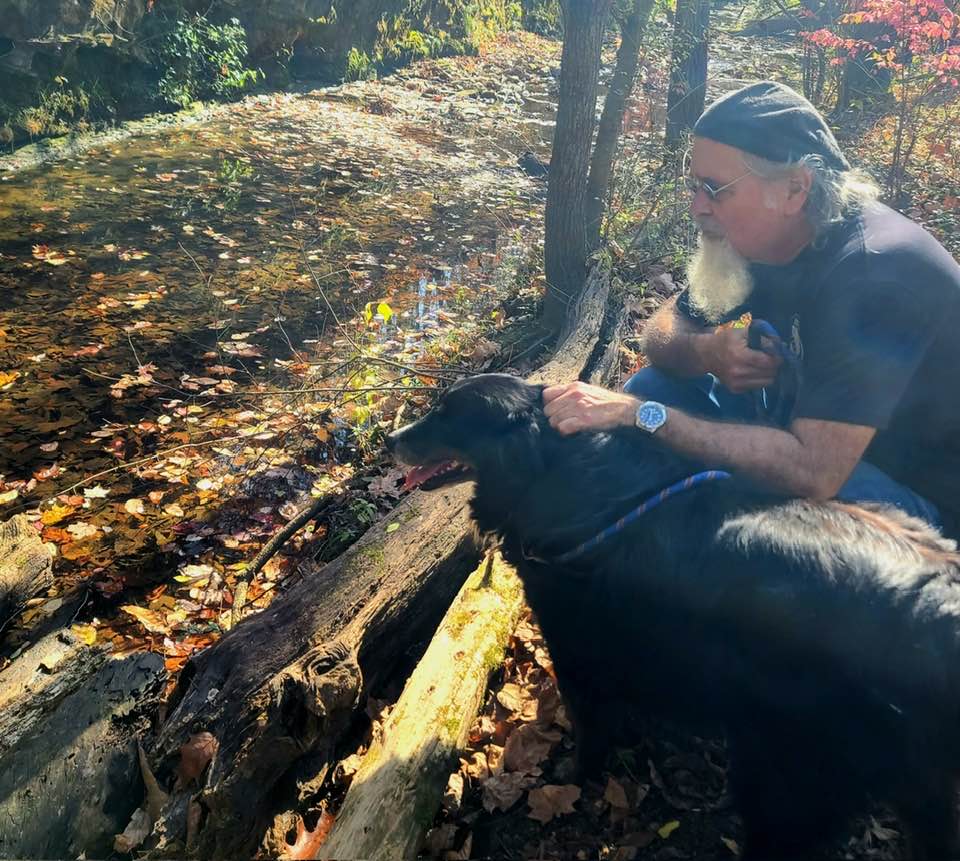
Tim and Banjo check out the fishies in the creek.

We hiked about 2 miles on the Taylor Fork Trail and area near it in Leitchfield. The park is in city limits, but the trail follows a creek and boasts some modest bluffs and rock formations, and the creek itself is pretty. There’s a spring-fed waterfall at the end of it—the dogs liked that part, and the creek crossings.

Home again now.

Got to keep that momentum going!

Tim working on a song in the gazebo.
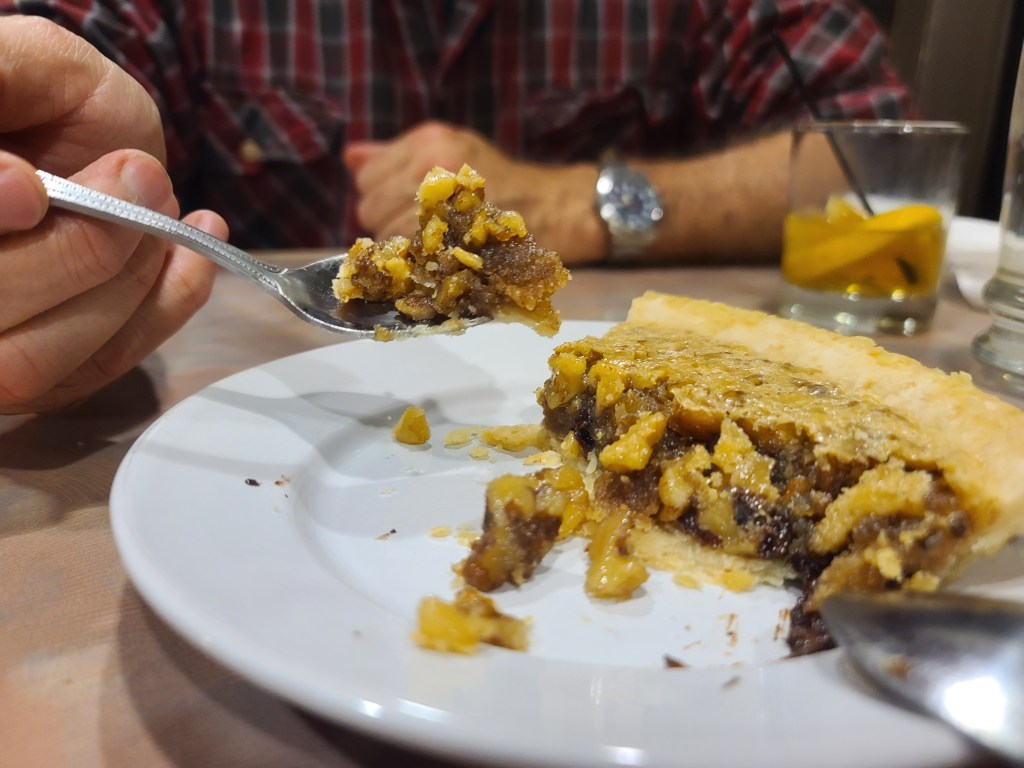
We found our place to have a drink! And we were introduced to Derby Pie, described as: like a pecan pie but also a chocolate chip cookie—it’s a Kentucky thing.