Caution: spoilers.

I hated reading The Girl Next Door by Jack Ketchum. I did not enjoy it at all. If Ketchum were not the craftsman he is, I’m not sure I could have finished it. As it is, he is an astonishing writer and he knew exactly what he was doing with this book. And it’s an important book, and, I think, one that should be read, and talked about. The back description sums up why: “Based on a true story, this shocking novel reveals the depravity of which we are all capable.”

Based on a true story. The novel is a fictional take on the true story of the horrible abuse and murder of Indiana teenager Sylvia Likens. Sylvia was abused, imprisoned, and eventually killed by Gertrude Baniszewski, whom Sylvia’s father trusted with her care. Baniszewski involved a handful of neighborhood children and her own children—Sylvia’s peers—encouraging their participation in inflicting serious injuries on Sylvia. Several adults in the neighborhood saw hints of maltreatment but none of them called authorities. The abuse escalated to shocking degrees, and eventually, Sylvia’s murder.

Knowing this book is based on a true story makes it that much more difficult to read. Because unlike two similar difficult-to-read-but-masterful books—American Psycho by Bret Easton Ellis and Not Forever, But For Now by Chuck Palahniuk—this is not a satire. It’s an exposé.

Ketchum’s book takes a hard look at the questions: How could this happen? Why did it happen? By his own admission, he flinched. In the book, main character David is redeemable, and Meg (the fictional version of Sylvia) has some small comfort at the end—she is not alone.

The depravity of which we are all capable. Several of the villains in this book are kids. The youngest is 10, the others in their early teens. However, their youth does not render them inculpable.

Ketchum makes David, neighbor boy and family friend, our protagonist. In doing so, he takes away our easy out—letting the kids off the hook and blaming only Ruth. David knows his limited participation is wrong, and he understands that his passivity is tantamount to betrayal. He approaches his parents when the abuse begins to escalate, but does such a poor job of explaining what is happening—and his parents such a lousy job of listening to him—that it amounts to having done nothing.

We are not to walk away from this book thinking, aw, he’s just a kid. We are to see ourselves as David. We are challenged to confront our own hesitation to take a stand when it’s difficult to do so, when we feel (or are) powerless, and when we might lose standing in our peer group—including in our careers or at university, for example.

Ketchum’s Ruth, the fictional Baniszewski, has had a rough and unfair life, and she has lost her ability to empathize. She convinces herself, at least in the beginning, that she’s helping Meg avoid some of the perils to which she herself fell prey. She is as hateful as any character I’ve ever encountered in literature.

While we might be very unlike Ruth, still: How many times have we justified being unkind, callous, or thoughtless because we perceive someone else’s suffering as less than our own?

Have we gloried in someone’s misfortune because we think they deserve it?

Have we labeled a group of people—those who vote differently than we do, for example, or those who choose different lifestyles—and by labeling them, rendered them less than human, a group we can denigrate and even persecute?

An important point to bring away from this book: Don’t assume you can never be the monster.

“We had permission.” A key factor both in the fictional and the true stories: The neighborhood children participated in torturing a girl because they were told they could. They had permission. An authority figure told them it was their right. They felt justified. They felt righteous. They might as well have confidently stated that they were “on the right side of history.”

So here’s another point: We can’t be like children and assume that authority is always right. “I was just following orders” didn’t keep war criminals from punishment. “They told me it was the right thing to do” doesn’t absolve us from asking questions. We have an obligation to defy authority when authority acts to persecute, vilify, and dehumanize. And no, it’s not just those people over there who need this lesson. It’s us, too. Whoever your “us” includes.

I needed some comfort while I was reading, some support. I posted about this reading experience in the Facebook group Books of Horror—an excellent community of well-read fans of the horror genre. The responses were thoughtful and considered. Other readers talked about feeling complicit in the atrocity just by continuing to read about it. They talked about honoring the memory of Sylvia Likens by reading the fictional account of what happened to her—giving her a voice and seeing her. A few people didn’t finish the book. A few people did and were still shaken. Very few were untouched by it.

This isn’t a book I’m going to be giving away at Christmas. It’s a difficult read. In writing this book, Jack Ketchum reminds us: We must confront the potential monsters we carry inside ourselves.

So…. I usually do NanoWriMo Flash with Nancy Stohlman. I will be checking in there. I will also be joining my mentor-in-flashing, Meg Pokrass, with her 300 words or less stories.

But… as of not even five minutes ago, I signed up for the novel version. Because it’s about damn time.

So, real quick. I read The Whisper Man by Alex North at The W in Du Quoin, a place I am pre-disposed to like because it is a horse facility. No horses in sight (except for a chestnut mare in a disagreement with a dog, glimpsed briefly in a back pasture), but still, the place gots good vibes. I was fireside with a flight of fall cocktails. Pictured is a cider and brandy combo.

Truly chilling book. A serial killer with a little tinge of supernatural. And about how crime and trauma affects people in our society, calling to some in a gruesome way. Also, families and love and trust.

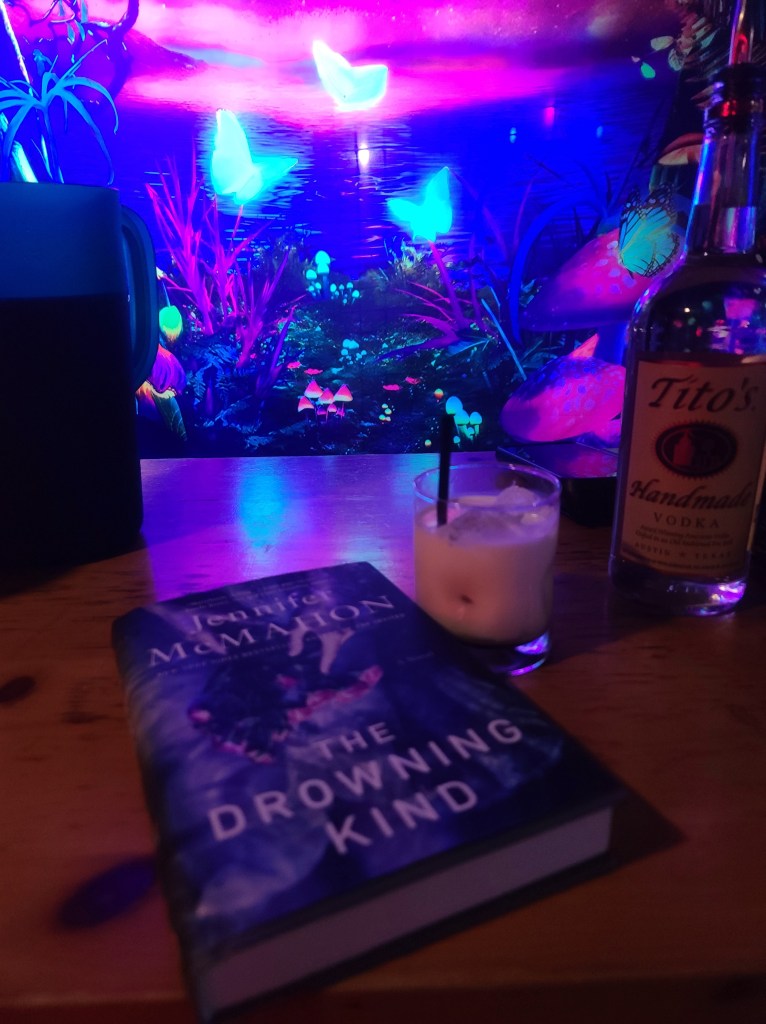
I tore through The Drowning Kind by Jennifer McMahon. Characters in McMahon stories are so damn believeable, relateable, even—even when they do strange things. Like become obsessed with a cursed spring that grants wishes and cures ailments. This is a story about sisters, generational inheritance, curses, blessings, and the importance of being very, very careful what you wish for.

It was right before Halloween. Tim had a basement gig—but it was a cool basement, and only a little bit haunted. That’s a Skrewball Russian sitting between my book and the Tito’s. Cool backdrop, eh?

As always, read more, and read more horror. And now I need to get my NanoWriMo set up. See ya’ round!

#nerdinabarwithabook

A horror trope I always love is when a person innocently or carelessly breaks a rule they didn’t know about or thought didn’t exist. It’s scariest when they realize, after it’s too late, what has happened, and then try to save themselves, right the wrong, or appease the monster.

This story, “A Fine Trade,” from a trio of my stories that appeared in Parhelion Literary Magazine, Halloween issue 2022, explores that trope—though the tone is more dark humor than horror.

The reading is on Devil’s Kitchen Lake in Southern Illinois, the Goth lake of the area. It’s a flooded valley, and a tree graveyard. Other footage is from the Seven Bridges Natural Area in Rapid River, Michigan.
And here’s what’s really cool—I didn’t throw my phone overboard this time!
Enjoy. Read horror. Read flash fiction too.

I missed getting this book in the Night Worms book subscription, which would have been really cool because it would have come with fun add-ons like stickers and bookmarks. Still, I got it within the first week or two after release.

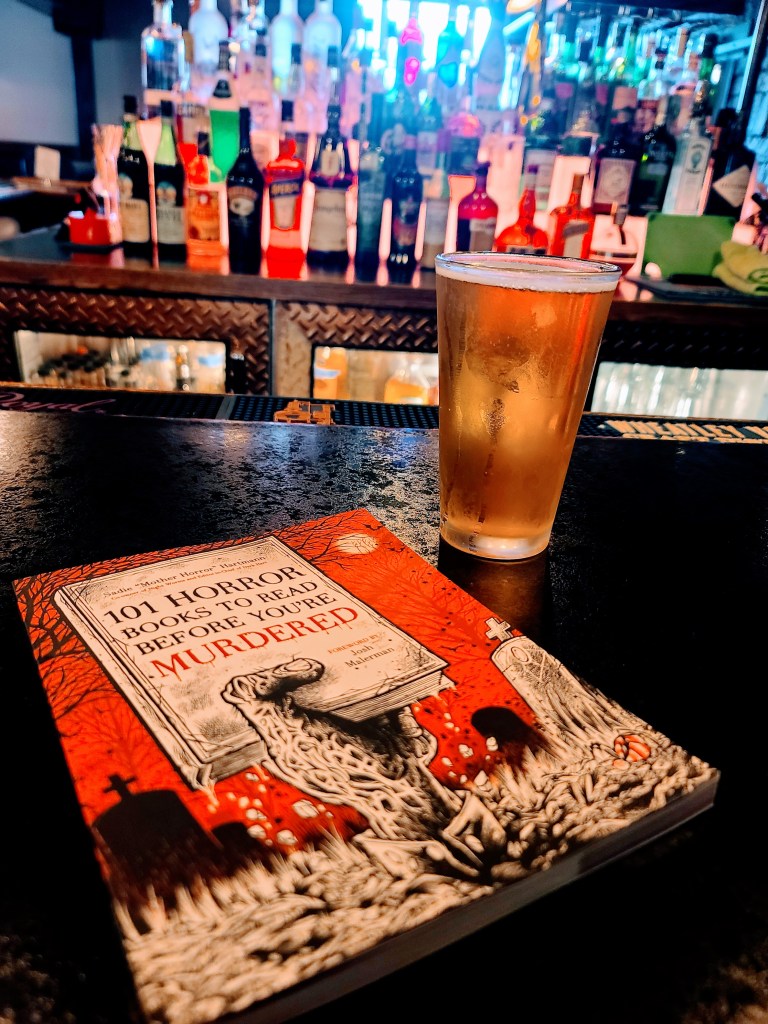
101 Horror Books To Read Before You’re Murdered by Sadie “Mother Horror” Hartmann isn’t a list of the greatest horror books of all time. It’s not a list of favorite horror books. It deliberately leaves out Stephen King (because it goes without saying, if you know modern horror, you know Stephen King!). It is a dissertation on modern horror. And it is amazing. Cue the chorus: “You’ve left off a favorite of mine!” Yeah, that’s not really a valid point here. This is a survey of the last 20 years in horror, with an eye to presenting some of the very best, and to do so over a chainsaw-sweep of sub-genres. If you read all of these books (before you are murdered) you will be an educated horror reader, a scholar of modern horror. And you’ll still be behind Sadie Hartmann, who is still reading and researching and compiling and reviewing. It’s not just the depth, though. It’s the insight. The first pages of this book give you an At a Glance reference guide which offers keen details on sub-genre, tone and style. I’ve made it sound easy. It’s clear that every book included in this guide has been thoroughly read, considered and studied. It’s already a classic.

The drink is a King Ale, a cream-style beer created in cooperation with Ravinia Brew Works and SIU Carbondale’s Saluki Brew Works. Enjoying at The Underground Public House. A couple patrons good naturedly moved over to let me get this photo.

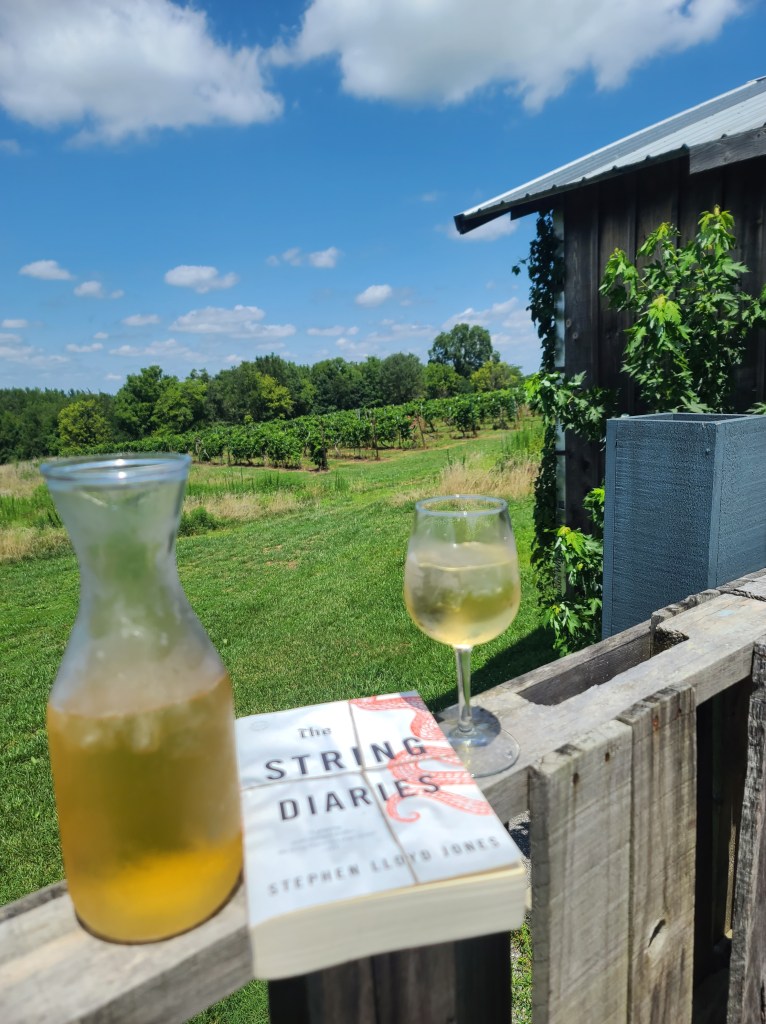
This book now—I haven’t seen a description of The String Diaries by Stephen Lloyd Jones that does it justice, and I won’t do it justice either. The plot basics: The villain, Jakob, is a man from a long-lived, aristocratic race of people gifted with, among other things, the ability to shift into any other person’s likeness. The hero—the final girl, if you will—is an altogether likeable young wife and mother whose entire life has been shadowed by the generations-long obsession of Jakob to possess a descendent of his long-ago love. That his advances aren’t wanted is not part of his consideration. The story sweeps across Europe and over a century, beginning in a frenzy and, building from there. Beautifully written, with vivid characters, mystery, secret societies, and an obvious love for scholarship.


The wine is a peach lavender sangria at the Peachbarn Winery & Café.
#nerdinabarwithabook
What are you reading? And what are you reading it with?

I like a marina bar. Water. Piers and docks. But also, there’s often a sense of community. A vacation vibe even in winter.

Pyramid Acres Marina Bar features a Bloody Mary bar. Did I take advantage of it? No, readers, I did not. I got an attack of shyness and didn’t want to inquire how one approached the bar. I mean, you get the vodka part of it at the bar, or…? So I had vodka and soda instead. I think there’s a name for that drink, but I didn’t order it by any cool name, just by ingredients.

The book is Revenant, by the late Melanie Tem. Revenant is a ghost town. It’s a last chance place for the dead and those who mourn them to make peace with death. It’s a very dark book, and I read a lot of dark books. It’s also hopeful, in the way the sun behind storm clouds is hopeful—the kind of gold rim that makes the dark more ominous but also reveals that the sun is still there.

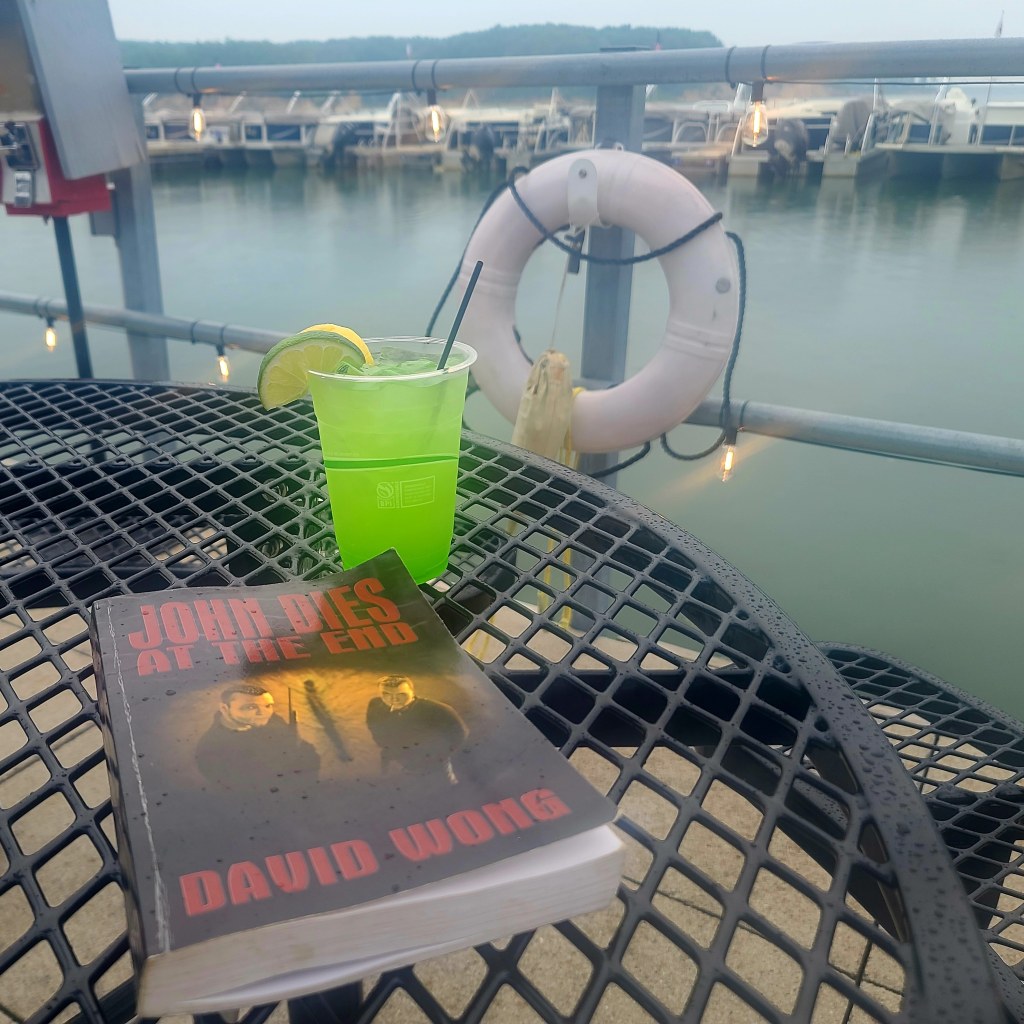
I brought John Dies at the End by David Wong, the identity assumed by Jason Pargin for that book and the serial story that preceded it, to Nessie’s the marina bar at Lithia Springs on Lake Shelbyville. Turns out Jason Pargin is an alum of Southern Illinois University Carbondale, where I have my day job. My signed copy is from Confluence Books, our indie used (and some new) book store.

That book is a wild ride. Sci-fi /cosmic horror, humor black as night, and truly likeable characters. The drink is a Midori-based spring-themed house cocktail. It was as yummy as it looks.

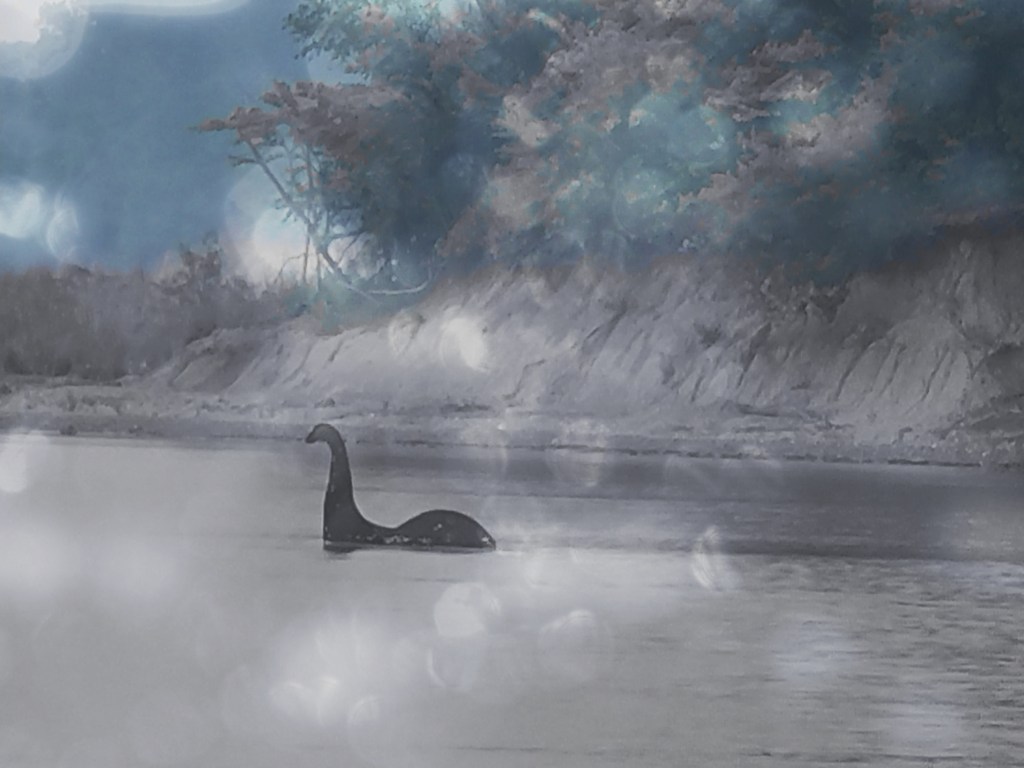
A cool thing about Nessie’s—a lake monster hangs out there. Not really, I wish though. It’s a marina sign. Still fun though.

Keep reading!

#nerdinabarwithabook

What I’m Reading. And Where I’m Reading It.

Since my husband is a gigging singer-songwriter, I get to bars and wineries and micro-brews a whole lot. And I’m the nerd who brings a book for the occasion. Here’s what I’ve started reading this new year.

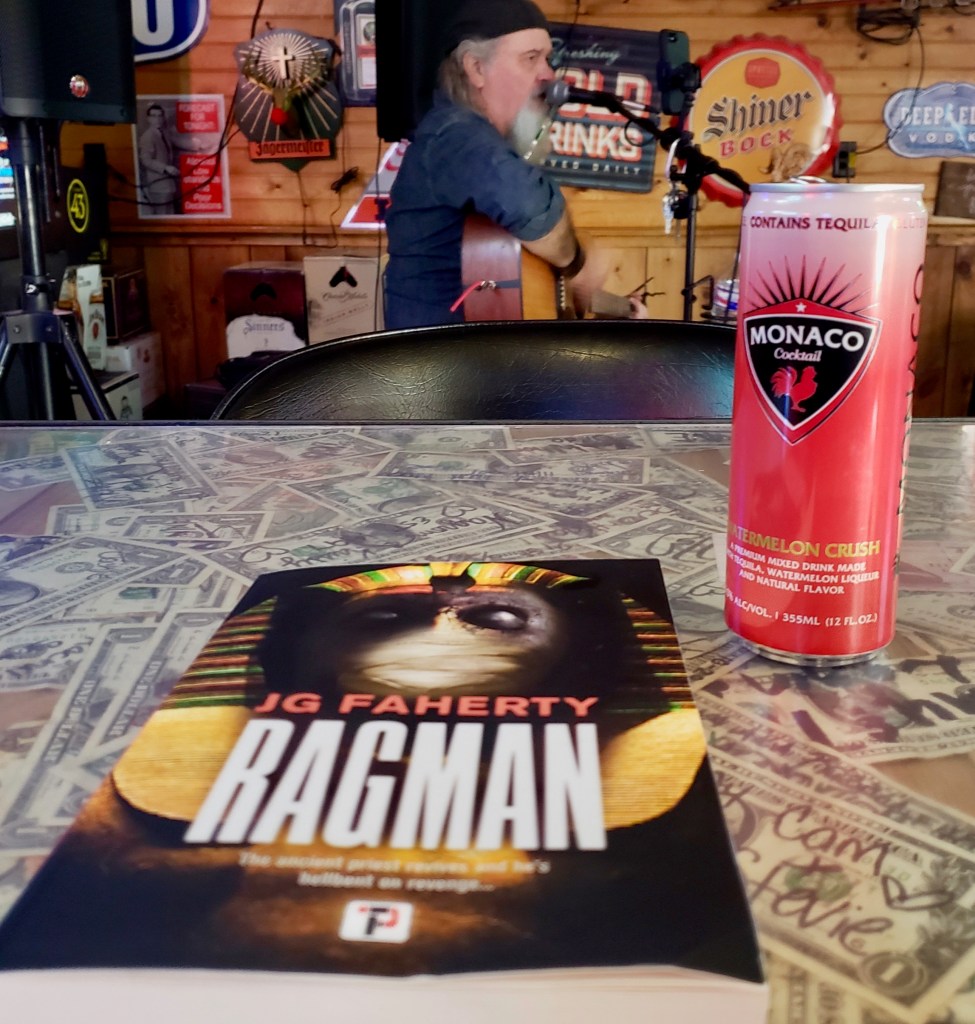
Reading now: Ragman by JG Faherty. First off, what a great title for mummy horror! At The Liquor Hut, in McLeansboro.


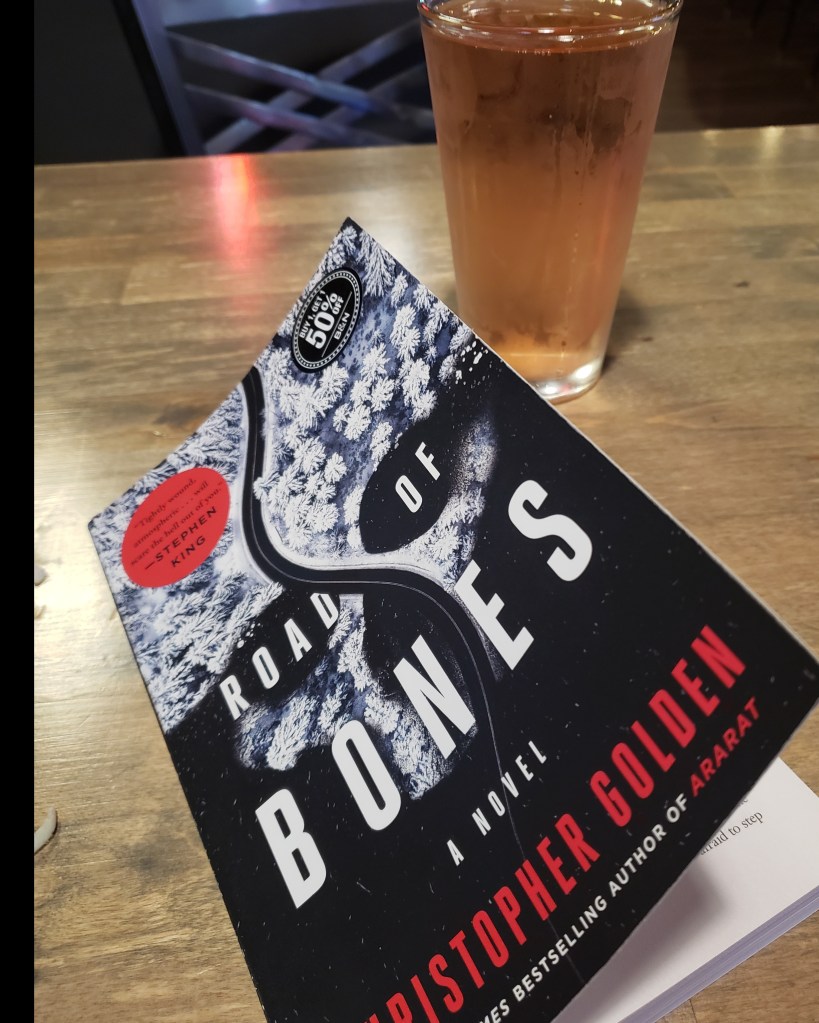
And earlier this year, Road of Bones by Christopher Golden at 618 Taphouse drinking a hard cider brewed in St. Louis.

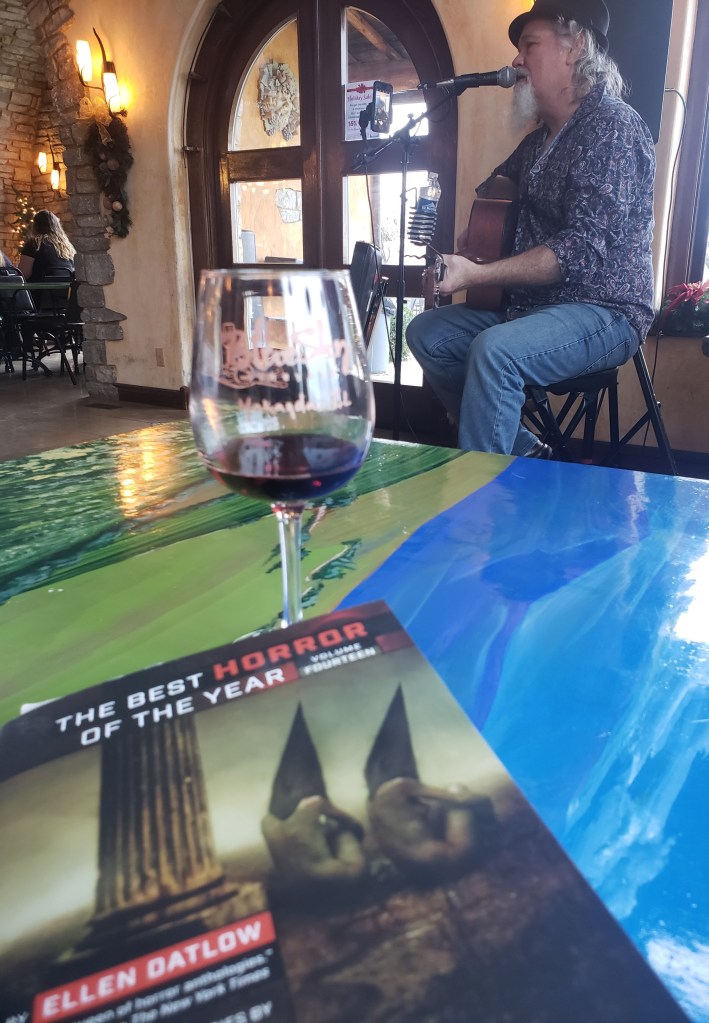
And the first book of the year was The Best Horror of the Year, vol. 14 edited by Ellen Datlow. Blue Sky Vineyard, Cabernet Franc.

I also read The Final Girl Support Group by Grady Hendrix. Barnes & Noble is hosting Grady Hendrix in a Zoom event tomorrow. Sign up. It’s free.