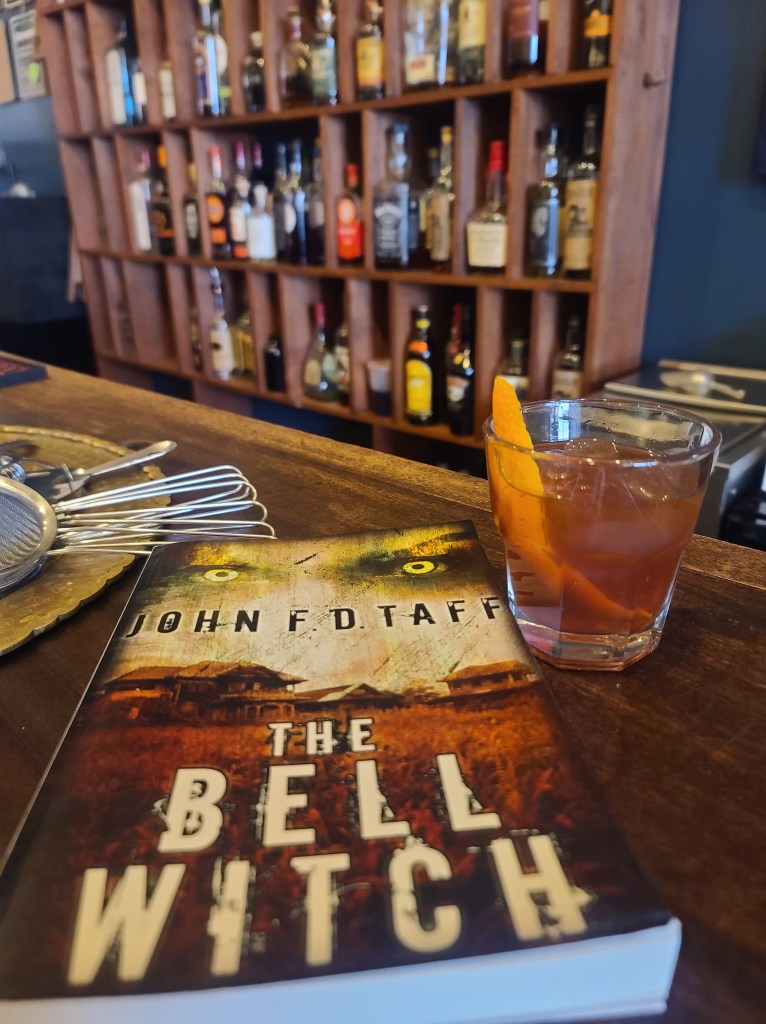
When the Moon Hits Your Eye first appeared in Parhelion Literary Review’s Halloween issue as one of three of my stories included in that issue.

The story was inspired by a photo of Lon Chaney Jr. in costume for The Wolfman, sitting patiently while a stylist fixed his hair.

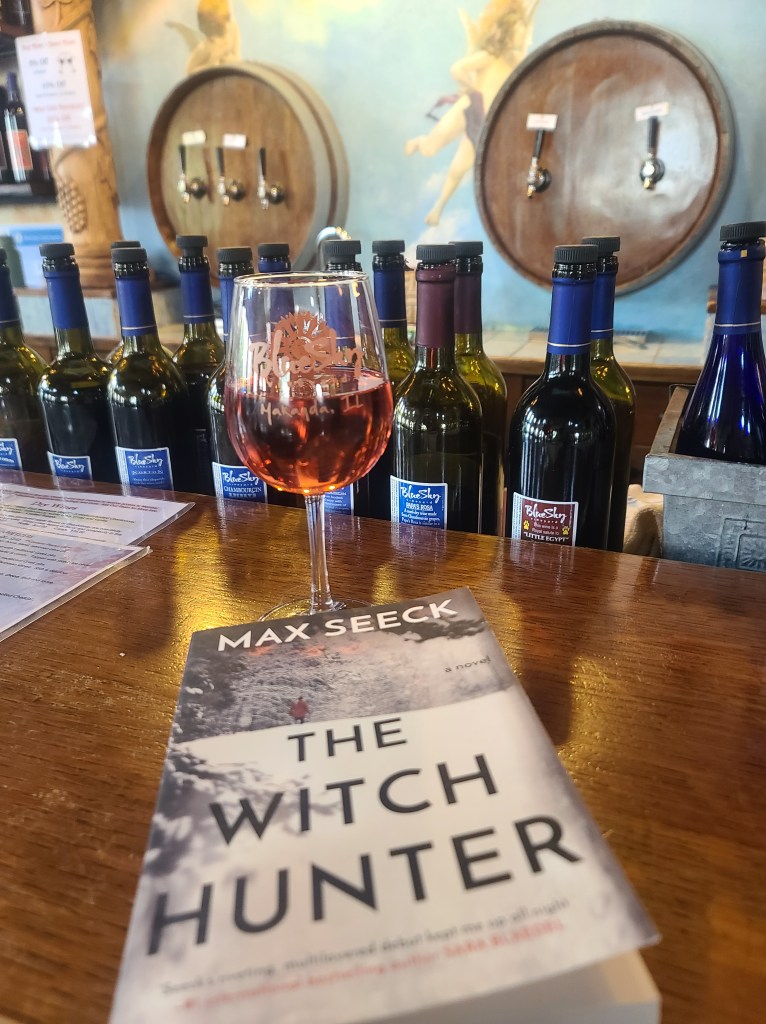
The reading is at Walker’s Bluff, a winery in the area. I walked across the grounds to an outdoor area that is rarely used now that they’ve moved into the second and pending third phase of development. It’s a beautiful area near a manmade lake, dotted with clusters of live edge tables and chairs that put me in mind of sitting amidst mushrooms. There’s a small building there that housed the wine bar that I think may be empty now.

I used to live near the area, on Hill Road, at Broken Branch, when my son was small. I had Merlin then, and a Curly Peruvian Paso for Dylan named Crocodile. Odin the German Shepherd rounded out our household, along with the occasional volunteer cat. The house was nothing to speak of, but we had 15 fenced acres surrounding it. I could hear the horses grazing outside my bedroom window at night. We were brokity-broke-broke, but those were good times.

A teenaged girl used to ride her Haflinger horse past the house. If I was home and available, I or Dylan and I would ride with her. I showed her the trails along the Big Muddy River and the field roads I had permission to ride, and she showed me a beautiful field with rolling hills. One day she said to me: “This is the last time we’ll be able to ride here. My aunt is going to turn this into a winery.”

We have an official wine region here, the Shawnee Hills AVA. So I knew it was possible. But I had no idea the scope or the vision! Walker’s Bluff is now a winery with a tasting room and outdoor patio area. And a wine cave. And an upscale restaurant. And, coming soon, a casino-resort. My favorite area, though, is still that first outdoor area.

Other B-roll in the reading is from a trip a year ago to Albuquerque, New Mexico to spend Christmas with my stepson, stationed at a nearby U.S. Air Force base. We took a day trip to Santa Fe, where we strolled around the art district and checked out the Meow Wolf exhibit (which, by the way, I highly recommend).

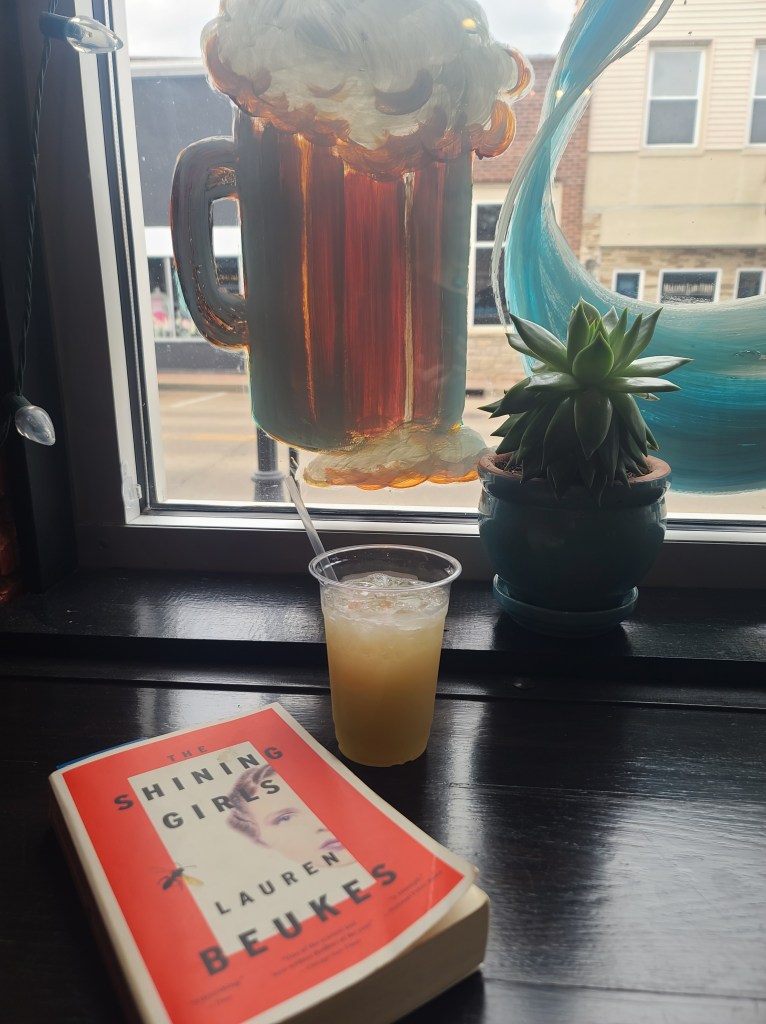
The Shining Girls by Lauren Beukes is a re-read for me. As is often the case with a really well written book, it’s even better the second time. The ending hit me harder, the inherent heartbreak in it.

It’s a time-travel serial killer story—so, a sci-fi psychological thriller. I don’t always love time travel, but Beukes makes it work seamlessly, and, in the world of the novel, believably. Plot basics, spoiler alert — in Depression-era Chicago, con man loser Harper Curtis discovers, literally, a key to time travel. He is compelled to seek out and kill “shining girls.” The anachronistic clues he leaves with each body are enough to put one of his planned victims, journalism student Kirby Mazrachi, hot on his trail.

I’m a bit behind in posting these—this is from May 5. I was at The Brick Bistro & Brew in Festus, Missouri, where Tim had one of the first outdoor gigs of the year. Considering the date, I had a margarita.

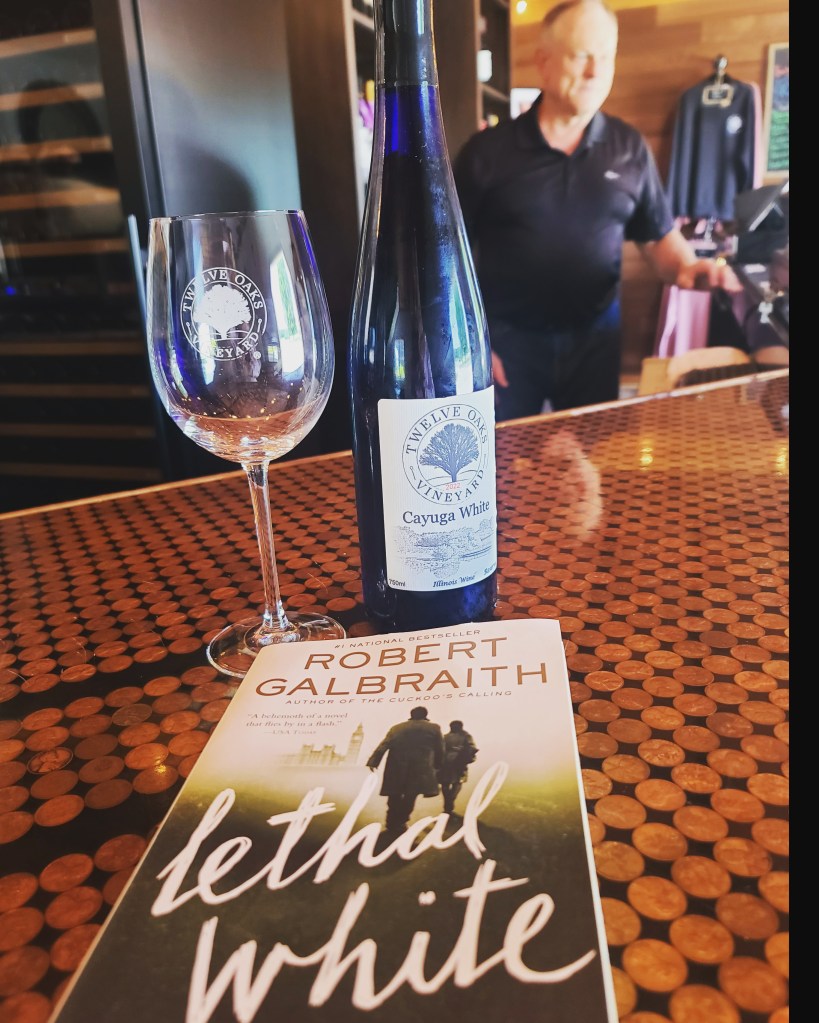
At Twelve Oaks Vineyard, I had a flight because I couldn’t decide. Since I was reading Lethal White by Robert Galbraith / J.K. Rowling, I snapped a shot with a bottle of their Cayuga White. I love Cormoran Strike and Robin Ellacott, and Galbraith tells a good story. I’m usually in suspense all the way to the end. I’m becoming impatient with the love interest side of things—either get them together or have them address why it won’t work (if it wouldn’t work). Still, I’m invested in the characters so I’ll ride out the series.

Share your own #nerdinabarwithabook if you like!

#nerdinabarwithabook

I like a marina bar. Water. Piers and docks. But also, there’s often a sense of community. A vacation vibe even in winter.

Pyramid Acres Marina Bar features a Bloody Mary bar. Did I take advantage of it? No, readers, I did not. I got an attack of shyness and didn’t want to inquire how one approached the bar. I mean, you get the vodka part of it at the bar, or…? So I had vodka and soda instead. I think there’s a name for that drink, but I didn’t order it by any cool name, just by ingredients.

The book is Revenant, by the late Melanie Tem. Revenant is a ghost town. It’s a last chance place for the dead and those who mourn them to make peace with death. It’s a very dark book, and I read a lot of dark books. It’s also hopeful, in the way the sun behind storm clouds is hopeful—the kind of gold rim that makes the dark more ominous but also reveals that the sun is still there.

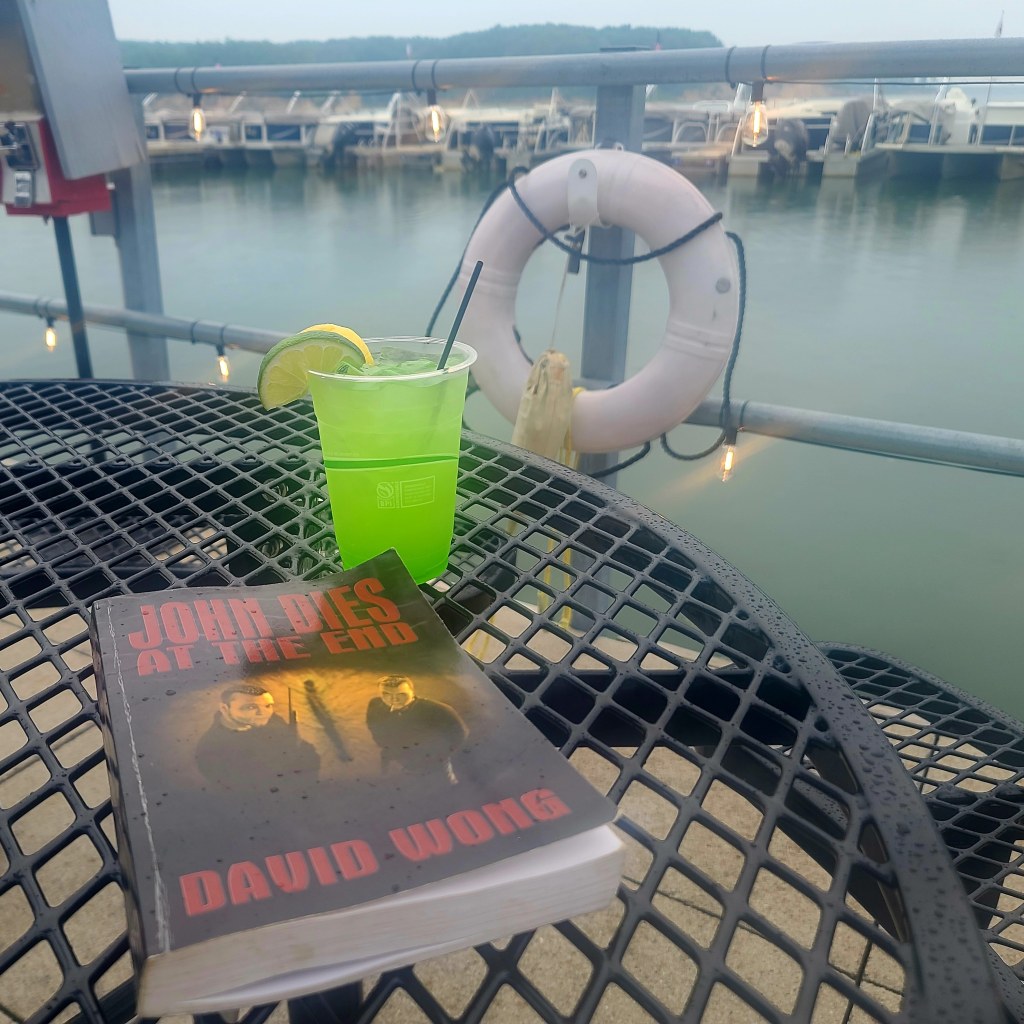
I brought John Dies at the End by David Wong, the identity assumed by Jason Pargin for that book and the serial story that preceded it, to Nessie’s the marina bar at Lithia Springs on Lake Shelbyville. Turns out Jason Pargin is an alum of Southern Illinois University Carbondale, where I have my day job. My signed copy is from Confluence Books, our indie used (and some new) book store.

That book is a wild ride. Sci-fi /cosmic horror, humor black as night, and truly likeable characters. The drink is a Midori-based spring-themed house cocktail. It was as yummy as it looks.

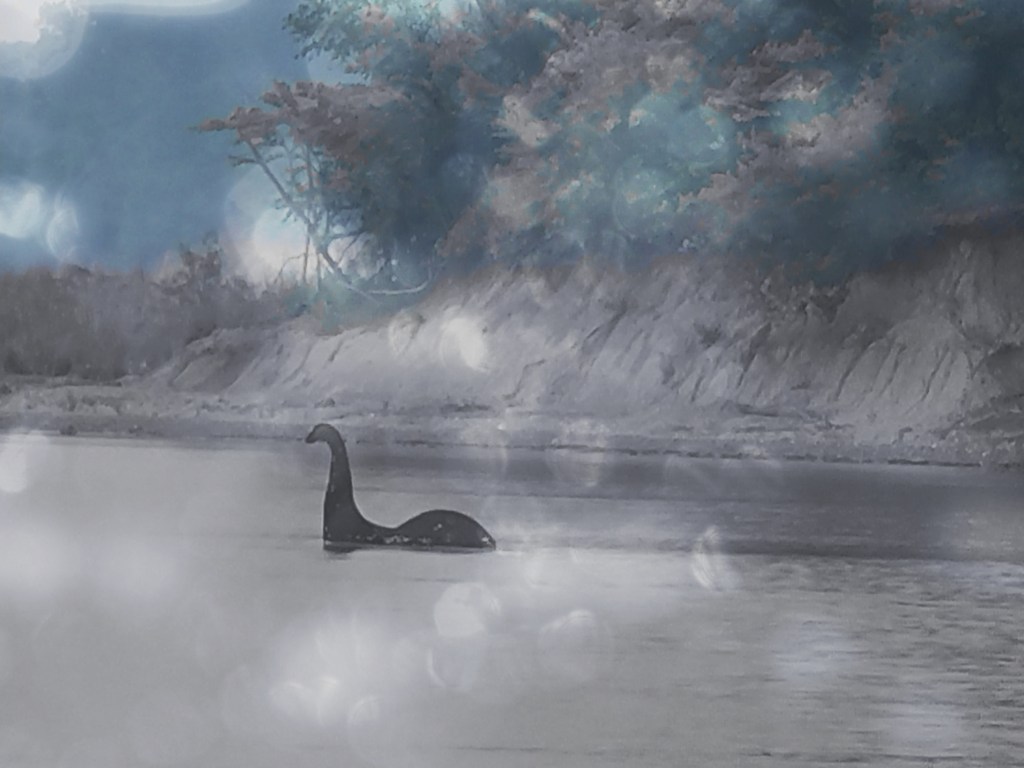
A cool thing about Nessie’s—a lake monster hangs out there. Not really, I wish though. It’s a marina sign. Still fun though.

Keep reading!

#nerdinabarwithabook

Every place I’ve lived in Southern Illinois I’ve always been within earshot of a distant train—or better yet, coyotes.
Tim (my husband, singer-songwriter Tim Crosby) got me a couple trail cams for my birthday. Best. Present. Ever.

Nocturnal Trail Cam in May

Maybe I shouldn’t be so excited about chicken-eating predators so near our free-range chickens. But I am. A bobcat!!
When I lived at Broken Branch with Merlin and Crocodile and Odin (horse, horse, dog, respectively) and my son was little, the barn door had blown down—and that was most of the wall. Before my then-landlord set it back on track, a bobcat moved into the barn. I never saw her, but neighbors did. I heard her one night—an unearthly screech! The neighbor suggested I call the IDNR, maybe have her removed. “No way,” I said. “I have no ‘possums, no raccoons, nothing in the barn.” She wouldn’t hurt the horses. So we had a nice relationship for a while.
Underhill, though, our home now is a berm home across from the Shawnee National Forest. A creek circles most of the back pasture where eventually we’ll have horses again. We’ve got lots of neighbors we never see. Enjoy!

I’m still in the afterglow of AuthorCon / Scares That Care! March 31-April 2 in Williamsburg, Virginia—my first horror writing conference. I met so many cool people, attended some readings that made me grateful for this new golden age of horror, learned a ton at various panels, lost my glasses, had my glasses returned to me, and bought a ton of books! By many people’s standards, my haul was modest, but for me, more than a dozen books at anything other than a library sale is a lot of books!

I can’t drive through mountains without stopping. So I built in time for some hiking. Not enough time! But better than no time. I drove the Newfound Gap through the Smokies, and part of the Blue Ridge Parkway.

Also, I visited my very good friend Pam Schmalenberger in Raleigh! We stayed up until 5 a.m. and could easily have kept going with the catching up another all-day and all-night.  Pam is a reader, too. She and I and fellow Hogwarts supporter Ashley Wiehle-Framm waited in line, wands in hand, for the release of the last of the Harry Potter books, then slunk off home to begin a reading marathon. Pam finished first, as I recall.

But the trip also gave me a chance for some fun Nerd in a Bar with a Book places to read! #nerdinabarwithabook

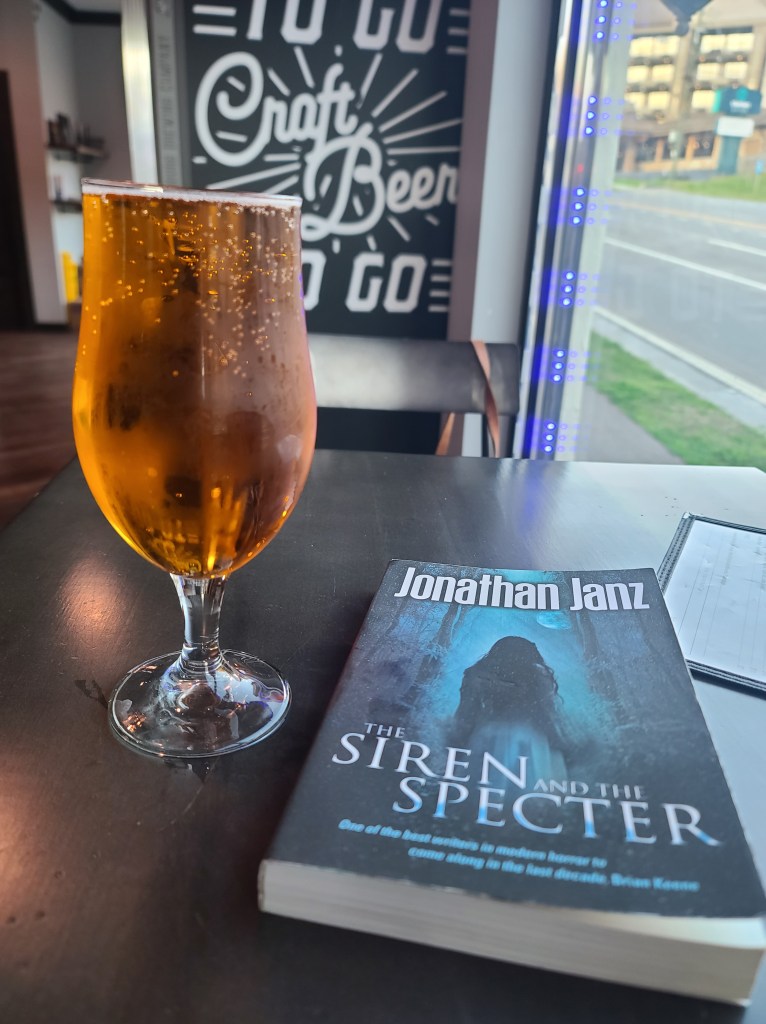
The Siren and the Specter by Jonathan Janz is a high-octane story that features several kinds of hauntings—a house, a river, a man’s past. I picked it for the trip because it’s set right down there in Virginia in AuthorCon territory.

I read it at Gatlinburg Brewing Company (where I should have bought one of their cool shirts or something!) and paired it with a guest tap from the Gypsy Circus Cider Company, the Lotus Dream Orange Blossom Cider.

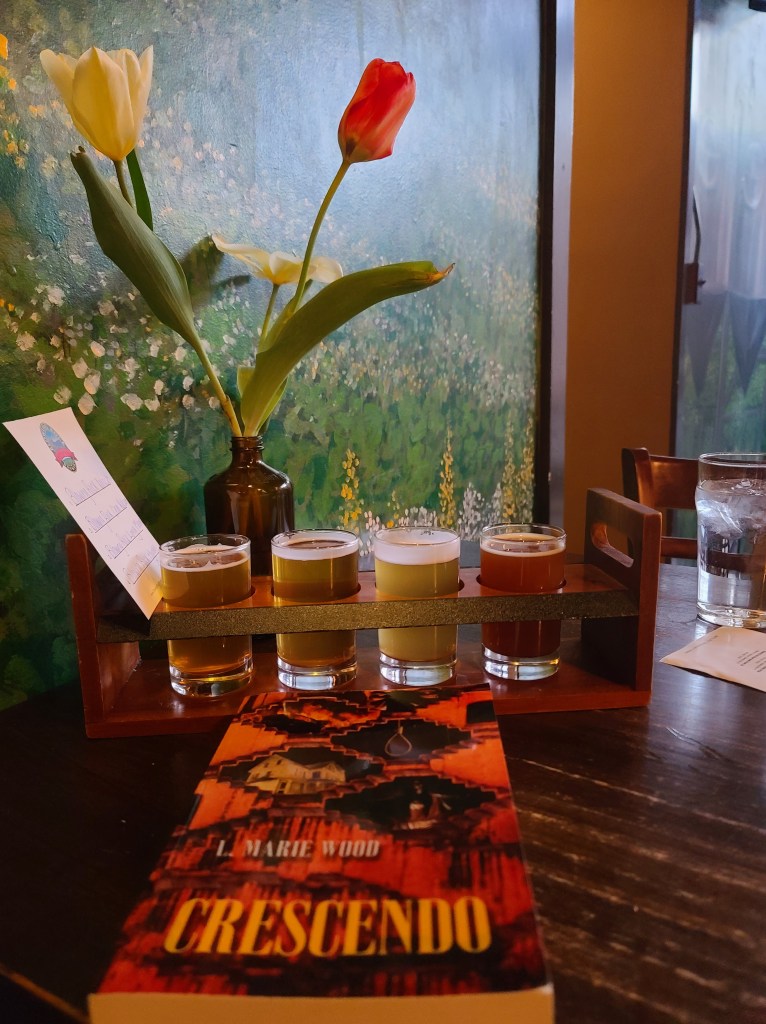
I picked up Crescendo by L. Marie Wood at AuthorCon. So cool to get to meet Lisa! Seriously, everyone was gracious at AuthorCon, kind, and encouraging—it was a pleasure! This is another haunted house, haunted man, haunted family story, but very different from the Janz book. This one takes a deep dive into the role of a person’s mental state in a haunting, and how brushes with malevolence can take a toll on a person’s sanity.

This one was at Blowing Rock Brewing Company, and let me just say I’ll be back to Blowing Rock some day. I ordered a flight. We have here: Kölsch, Chai Kölsch, Long Moon wheat beer, Honey Amber—all of them Blowing Rock beers. I bought some Kölsch to go.

Happy reading, y’all!

I took the Blue Ridge Parkway from Blowing Rock to almost Asheville on my way home from my first AuthorCon / Scares That Care event. I stopped as often as I could to take in the view, or to hike a short ways, half a mile or so, on some of the trails. I stopped here at the Chenoa View to do a reading of my story Harbinger, which appears in Root, Branch, Tree: 2020 National Flash Fiction Day Anthology.

After I finished reading, it occurred to me I might have read that one at a boat ramp, since a boat ramp is not only part of the setting, but also where I got the idea for the story.

Once upon a time, I lived in a duplex not quite a mile from Cedar Lake in Southern Illinois. Before I had a kayak, I’d walk my dog down to the lake, or sometimes, drive there instead of going straight home after work. It was a chaotic time in my life (when isn’t it though) and sometimes I needed a minute to sit by the water before going home. The idea for this particular story started when I drove to the boat ramp during a nighttime thunderstorm. I sat there in my truck, watching the lightning flash over the lake and listening to the dark-moving clouds rumble, and thought about what it’s like to lose someone you’ve already lost.

In this story, I mean for the end to be ambiguous. Why does GraceAnn make her deal, and with whom? Does she want her sister to go soon so she won’t suffer? Or is GraceAnn bitter? Does she really wish it was her instead?

I hope you enjoy the story!  

I was asked to write a craft essay for the forthcoming edition of Best Microfiction — a first for me, and a huge honor. It got me thinking about how I started writing flash fiction, and why I love the genre so much.

To give a simple answer: Meg Pokrass got me started writing flash fiction. Meg, and the community she created.

If you haven’t already discovered Meg Pokrass, remedy that immediately. Any of her books will do, they will all leave you gasping for breath. I don’t know anyone who writes quite like Meg. She’ll break your heart and you’ll laugh while it’s happening. No one gets the beginning of how things end the way Meg does. She can tell a story set in the past, or one set right now, and it all feels like something you’ve remembered, or something you’ve only just now understood though it was there all the time. Every single thing in a Meg Pokrass story means something, but her stories are never weighed down, they are never pompous.

I found Meg on Facebook when social media was still fairly new. I don’t remember exactly how. Meg posted prompt words nearly every day. And a large community of writers used them and posted their drafts there. So I started to do it, too.

Meg’s instructions were to use all the words — usually 8-10 of them — in a story written in about 20 minutes of continuous writing. In other words, a timed freewrite.

I confess at first I thought these freewrites were merely writing exercises, something you did on your way to whatever it was you were really going to do. But then I started hearing this term “flash fiction.” And I noticed how the other stories from the prompts were put together, how they worked as full stories and packed an outsized punch.

Meg’s first book, Damn Sure Right, was still new. I bought it — and the sun shone through the clouds, and birds sang, and rainbows arced, and brooks babbled merrily. I got it all at once, what flash fiction was about, what it could do, why it is so powerful. An epiphany, if you will…

It wasn’t just reading Meg’s work, though. It was reading everyone else’s stories on the page, too, watching how they used language, developed characters, moved the narrative — all in less than 1,000 words. What’s more, these accomplished and well-published writers offered kind feedback on each other’s stories — and on mine too!

From the comments made on my stories — or not made — I began to understand where I’d been successful and where I still needed to work. Meg herself was always encouraging. Others in the community — Charles Rammelkamp, the late and much-missed David James, James Claffey, Morgana McLeod, Francine Witte, Frances Leibowitz, Michael Dwayne Smith, Sherrie Flick, Rosemary Tantra Bensko, so many others — were kind to newbie me. Sometimes they saw a gold nugget in a story I thought was a throw-away. Occasionally, someone would suggest an edit, and as I tried out the suggestions, I began to understand how to craft my work.

One of my favorite things in reading the other stories was seeing how everyone else used the prompt words. Sometimes several writers would use several of the words the same way, sometimes even in the same word order. Other times, someone would bend a word in a way I didn’t know it could be bent! Meg in particular is a master of this, with a James Joyce-level of attention to details and bits of truth that are simple on the surface, but weighty as an iceberg with lurking (and often devastating) meaning.

I’ve kept most of my freewrites from then, dating back all the way to 2012. Some of them are embarrassing! I’d write with mad passion, deeply personal but without much relevance for anyone else — like writing a diary entry — and call it a story. That kind of confessional writing was good for me, cringy though it is for me now. It was instrumental in teaching me to shut down that inner critic, to write now and edit later and to get out of my own way.

From that freewrite community, I learned to play with language and to allow even delicate words to do some heavy-lifting. I learned to write myself out of a hole, to take sharp turns when necessary, and to finish the story, not just let it trail off into mist. That it’s okay to throw away whole paragraphs, to begin the story at the end, to admit that this one just isn’t going to work. To write every day or at least regularly — and to expect some days to deliver sluggish and uninspired work. And that it’s important to share your work, and to get feedback on it, to have a writing community.

I’ve since taken plenty of flash fiction workshops: with Meg, Kathy Fish, Nancy Stohlman, Lorette Luzajic, others. I’ve learned something profound in every one, whether it’s a new approach to pulling a story out of the air, or an editing methodology for an unruly story that maybe has something to offer.

I’ll always write flash. I love the immediacy, the spontaneity, the unpredictability, the challenge. I’m writing some longer works now, including proper short stories. I’ve got a novella-in-flash going, a hybrid collection, and a horror novel. Flash is where I found my voice, though, and it’s the well-spring that will always refresh.