JG Faherty was my mentor during a formal mentorship with the Horror Writers
Association. And remains a mentor even now that the formal part is over. It is
not an exaggeration to say he revolutionized my horror writing.

I’ve wanted to write horror as long as I’ve wanted to write. I admire people
who started in horror and succeeded. I had to grow into it. I found my voice in
flash fiction—a genre I adore. My mentor in that realm is Meg Pokrass. I have
this idea that some day, future college students will study the Meg Pokrass
school of flash fiction writing. If I could warrant a footnote, that’d be
grand.

Faherty did that for me with horror. He gave me the roadmap I needed to be
able to analyze my own work. That is no small thing. To read your story and
know if it is on track or not is huge. I’m not an expert on my own horror
writing yet. But he booted me far down the road—farther than I could ever have
gotten on my own.

So anyway, yeah, I’m a fan. His recent book Sins
of the Fathers
gave me fucked-up nightmares. (Especially because they
combined with Stephen Graham Jones’ The
Mongrels
.)

I don’t read enough poetry. Occasionally a poem will kick my ass all the way
around the block. So I’m trying to read more. So when Faherty came out with a
book of poetry, I was all about it. So I had some fun with it.

A reading in a sculpture garden at Southern Illinois University Carbondale. And an unflattering still.

And here’s a review:

If you read JG Faherty, you know he’s not afraid to go there. Where? There,
man. Beyond the sane, normal, safe. He’ll go there. In a novel, that’s spread
out over a couple hundred pages. So, take that (razor-wire) edge and condense
it into poetry and you get Songs
in the Key of Death
.
These poems are dark as a cloudy night sky with
no moon. And they are bleak, or funny, or sly, or gory—all at once. I haven’t
had this much fun reading poetry since… ever? These poems range from cosmic
horror and aliens to slashers, serial killers, and sci-fi. The language is
rumbly and strong, crashing around like giant-thrown boulders or trickling
along like blood from a deep, non-arterial cut. They beg to be read aloud. But
if you do that, stay in the salt circle—please!
Enjoy!

I find that a couple nights away from home with the intention of writing like crazy, works. Partly because I go there with the express intention of writing. Partly because we are paying for it, so feel the need to get the most out of it. Or maybe especially because I rarely indulge in a writing retreat. In fact, this was only my second one ever!

So. Tim and I went to Falls of Rough, Kentucky, on the Rough River Lake. I had about a dozen places picked, and ultimately we went with the cheapest. (Heh) My selection criteria were: a place to write, a place with some privacy for Tim to work on a song, a place to walk, affordable, food options.

We got most of those in Falls in Rough.

I want a place for a writing retreat that is cool—but not too cool. In other words, a place I enjoy visiting. But not somewhere that makes me want to go outside and play more than write.

We stayed in a wee little log cabin in a lake neighborhood. I filmed a story reading in the loft—you’ll see it here later. The weather was pleasant for November, so Tim did a lot of his work in the fantastic gazebo on the property. We brought the dogs along, and they hung out on the porch, in the fenced backyard, or underfoot.

Sundance insists on looking out the front window. Banjo is content to curl up and chill out.

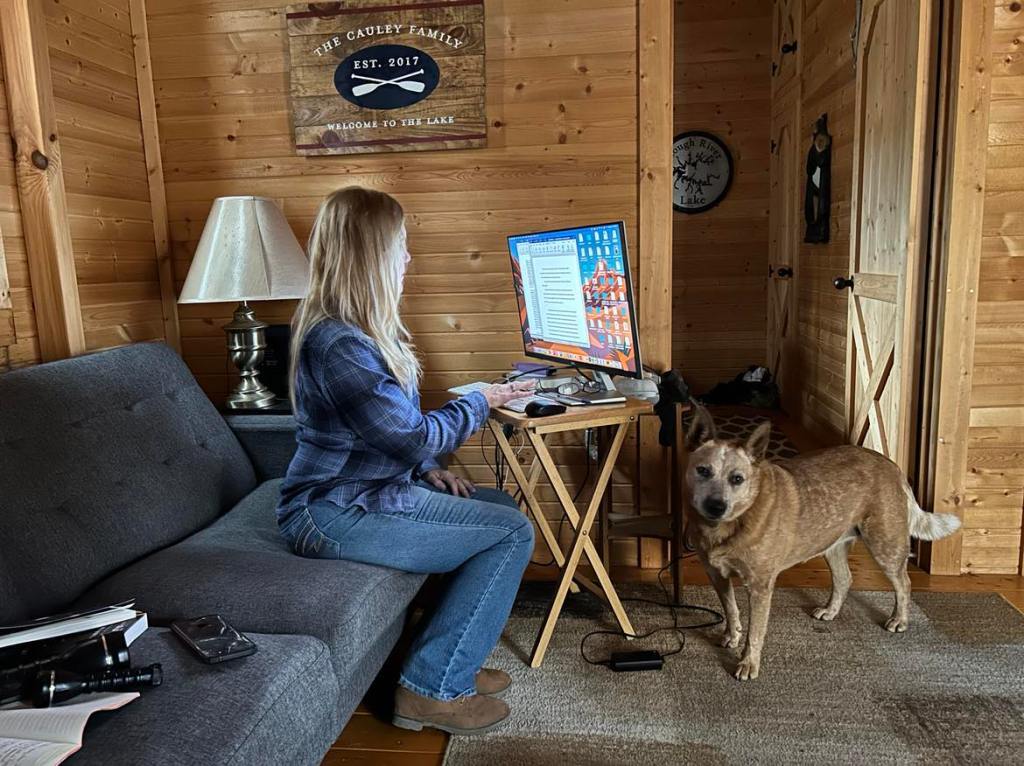
For my writing area? I wound up using a TV tray for a desk. Not even kidding. And I took my computer, not a laptop (my Chromebook is my laptop). So I was all cramped, not even able to use the mouse properly, hunched over and sitting on a couch in a corner of the living room.

It was great. I mean it. I got so much done!

I signed up for NaNoWriMo with what I called a new project, but which is only partly that. So what I was able to do on this writing retreat was to get all the way through what I already had, doing some small re-writes, and making notes of continuity problems, timeline issues, sucky sections, and character inconsistencies. I have a LOT of work to do on this novel. But right now the important thing is to finish the draft.

I wrote a trio of flash stories while I was there, too. One of them shall not see the light of day. The other two have some potential.

When we weren’t writing songs and stories, we explored the area. The nearest actual town is Leitchfield, and we went there, mostly, to eat. A highlight of the trip was me peering in restaurant windows that first night to try to guess if we’d be able to get a beer or other adult beverage with our meal.

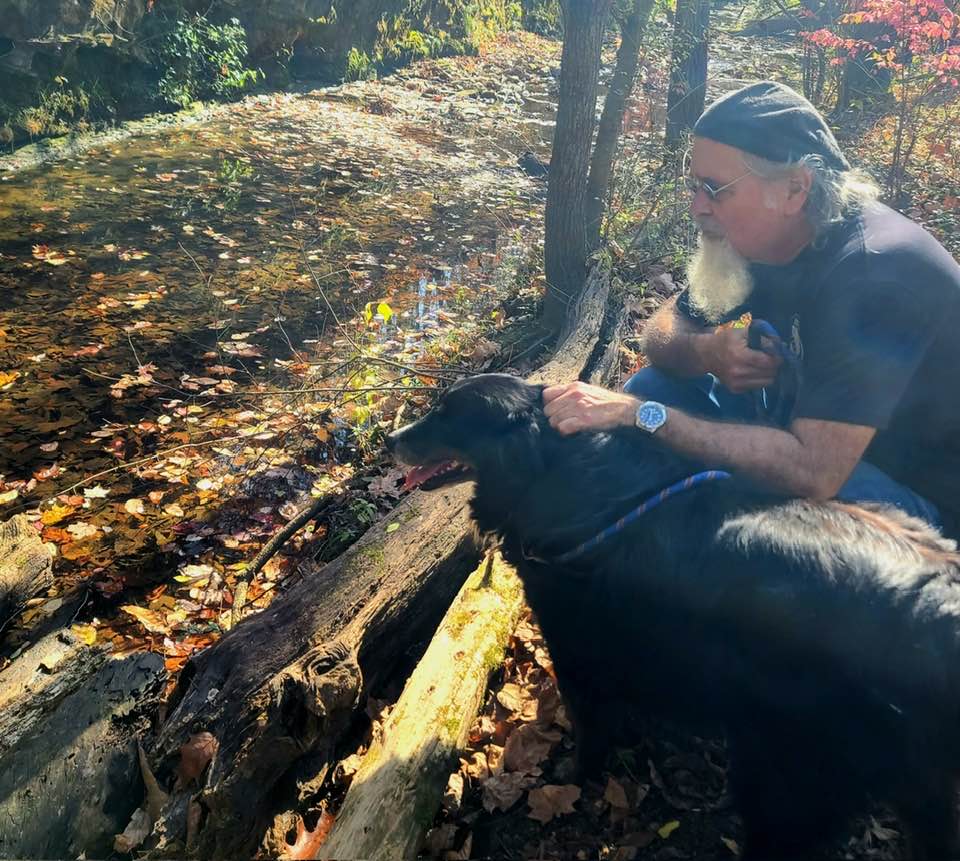
Tim and Banjo check out the fishies in the creek.

We hiked about 2 miles on the Taylor Fork Trail and area near it in Leitchfield. The park is in city limits, but the trail follows a creek and boasts some modest bluffs and rock formations, and the creek itself is pretty. There’s a spring-fed waterfall at the end of it—the dogs liked that part, and the creek crossings.

Home again now.

Got to keep that momentum going!

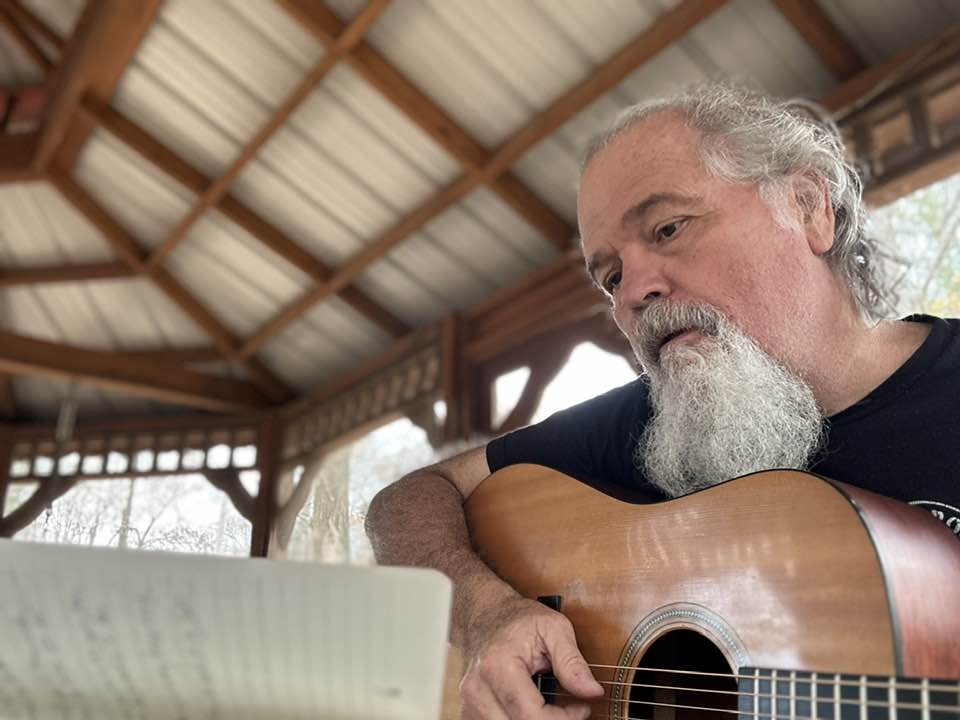
Tim working on a song in the gazebo.
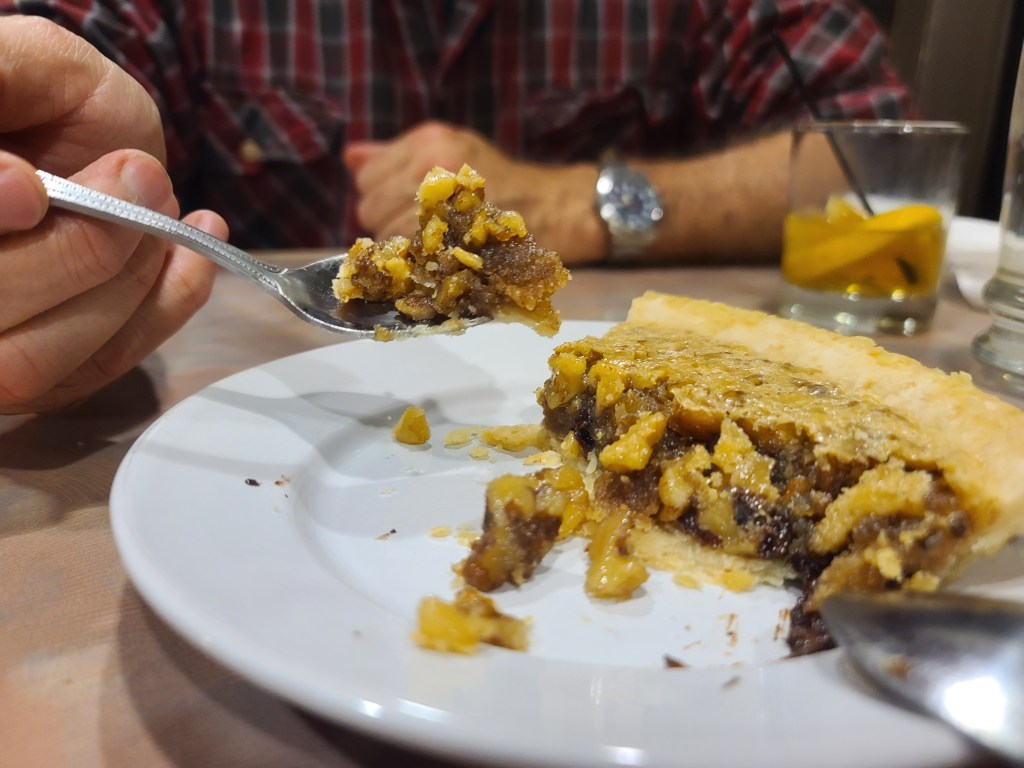
We found our place to have a drink! And we were introduced to Derby Pie, described as: like a pecan pie but also a chocolate chip cookie—it’s a Kentucky thing.

So…. I usually do NanoWriMo Flash with Nancy Stohlman. I will be checking in there. I will also be joining my mentor-in-flashing, Meg Pokrass, with her 300 words or less stories.

But… as of not even five minutes ago, I signed up for the novel version. Because it’s about damn time.

So, real quick. I read The Whisper Man by Alex North at The W in Du Quoin, a place I am pre-disposed to like because it is a horse facility. No horses in sight (except for a chestnut mare in a disagreement with a dog, glimpsed briefly in a back pasture), but still, the place gots good vibes. I was fireside with a flight of fall cocktails. Pictured is a cider and brandy combo.

Truly chilling book. A serial killer with a little tinge of supernatural. And about how crime and trauma affects people in our society, calling to some in a gruesome way. Also, families and love and trust.

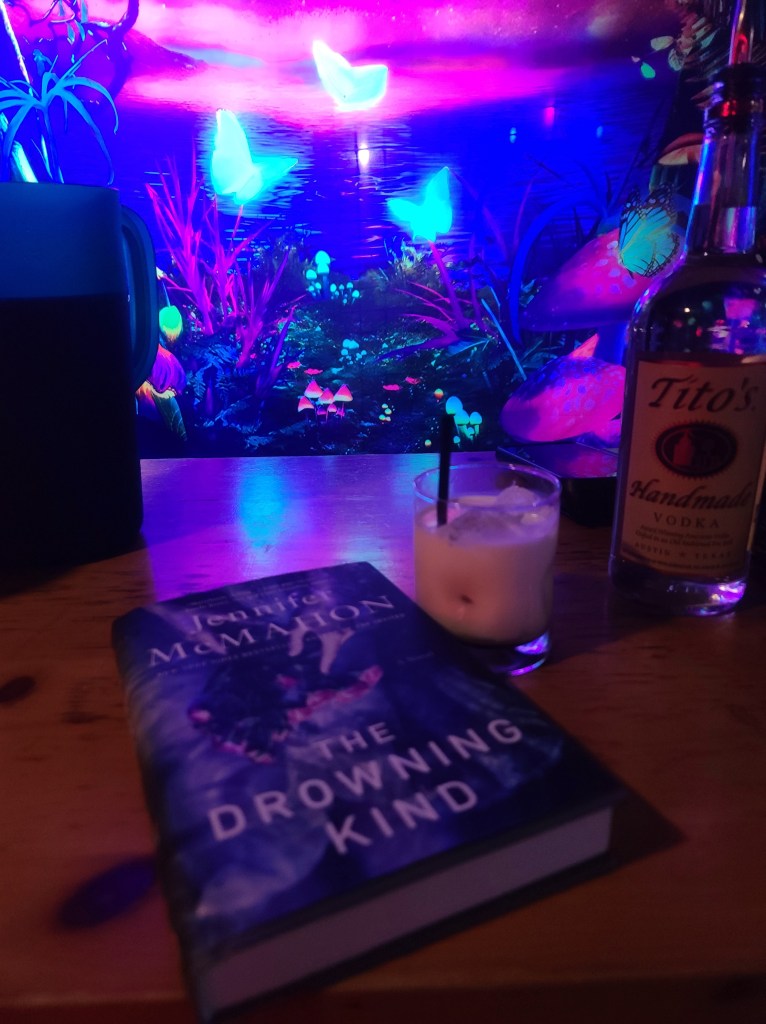
I tore through The Drowning Kind by Jennifer McMahon. Characters in McMahon stories are so damn believeable, relateable, even—even when they do strange things. Like become obsessed with a cursed spring that grants wishes and cures ailments. This is a story about sisters, generational inheritance, curses, blessings, and the importance of being very, very careful what you wish for.

It was right before Halloween. Tim had a basement gig—but it was a cool basement, and only a little bit haunted. That’s a Skrewball Russian sitting between my book and the Tito’s. Cool backdrop, eh?

As always, read more, and read more horror. And now I need to get my NanoWriMo set up. See ya’ round!

#nerdinabarwithabook

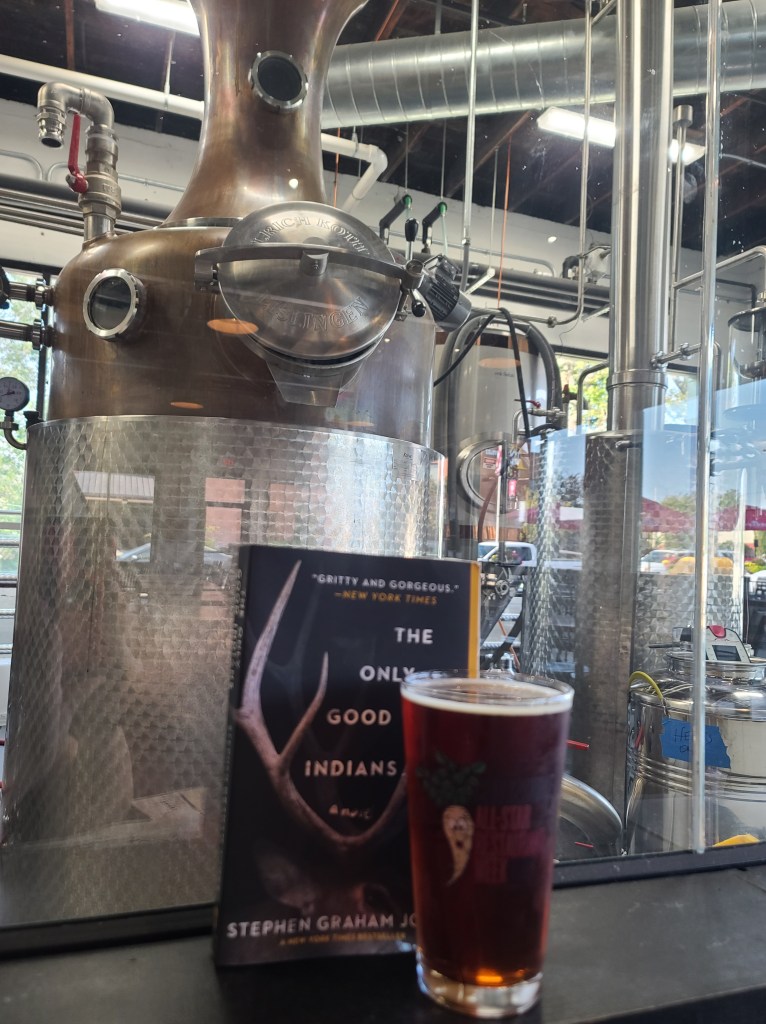
A trifecta of folk horror. I was reading The Only Good Indians by Stephen Graham Jones while I was at Archon 46, a sci-fi and fantasy event featuring writing hero Jonathan Maberry. Whom I got to meet. And to hand-deliver a bottle of local Chambourcin after alerting him to the presence of a wine trail here in Southern Illinois.

Back to the book. Holy shit. SGJ wrecks me. In a good way. But I will have to take a few deep breaths from now on before starting reading. The Only Good Indians is a wonderful example of what happens when someone breaks a rule pertaining to the Other world and doesn’t know it or doesn’t take it seriously. In this story, four young Blackfeet men know they broke a rule—they hunted elk in a section reserved for their elders. Ten years later, they begin to realize they did more than poach—they transgressed. They have made an enemy of Elk Woman. And her fury is implacable. Their (self) destruction is painful to witness, and the struggle of those around them to avoid becoming collateral damage is heart-rending.

I stopped in at the Old Herald Brewery & Distillery for lunch and an Oktoberfest. The building is the former offices and printing site of the Old Herald newspaper. This ex-reporter appreciates the theme, carried through as it is on some of the menu items.

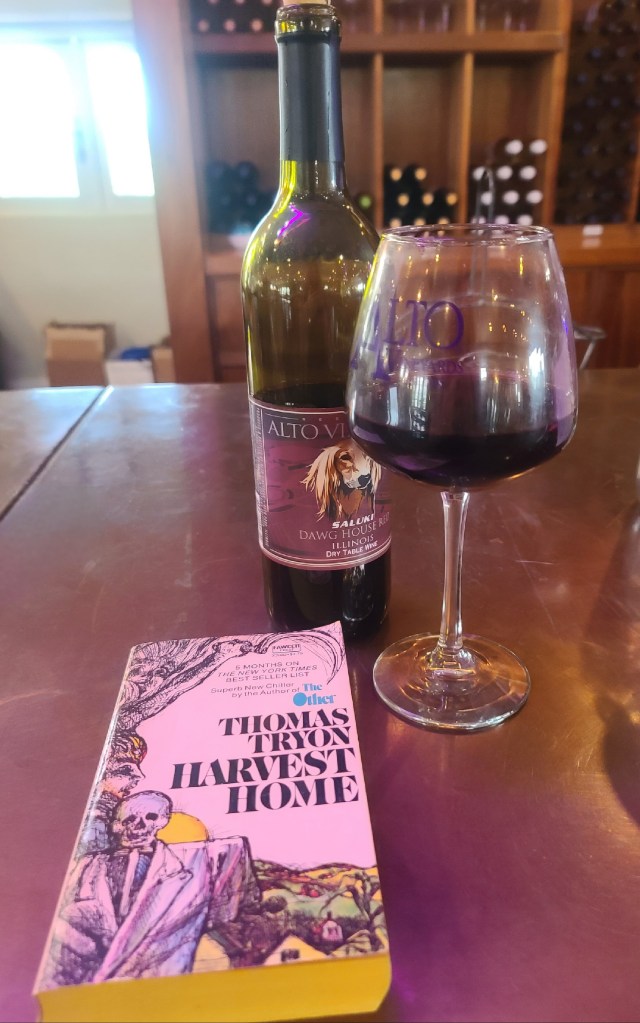
Harvest Home, by Thomas Tryon, makes just about every list of folk horror ever. I am late to the party, but can confirm—folk horror gold.

This is another one where the main character, Ned Constantine, knows he broke a rule. He fails to consider the consequences. Ned brings his wife and daughter to the quaint farming village of Cornwall Coombe, where they resolve to embrace country living and leave behind the pace and distractions of NYC. Ned counts befriends young malcontent, Worthy Pettinger. Ned begins to understand the nature of the strange pseudo-religious beliefs in the community, and the role of the Widow. Fearing for Worthy’s safety after the young man disappears, Ned determines to uncover the mystery. One great thing about this slow-build book is how the reader is constantly two or three steps ahead of Ned. You get the thrill of discovery as the plot unfolds, and the dread of watching Ned make mistake after mistake.

I was at Alto Vineyards for this one, drinking a Chambourcin blend, Dawg House Red. It should have been mead…

I just finished reading The Hunger by Alma Katsu. Katsu makes the horrific story of the Donner Party—the pioneers who resorted to cannibalism to survive after forced to winter in the mountains during their ill-advised shortcut to California—even more gruesome and terrifying. Blending folk tales and dread whispers from German settlers and Native Americans of several tribes, Katsu creates a threat that is monstrous, vicious, and horrifying when you realize what “the shadows” are and where they originate. While this book is clearly fiction, equally as clearly Katsu did plenty of research. It’s easy to lose yourself in this book, and to feel kinship with some of the characters.

I was at a nearby winery, Starview Vineyards, drinking Chambourcin, the same wine I brought to Archon. That oak tree you can see in the background is one of my favorite trees in the area, and is a true landmark.

Remember: read more horror. And share what you are reading!
#nerdinabarwithabook

A horror trope I always love is when a person innocently or carelessly breaks a rule they didn’t know about or thought didn’t exist. It’s scariest when they realize, after it’s too late, what has happened, and then try to save themselves, right the wrong, or appease the monster.

This story, “A Fine Trade,” from a trio of my stories that appeared in Parhelion Literary Magazine, Halloween issue 2022, explores that trope—though the tone is more dark humor than horror.

The reading is on Devil’s Kitchen Lake in Southern Illinois, the Goth lake of the area. It’s a flooded valley, and a tree graveyard. Other footage is from the Seven Bridges Natural Area in Rapid River, Michigan.
And here’s what’s really cool—I didn’t throw my phone overboard this time!
Enjoy. Read horror. Read flash fiction too.

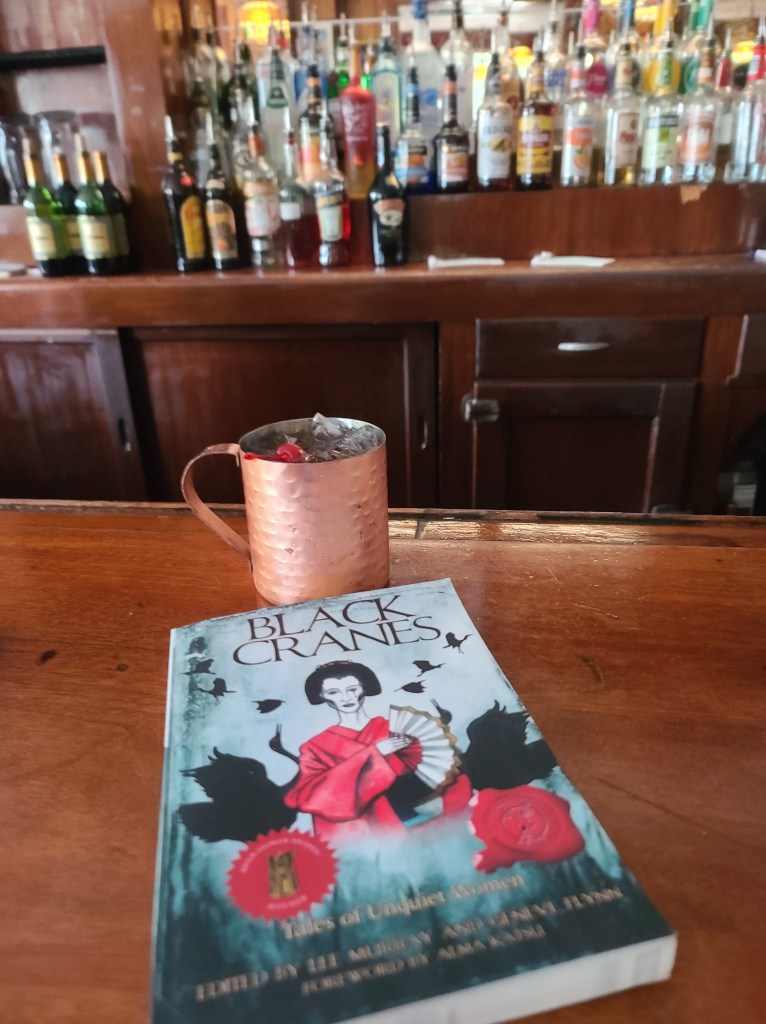
Stoker award winner. Deservedly so. Black Cranes: Tales of Unquiet Women, edited by Lee Murray and Geneve Flynn, is a beautiful book. Literally, the cover is compelling, and the interior illustrations lend magic. The fourteen stories that make up the anthology are, every one of them, breath-takers.

The authors are all Southeast Asian writers. These stories emanate, get their strength, from the authors’ relationship with their heritage, and with the culture and tradition that come with it. Some of the conflicts in the story are universal — disappointing a parent in your choice of partner or career or by the act of moving away, for example. But in these stories, there are struggles specific to Asian women who don’t fit in, or who struggle with aspects of their culture.

The stories blend fantasy and folk horror, ghost stories and dystopia and dark humor. The stories have been flowing over each other in my mind for days, making me feel haunted at times, pensive at others.

Though I wasn’t trying to match my drink to the book, the house special cherry mule, made with local ginger beer, seemed appropriate. Joe’s Friendly Tavern, Empire, Michigan.

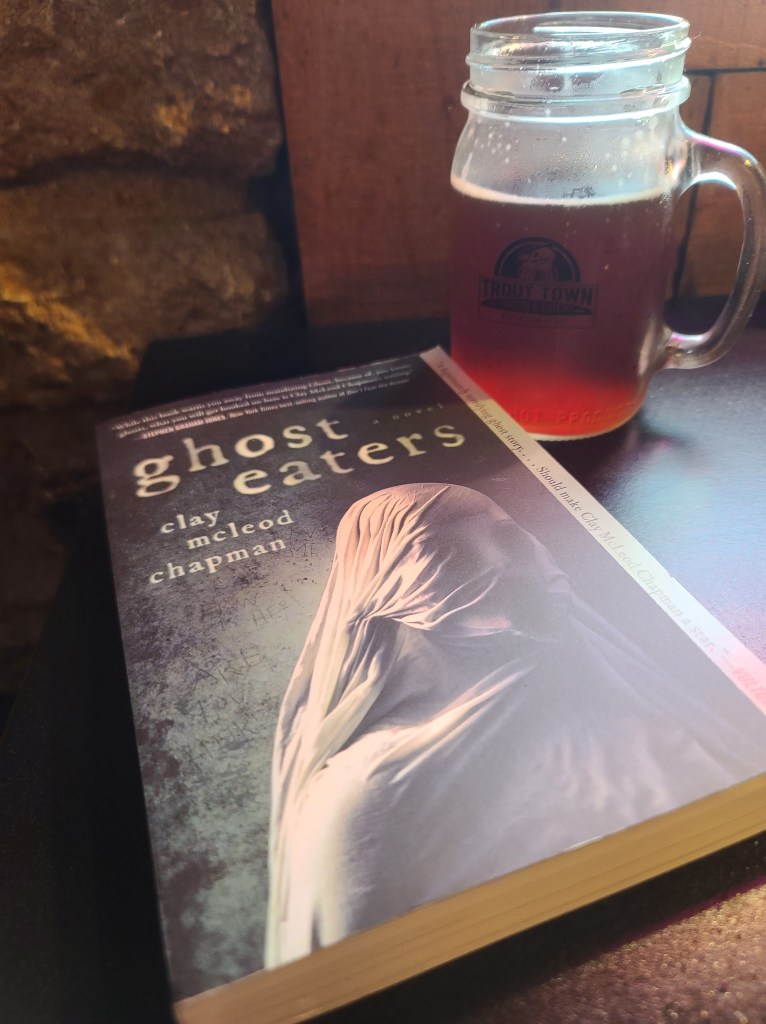
Gothic-punk. Okay, I can dig that designation for Ghost Eaters by Clay McLeod Chapman.

This story is terrifying. And pretty damn bleak.

We begin with a quartet of friends — or should I say, Silas and his fan club — trespassing in a cemetery late at night with the intention (Silas’) of stealing a corpse’s tongue for occult purposes. Should I mention the four of them are tripping? I should. Addiction and drug abuse are main features of this story — ah, but not just any drug addiction. A Ghost addiction. Fungi are having a moment…

Silas is low-key obsessed with his dead mother. Erin (the narrator of this haunted foray into horror) is obsessed with Silas.

I don’t want to give away too much of the plot, but be prepared: These ghosts are some of the scariest I’ve ever encountered in literature. You remember how Odysseus fed blood to the ghosts in the Underworld to restore their memory temporarily? Like that. Only worse.

Setting is key. Richmond, Virginia. An old city on long-established ground with a history of past cruelty and enslavement and conquer. A city where the ghosts of the trampled want to be seen and acknowledged. They are hungry ghosts. Insatiable. So, Chapman asks: What should we do with our ghosts?

I don’t think I’d have been friends with Erin. She can be pathetic, needy, spineless. But occasionally, I’ve been just like her. There is something so pure in her desperation, so relateable in her self-sabotage. Because this story, like all the best horror, is about people — about how people decide who they are, and what people will do if you let them.

And I assure you, as horrifying as these ghosts are, they aren’t the worst monster in these pages.

Since setting is so important to this book, I wanted to emphasize setting where I was when I started reading it — by having an exclusive Trout Town Steelhead Amber at Trout Town Tavern in Kalkaska, Michigan, where beer comes with a pretzel!

#nerdinabarwithabook Share yours!

When I travel, I like to read a book set where I’m going, or by someone from that area. Hence, Drowning Ruth, a novel set in rural Wisconsin west of Milwaukee—the debut novel by Christina Schwarz.

It’s a story about tragedy unfolding from a secret—a secret that required lies and subterfuge to keep hidden, and one that literally had its keepers precariously balanced on thin ice. It’s also about sisters, family, parents, children, gossip, friendship, love, mental illness, and finding one’s place in this wild world of expectations and reality.

It’s also about adoption—which I did not know when I picked this book out to read.

But how very appropriate to my travels in Wisconsin and Michigan!

I shall have more to say later. And I’ve said a little bit previously. But my recent journey was a visit home, to my birth families.

I started reading Drowning Ruth at Toonie’s in Bellaire, Michigan. The brew is a local from Right Brain Brewery (Traverse City, MI)—Northern Hawk Owl Amber Ale.

That is the lighthouse at Sheboygan, Wisconsin. It’s as good a symbol as any of the amazing adventure of visiting my long lost sister, and meeting four siblings I never knew. I’m not posting their pictures here yet, but may in future.

Before I met my “Up North” Michigan family—my maternal siblings—we stopped at Seven Bridges Natural Area in Rapid River for some rushing water therapy. I soon discovered that my maternal cousin was quite familiar with the area and found solace there herself. It’s nice to have things like that in common.

This is a 450-foot dune that comes with a warning. If you go down it and can’t get back up, expect to pay $3,000 for a rescue. I did go down it as a teenager. The beauty was so astonishing, it actually hurt my heart. The blues of the water, the gold of the sand, the solitude of being so far away from people up top, the challenge of the climb back up… Then, I made the climb in 45 minutes. I think these days I’d take closer to the average 2 hours. The Sleeping Bear Sand Dunes are visible from the top of that dune. One of my very favorite places in all the world.

#nerdinabarwithabook

Share yours!