You know how it is. You know you should do something. You put it off. Several times. Then you feel guilty. Then the whole thing becomes a bigger deal than it ought to be.
I’ve neglected this part of my website so long it’s become a mountain of guilt. I knew if I just wrote SOMETHING it’d take the mountain down to a manageable size. But just touching it…. jeez, so hard.
So, here, now I’ve touched it. Now I can get back to keeping it up.
Ah, Facebook, that entity we love to hate. I’m more in the hate to love it category, maybe. Facebook is the home of my writing community. It’s where I’ve “met” and gotten to know writers and horse people across the country and in several other countries. It’s especially fun when I get to know writers who also love horses. It’s a good combination, I think.
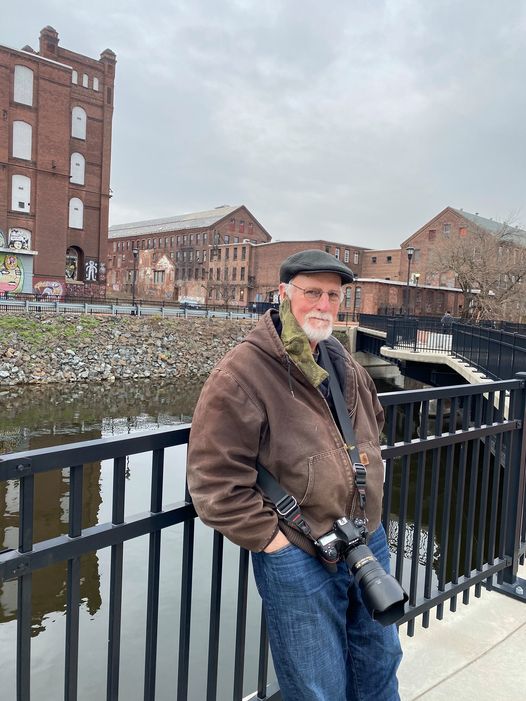
Doug Anderson is one of the most thoughtful people I’ve encountered through Facebook. I’ve read his posts about the state of the humanities, trigger warnings, cultural appropriation, culture, teaching, aging, love, memories of love, the need for love, the Vietnam War, and horses. His opinions are considered, not knee-jerk. And if he throws something out there as a question, you can be assured he’s already given it quite a bit of thought. Clearly I admire him.
He is also an award-winning poet. National Endowment for the Arts Fellowship, Pushcart Prize, Eric Mathieu King Fund of the Academy of American Poets – you know, big deal awards.
He was nice enough to answer some questions I had for him after reading his most recent poetry collection, “Horse Medicine.” I’m tempted to post these one question at a time because the answers are weighty. However, Doug sent me answers to my questions weeks ago and it’s about damn time I post them. No more delays! The world marches on, there’s never a “perfect” time.
Q: What do you think is the biggest challenge facing writers today?
A: Students are not being trained to read nuanced language in high school; they mostly get short non-fiction pieces. This is part of the teaching-to-the-test strategy. It has done incredible damage. Students arrive at college way behind and resent having to read texts that have any kind of difficulty, or lead them toward the discovery of their own imaginations. When I was an undergraduate I remember students carrying poetry books because poetry was a part of their world—even students in non-English majors. That’s all gone now and the reading of imaginative literature is now the province of an elite class. It is demonstrable that the reading of imaginative literature builds empathy. I’m resigning myself to the idea that I’m speaking to a very small tribe when I write.
Q: The pull of Vietnam for veterans of the Vietnam War seems to me to be different than, say, Afghanistan. What is it that brings the soldiers etc. back, and what do they carry home with them after they’ve returned during a time of peace?
A: Vietnam is an undigested mass on the country’s soul. Many vets ceased believing in the war, even when they were fighting it. There is a desire held by many of us to make friends with the country we devastated, make friends with our former enemies. I’ve been back twice since the war, and am a member and teaching affiliate of the Joiner Center for the Study of War and Its Social Consequences. We’ve made friends with many former soldiers who’ve become writers. This war will not go away until the country reckons with it. Or until all who fought in it are dead, and then it will enter a whitewashed history. BTW Afghanistan is not all that different than VN. It is a war of choice begun for corrupt reasons and going nowhere after over fifteen years. Afghanistan vets are beginning to ask questions.
Q: How has your poetry changed over the years?
A: When I began to write poetry about the war in the eighties I was fortunate to have Jack Gilbert as a mentor. The poems came fast and hard and I was able to shape them into a chapbook, and then a full-length book. I can say I really learned how to write poetry during that time. Poetry seemed to be the perfect medium for memory. Much of war is waiting, and then a sudden violent event. The brevity of poetry is right for that.
Q: What has horse medicine done for you?
A: For a few years I was associated with a horse rescue farm with 32 draft horses. I grew to love those horses. I did photography and publicity for the farm and hung out with the horses in the paddock. A horse is not a pet and the relationship one has with it is much more complex, involves changes to one’s nervous system and emotions. It is demonstrable that these relationships can be healing. The poems that came from this are celebratory.
I have a blog post up at Ghost Parachute. It’s really a terrific journal. If you head over there, read a bunch of stories, and if you read the blog posts, read some by Len Kuntz because they are all fantastic!
Also, if you have a favorite ghost story, share it here if you like!
It was the kind of day that makes a person grateful to be alive. Early autumn in Southern Illinois. I spent a few hours on Little Grassy Lake, after which the Southern Illinois University Carbondale graduate student literary festival is named.
This story, as is true of many of my stories, was inspired by a Meg Pokrass word prompt. I sat on it a while after writing, then pulled it out, cut the word count at least in half, and now it appears in a cool anthology, Predators in Petticoats, edited by Emily Leverett and Margaret S. McGraw and available for Kindle or in paperback from Amazon.
Not ashamed to admit I’ve daydreamed about receiving a phone call with good news about my writing. And then it happened.
Kevin Morgan Watson, one of the founders of Press 53 (from where I have more indie published books than anywhere else) and Prime Number Magazine CALLED me !!! to let me know I won the Prime Number Magazine 2020 Flash Fiction Contest !!!
I am stunned. Absolutely floored. And grateful.
The story is inspired, in part, by a couple visits to my brother in Florida. He used to work in the Everglades and he took us to visit his old work place and stomping grounds. We saw lots of alligators. In the water, basking, up close, in pairs… Pretty cool.
I returned to Devil’s Kitchen Lake for another kayak reading. I do have other lakes to show you guys, but Devil’s Kitchen is close, convenient and pretty.
A couple bobbles as I turned the page and also bumped into the bluff.
This story, as with many of my stories, began in a Meg Pokrass workshop.
I always look forward to the Devils Kitchen Literary Festival, hosted by Southern Illinois University Carbondale undergraduate creative writing students. Since I live near the Devils Kitchen Lake for which the festival is named, I decided to go take an early evening paddle and do my own wee Devils Kitchen reading.
The lake is a dammed river, as many lakes in So Ill are. This one is narrow and wind-y, just begging me to keep on going around the next bend and the next and the next one too. I try to remember that as far out as I paddle, I have that same distance to return.
Drowned trees are a big feature on this lake. I suspect if I worked at it a little bit, it wouldn’t be impossible to get some eerie images.
But nothing eerie today. Just me reading a story from The Slag Review, “Way Down Deep Inside.”