I’m still processing our recent road / train trip out west and back. In mid-April, Tim and I rented a car and drove to the Denver, Colorado area to visit a friend, then to Tucson, Arizona by way of Santa Fe, New Mexico to visit our son. We returned home on the Amtrak train, the Texas Eagle.

The road trip remains my favorite way to travel. Train is second. Flying a distant—and preferably avoided—third.

I know, sometimes flying is necessary. It’s often faster and cheaper, particularly if the road-driving alternative is more than two days. But for me, getting there really is half the fun. And flying is not as fun.

Here are my Top 15 Reasons Why This Road Trip Was Better Than Flying.

In almost chronological order

1. Pizza at a fancier-than-anticipated Italian restaurant in Hannibal, Missouri, hometown of Mark Twain.

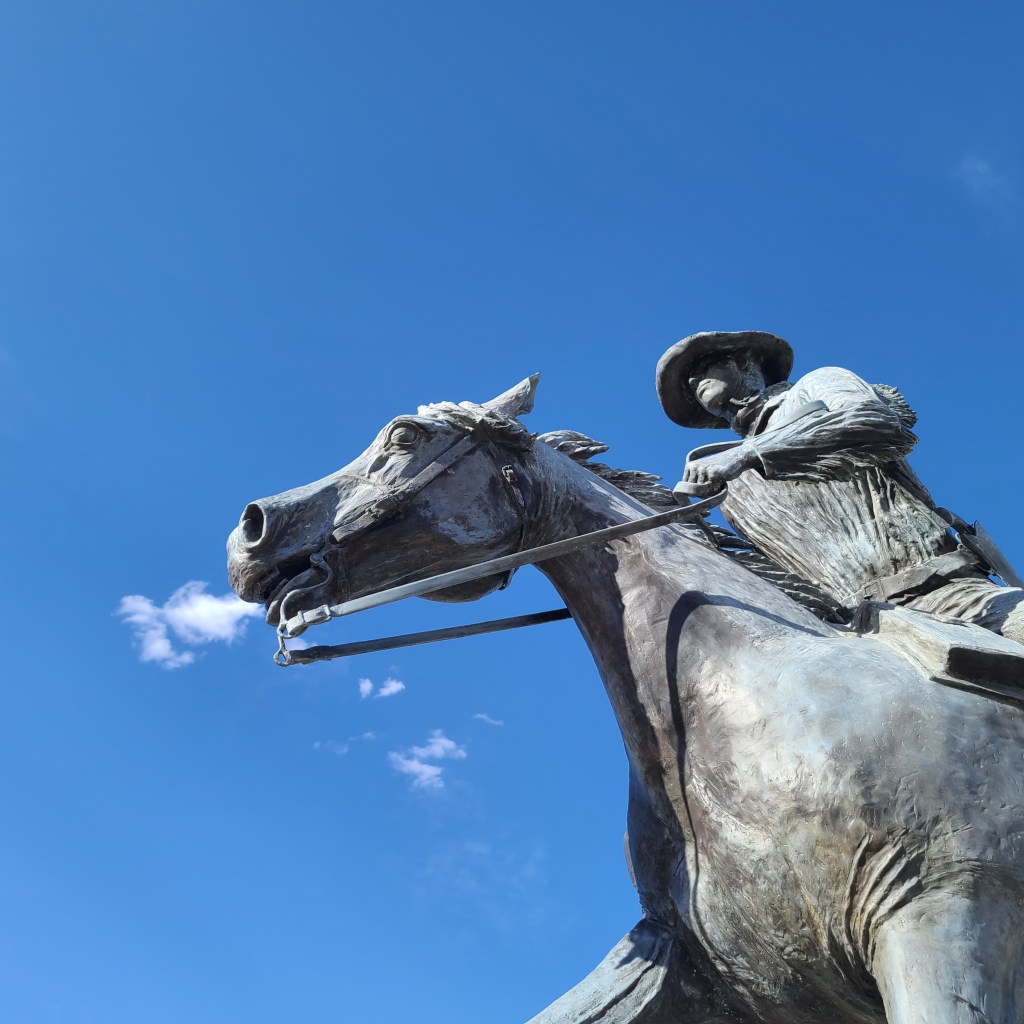
2. Visiting the Pony Express memorial in Julesburg, Colorado. Check out how I used a cloud to enhance the image! What’s even better? It was so bright and sunshiney, I didn’t realize what I’d caught until looking at the photos later.

A close-up of the horse and rider with a cloud enhancing the image.

3. Conifer Café in Conifer, Colorado. What a cool little café! It has the best indoor décor. And swings! And super nice and friendly customers.

4. Colorado coffee shops generally. Coloradoans brew a good cup of coffee!

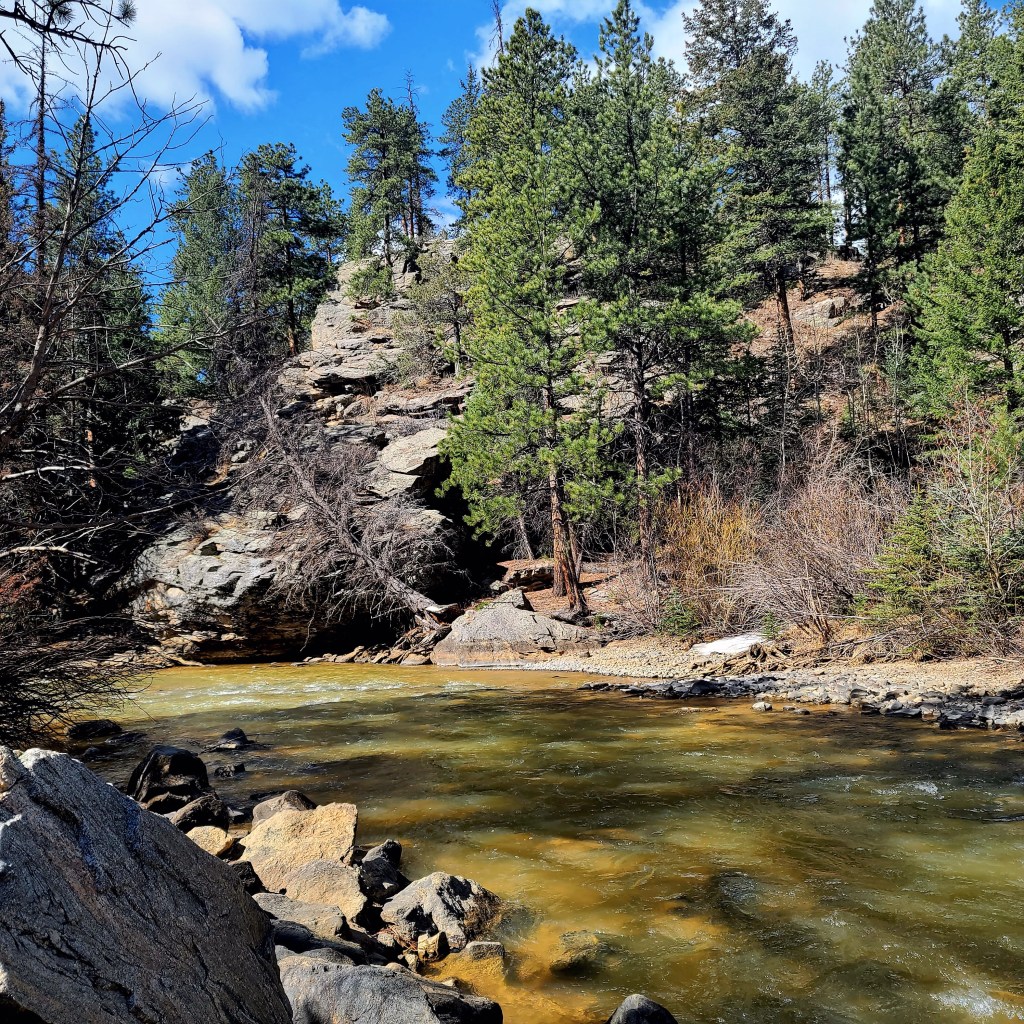
5. Being able to stop the car and get out to play in a mountain stream that ran by the road in the Rockies.

6. Holding a snowball at Kenosha Pass in the Rockies.

7. Seeing wild pronghorn antelope roadside! And elk! I’d never seen wild pronghorns before, thrilling experience for me.

8. Breakfast at Cafe Pasqual’s in Santa Fe, after a lovely evening in a casita in Tesuque, New Mexico.

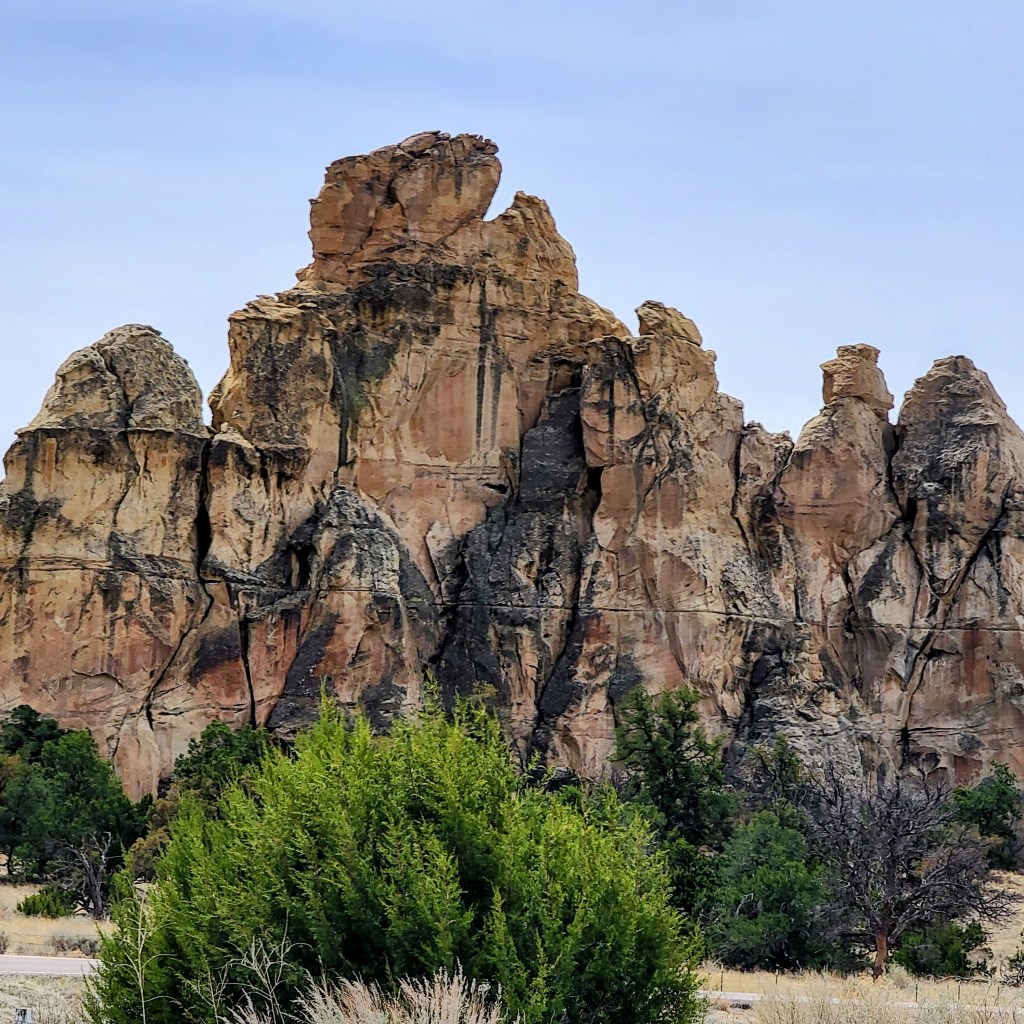
9. El Malpais National Monument, New Mexico. I had not heard of El Malpais. We plan to return.

9. Wild horses! In Salt River Canyon

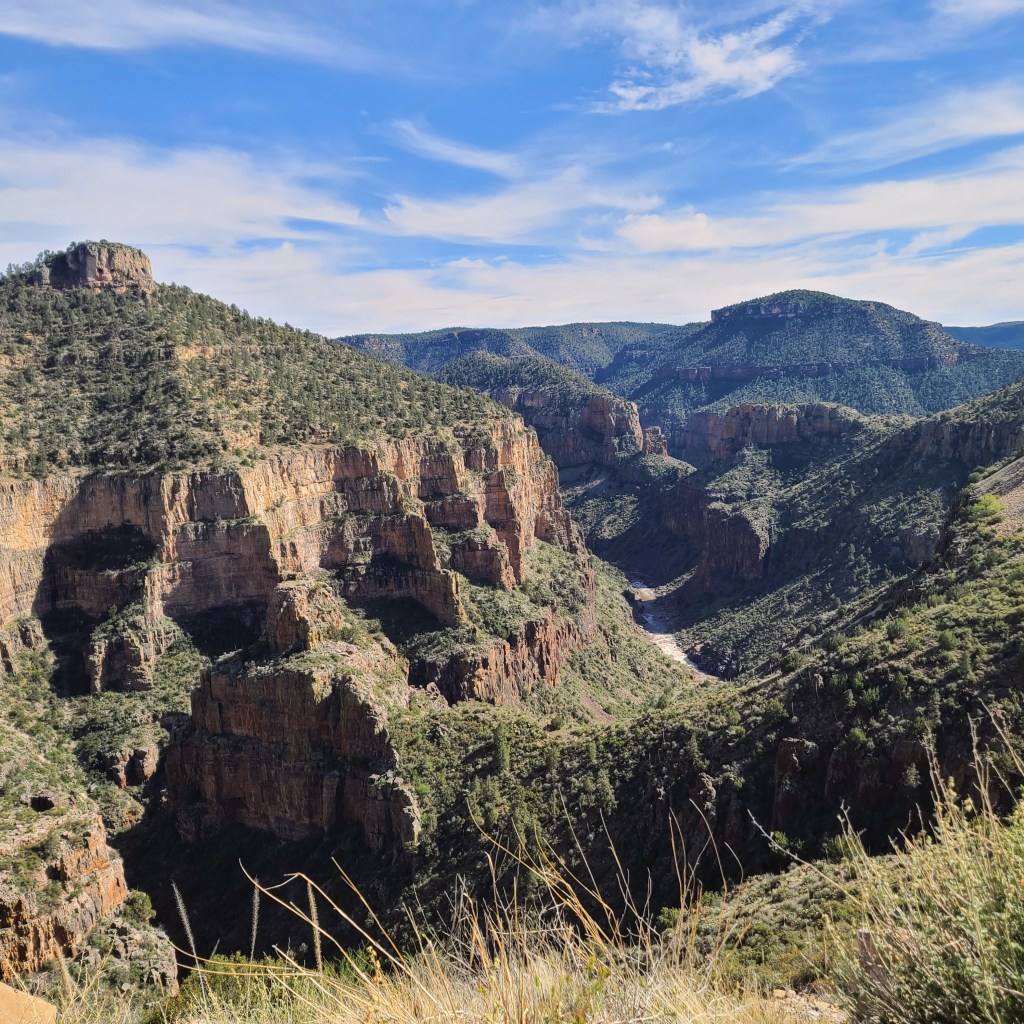
10. Salt River Canyon! And Corduroy Canyon and Cedar Canyon. I was thoroughly unprepared for this. We’re driving along and all of a sudden there’s a beautiful canyon roadside. For miles. Followed by another. And then another!

11. Roadside fry bread. We took US 60, which included the Salt River Canyon and the Apache-Sitgreaves National Forests and the Fort Apache Reservation. Somewhere along that route, while still marveling over the canyons, we stopped at a roadside vendor for some Native frybread—which I’d been eager to try. It tastes better when you are eating it canyon-side. If only I’d taken a picture!

12. Trying a regional fastfood chain—Runzas. German sandwiches. (Think Michigan pasty and you are close to what we had.)

13. The salsa at Booga Red’s in Springerville, AZ

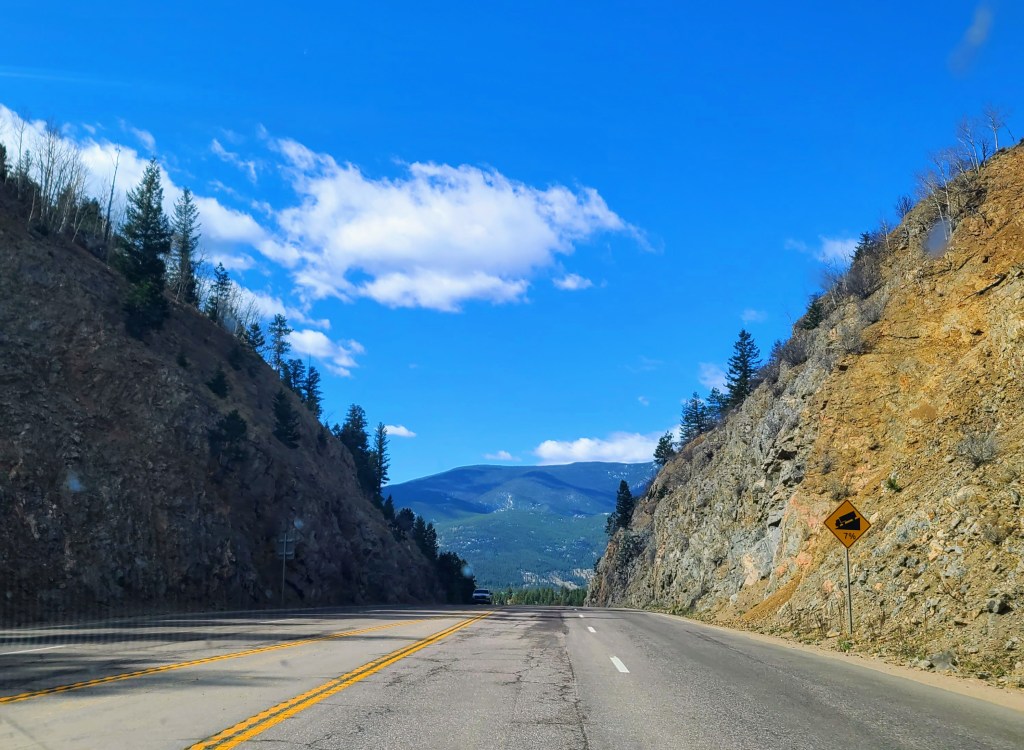
14. Driving through mountains for two days.

15. No waiting at an airport.

And then, of course, there’s the destination. We had a great visit with Will and Jensen and Ernie the Good Dog. That’s for another blog.

Eclipse 2024. And I live in the Eclipse Crossroads of America. On August 21, 2017, the little hippy town of Makanda, self-described as the Valley of the Arts, was the site of the longest duration of totality. This time around, on April 8, 2024, Makanda was the exact point where the two paths crossed. Two eclipse paths crossing the same space within a decade of each other is a super-rare phenomenon—and, considering how many total solar eclipses are visible only in the ocean instead of on land, being able to witness it was truly special.

In my capacity as marketing and recruiting writer at Southern Illinois University Carbondale, I wrote the slogan: Once in a Lifetime. Again. (Yeah, I’m proud of that one.) Isn’t it amazing, though? To experience two once-in-a-lifetime events in one lifetime.

Witnessing an eclipse is unexpectedly emotional for many people. For me, not the least of it is realizing that, as I gaze to the heavens, watching the most significant body in our solar system and our closest neighbor interact so that we are covered by a celestial shadow, so are hundreds of thousands of other people doing the same thing. We are all taking time from our usual lives to witness a celestial event over which we have no control—all we can do is observe. I feel linear time slip away, and realize how connected we are: not only across geography but across time as well. The same awe I feel watching the corona burst around the Sun, I know that someone 2,000 years ago witnessed and felt as well. It’s as egalitarian as it gets. And it’s humbling.

Social media being the ubiquitous commentator it is, I saw some people I know bragging that they weren’t impressed, that even if they were in the path of totality, they would go out of their way to avoid witnessing this. How dull. What boring, self-involved people, incapable of awe, devoid of imagination, thoroughly insensitive to anything beyond their ken. If Nature doesn’t wow you, if you think your tightly controlled world is the only one that matters, if you have no gratitude, I have no respect for you.

But for all those who, like me, were outside, gazing skyward and looking around in amazement at the sharp and then strange shadows, the 360° sunset, the strange moments of darkness, feeling the drop in temperature, the primal feeling deep in your heart that tells you this is something big, cheers. Keep looking up.

By the way, you can certainly find far better pictures of the eclipse. This is mine. I was a bit trembly, so this was the best I could do.

This dystopian micro first appeared in Ghost Parachute. I love dystopian literature, and have plans for a longer dystopian work in future. What especially fascinates me is what remains—how we try to hold onto culture and stories and how we might incorporate some of the best of our past into a grim, new future. In this story, makeup has taken on a deeper significance. It might be war paint. It certainly is a distinguishing part of the narrator’s life and her people’s. I refer to Van Gogh, O’Keefe, and other works of art and painting techniques. I see them as surviving the unnamed, undefined apocalyptic event, and being incorporated in a personal way in the lives of the survivors who wear the makeup. The story hints at some sort of computer or digital cataclysm, caused by other survivors who continue to live in the cities while our narrator and her people skulk around the edges.

It’s an atmospheric story, and I hope you find it unsettling. My first draft was actually meant to be lighthearted! I got the initial breath of the story while walking to a nearby creek. I was wearing a t-shirt I didn’t particularly like. I was thinking to myself, “Wouldn’t that just figure if something cataclysmic occurred and here I am wearing a shirt I don’t even like when I have a closetful of t-shirts I do like?” I wrote a first draft of this story about a character who really was bothered by the fact she was wearing an ugly shirt and couldn’t easily find something else to wear. This character was extra annoyed at the preppers, as she called them (they weren’t, necessarily) who “thought they were so cool in their camo.” It’s an okay draft, but it wasn’t getting where I wanted to go.

So I decided to try makeup. Would someone care about wearing makeup post-apocalypse? If so, why? And what would it mean?

As I worked on the story and found its voice, I tapped into the uneasiness so many of us are feeling as we see how much of our lives are dependent on technology most of us barely understand. Though the story doesn’t state this explicitly, I was thinking, too, of how easy our digital world has made surveillance and censorship, and how the algorithm contributes to a particularly virulent tribalism of us-against-them.

I filmed at the Kaskaskia River Spillway Recreation Area. In Southern Illinois, where I live, lake spillways are often more natural. I mean, of course they have a dam. But the water flows into a small river or a creek that is often rocky and forested. When the water is flowing, it’s whitewater beauty. I expected something similar here. I forgot how much bigger the Kaskaskia River is than the little rivers our smaller lakes empty into. At first I was disappointed by how much more industrial it all looked. Then I realized it was perfect for this story of liminal areas, between civilization and wilderness.

I should note that the story refers to water pollution. The scene that goes with it in this video isn’t an example of pollution, really. It’s an overflow from a creek that flows under a sidewalk through a culvert into the river. Just water.

I hope you enjoy!

I just had a wonderful weekend! It started with heavy fog and me driving my least favorite freeway—I-57—and the fog didn’t lift until I was almost to Indiana.

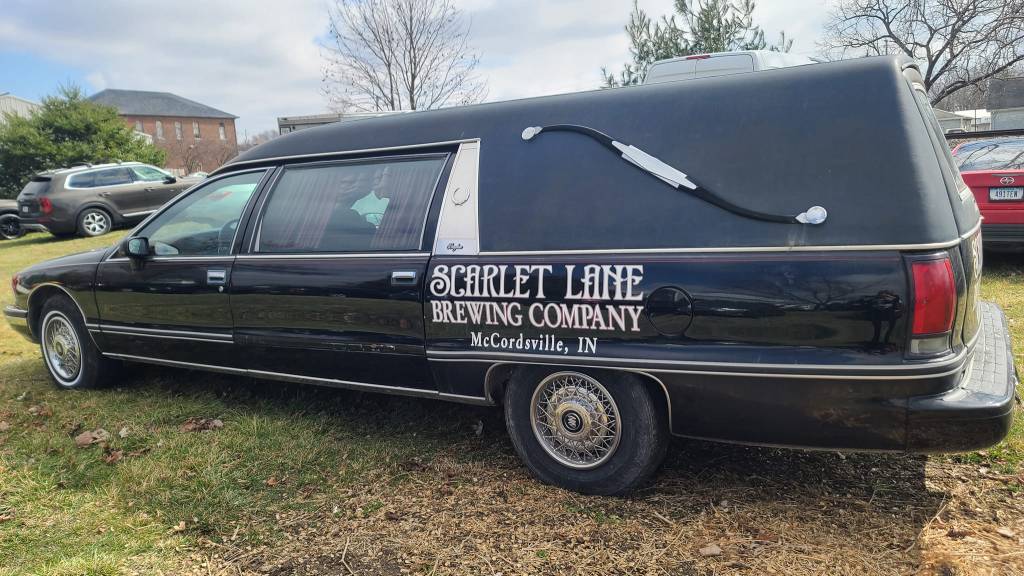
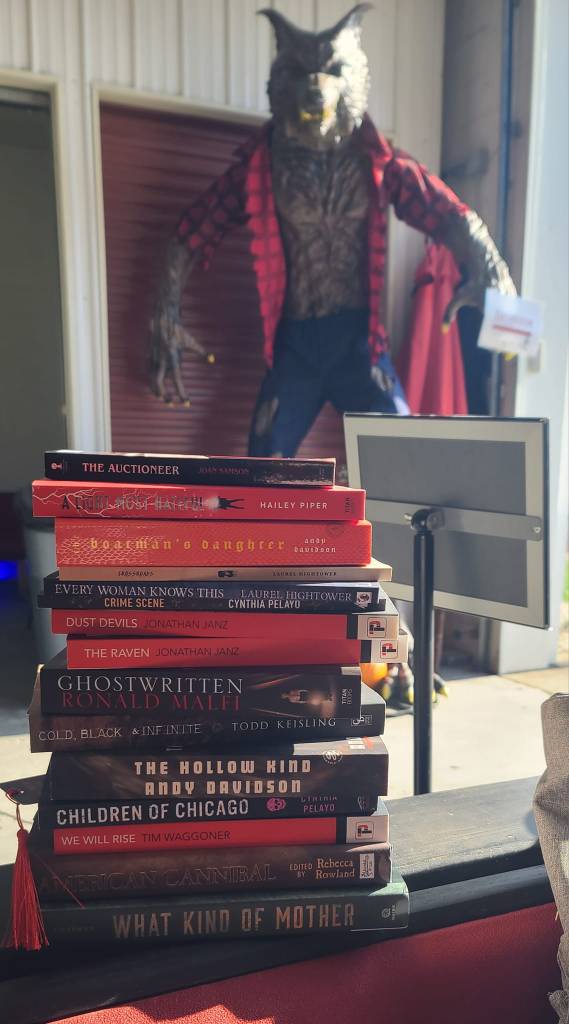
I attended the Scarelastic Book Fair at Scarlet Lane Brewing Company in McCordsville, hosted by author and master brewer Josh Hull. What a great time! A horror-themed brewery, many favorite authors, spent way too much on books (including one I now have two of, both signed…how could I forget??)

Above is most of what I bought. I snagged a few more right before I left. Pretty much my book budget for the year. Well… I mean…. not really. But…

I should mention the beer at Scarlet Lane is fantastic. Highly recommend—the brewery is absolutely worth a visit all on its own.

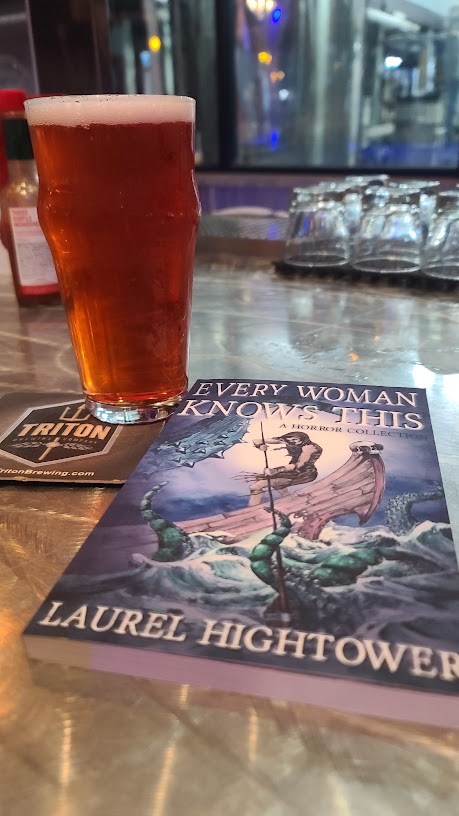
I spent the night at Fort Harrison State Park Inn, a cool old hotel. It was so quiet I was briefly convinced I was the only guest. I had dinner and a couple more fantastic brews at Triton Brewing Company. And of course, had to have a book with me, since I bought so many good ones. This is Laurel Hightower’s Every Woman Knows This and I can’t wait to dig into it! That beer is their Strawberry Hometown Hero Ale. Isn’t it pretty?

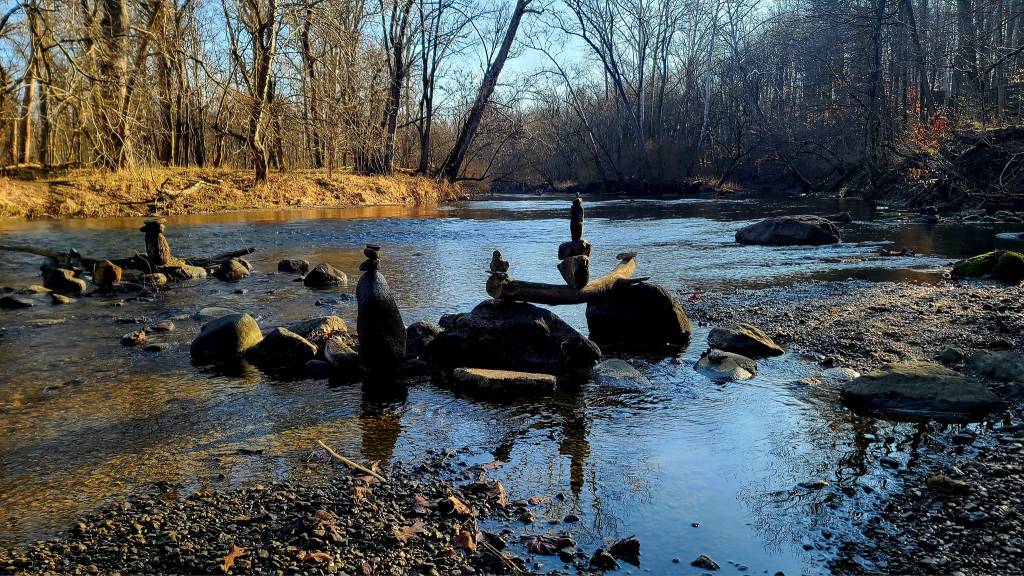
Then up early in the morning to hike the Fall Creek Trail in the state park. I didn’t make those cairns, someone else’s handiwork. But I enjoyed. That’s Fall Creek. Hence the trail name. 🙂

I stopped off in Bloomington, IN for lunch because I wanted to see the town, and also go home a different way. Great lunch. Did a quick read from Quick Adjustments by Robert Scotellaro. I read Interpreter of Dreams, one of my favorites from that great new collection. It’s on my Instagram if you want to check it out.

And then I managed to add almost an hour to my drive time—oops!—by going all the way south to Kentucky before going west towards home. S’ok, it was rural scenery I would not have seen otherwise.

Got home to find that my husband has written a new song that’s pretty kick-ass heartbreaking. So we both had a productive weekend! I hope yours was fantastic too!

Somewhere I heard the expression “teaching the dead to talk with us.” I don’t think, really, that’s quite what was said. I don’t know that “the dead” were involved at all. But the minute I thought it, I knew I had a story.

I’ve been watching shark videos and reels in the way many people watch funny cats or goats in pajamas. I see people who are shark experts swimming with sharks. I admire them.

And I wonder if there are consequences to messing with the order of things.

I don’t have the answers. Just a story. Here it is.

This story first appeared in Feed Lit Magazine.

First, I declare I will be more active in posting my published stories here. Most of them are listed in the Recent Publications section, but I will put them here now, too.

This one came in a round-about way from a writing group with friends, as many of my stories do. Remember: It’s fiction!! (Although I have stayed in many a Super 8.)

Thanks for reading!

So, I did something dumb today. I completely missed the driveway as I backed my truck into the spot, and got it stuck but good in the mud between the driveway parking space and the sidewalk. I don’t have an explanation.

Yes, I do. It was aliens.

So I came inside and made this reel from the story A Bedtime Story, from the book Better You Believe: A Collection of Horror by Tony Evans. I met Tony briefly at Scares That Care/AuthorCon in Williamsburg, Virginia last year. He’s part of the Appalachian horror writers’ scene. This story is one of my favorites in the collection. I hope you like my pseudo-spooky reading of it!

My writing comfort zone is flash fiction. It’s where I found my voice. And my first writing community. The process of writing a novel is vastly different from flash. I really love both processes. Writing this novel makes me appreciate the freedom of flash, and renews my respect for the creative process that happens there.

I approached the novel methodically. Or so I thought. I had a multi-page annotated outline to guide me. As it turns out, I hadn’t planned and plotted nearly enough! About 2/3 of the way in, I realized I had not thoroughly considered some of the most important plot points—like, why do you have TWO ghosts? Also, if you want the reader to like your main character, maybe spend some time making her likeable?

With flash, I rarely have even a smidge of an idea when I sit down to write. I use random-word prompts or picture prompts. When I start writing, I don’t know where I’m going. It’s free-falling. Sometimes it works and the words soar. Sometimes it’s more of a crash and burn. But it’s exhilarating. Even the flailing around can sometimes produce a nugget of a story.

I’m friends with and know so many writers, I feel kinda precious being all excited about draft 1, novel 1. But, having gotten this far, I can say I’ve learned tons about my own processes. For me, flash is instinct followed by thinking. Novel-writing begins with thinking and is aided by instinct.

I’m excited to dive into the second draft. I plan to have it in hand by AuthorCon St. Louis.

Caution: spoilers.

I hated reading The Girl Next Door by Jack Ketchum. I did not enjoy it at all. If Ketchum were not the craftsman he is, I’m not sure I could have finished it. As it is, he is an astonishing writer and he knew exactly what he was doing with this book. And it’s an important book, and, I think, one that should be read, and talked about. The back description sums up why: “Based on a true story, this shocking novel reveals the depravity of which we are all capable.”

Based on a true story. The novel is a fictional take on the true story of the horrible abuse and murder of Indiana teenager Sylvia Likens. Sylvia was abused, imprisoned, and eventually killed by Gertrude Baniszewski, whom Sylvia’s father trusted with her care. Baniszewski involved a handful of neighborhood children and her own children—Sylvia’s peers—encouraging their participation in inflicting serious injuries on Sylvia. Several adults in the neighborhood saw hints of maltreatment but none of them called authorities. The abuse escalated to shocking degrees, and eventually, Sylvia’s murder.

Knowing this book is based on a true story makes it that much more difficult to read. Because unlike two similar difficult-to-read-but-masterful books—American Psycho by Bret Easton Ellis and Not Forever, But For Now by Chuck Palahniuk—this is not a satire. It’s an exposé.

Ketchum’s book takes a hard look at the questions: How could this happen? Why did it happen? By his own admission, he flinched. In the book, main character David is redeemable, and Meg (the fictional version of Sylvia) has some small comfort at the end—she is not alone.

The depravity of which we are all capable. Several of the villains in this book are kids. The youngest is 10, the others in their early teens. However, their youth does not render them inculpable.

Ketchum makes David, neighbor boy and family friend, our protagonist. In doing so, he takes away our easy out—letting the kids off the hook and blaming only Ruth. David knows his limited participation is wrong, and he understands that his passivity is tantamount to betrayal. He approaches his parents when the abuse begins to escalate, but does such a poor job of explaining what is happening—and his parents such a lousy job of listening to him—that it amounts to having done nothing.

We are not to walk away from this book thinking, aw, he’s just a kid. We are to see ourselves as David. We are challenged to confront our own hesitation to take a stand when it’s difficult to do so, when we feel (or are) powerless, and when we might lose standing in our peer group—including in our careers or at university, for example.

Ketchum’s Ruth, the fictional Baniszewski, has had a rough and unfair life, and she has lost her ability to empathize. She convinces herself, at least in the beginning, that she’s helping Meg avoid some of the perils to which she herself fell prey. She is as hateful as any character I’ve ever encountered in literature.

While we might be very unlike Ruth, still: How many times have we justified being unkind, callous, or thoughtless because we perceive someone else’s suffering as less than our own?

Have we gloried in someone’s misfortune because we think they deserve it?

Have we labeled a group of people—those who vote differently than we do, for example, or those who choose different lifestyles—and by labeling them, rendered them less than human, a group we can denigrate and even persecute?

An important point to bring away from this book: Don’t assume you can never be the monster.

“We had permission.” A key factor both in the fictional and the true stories: The neighborhood children participated in torturing a girl because they were told they could. They had permission. An authority figure told them it was their right. They felt justified. They felt righteous. They might as well have confidently stated that they were “on the right side of history.”

So here’s another point: We can’t be like children and assume that authority is always right. “I was just following orders” didn’t keep war criminals from punishment. “They told me it was the right thing to do” doesn’t absolve us from asking questions. We have an obligation to defy authority when authority acts to persecute, vilify, and dehumanize. And no, it’s not just those people over there who need this lesson. It’s us, too. Whoever your “us” includes.

I needed some comfort while I was reading, some support. I posted about this reading experience in the Facebook group Books of Horror—an excellent community of well-read fans of the horror genre. The responses were thoughtful and considered. Other readers talked about feeling complicit in the atrocity just by continuing to read about it. They talked about honoring the memory of Sylvia Likens by reading the fictional account of what happened to her—giving her a voice and seeing her. A few people didn’t finish the book. A few people did and were still shaken. Very few were untouched by it.

This isn’t a book I’m going to be giving away at Christmas. It’s a difficult read. In writing this book, Jack Ketchum reminds us: We must confront the potential monsters we carry inside ourselves.